Upcoming Electric Cars in August 2026 in India
- Electric-Cars
- Published: 29 Jun, 2026
Book a Test Drive
Free doorstep test drive at your convenience
India's electric vehicle (EV) market is entering a new phase of growth, with nearly every major automaker preparing to expand its zero-emission portfolio. Over the past few years, factors such as improving charging infrastructure, government incentives, rising fuel prices, and growing consumer awareness have accelerated EV adoption across the country. According to industry estimates, electric passenger vehicle sales are expected to cross 3 lakh units in 2026, making it one of the fastest-growing segments in the Indian automotive market.
Unlike the early years of EV adoption, where buyers had limited options, the upcoming wave of launches offers something for almost every customer. From affordable compact electric SUVs to premium lifestyle off-roaders and technologically advanced family vehicles, manufacturers are focusing on longer driving ranges, faster charging capabilities, connected technologies, and improved safety features.
August 2026 is expected to be a particularly important month for India's EV market, as several highly anticipated electric SUVs are either scheduled to launch or begin reaching dealerships. Brands including Honda, Mahindra, Kia, Tata Motors, and Maruti Suzuki are expected to strengthen their EV portfolios with products aimed at different price segments.
If you're planning to buy an electric vehicle this year, here are the most anticipated upcoming electric cars in August 2026 in India, along with their expected prices, features, specifications, and launch timelines.
Upcoming Electric Cars in August 2026
| Electric Car | Expected Price | Expected Launch |
| Honda Elevate EV | ₹18–22 Lakh | August 2026 |
| Mahindra Thar.e | ₹25–30 Lakh | August 2026 |
| Kia Syros EV | ₹14–18 Lakh | Expected August 2026 |
| Maruti Suzuki eWX | ₹30–34 Lakh | August 2026 (Expected) |
| Tata Sierra EV* | ₹22–28 Lakh | Deliveries & Availability Around August |
Note: The Tata Sierra EV officially launches in late June 2026, but customer deliveries and wider dealership availability are expected during August 2026.
1. Honda Elevate EV
Honda is preparing to make a serious entry into India's mainstream electric vehicle segment with the Honda Elevate EV. Based on the popular Elevate SUV, the all-electric version is expected to combine Honda's reputation for reliability with an efficient electric powertrain designed specifically for Indian driving conditions.
Instead of developing an entirely new model, Honda is expected to leverage the proven practicality of the Elevate platform while incorporating EV-specific design elements. Buyers can expect a closed front grille, redesigned bumpers, aerodynamic alloy wheels, distinctive LED lighting signatures, and exclusive colour options that differentiate it from its petrol-powered sibling.
Inside, the Elevate EV is likely to feature a modern cabin equipped with a larger touchscreen infotainment system, fully digital instrument cluster, wireless Android Auto and Apple CarPlay, connected-car technology, wireless charging, ventilated seats, automatic climate control, and an upgraded sound system. Honda is also expected to offer Level 2 ADAS features, multiple airbags, electronic stability control, and advanced driver assistance technologies to improve overall safety.
One of the biggest highlights of the Elevate EV is expected to be its practical driving range of around 400–450 km, making it suitable for both daily city commuting and occasional highway trips. Fast-charging support is also likely, allowing users to recharge a significant portion of the battery in under an hour using compatible DC chargers.
Since Honda is focusing on local production for its upcoming EVs, the Elevate EV could become one of the company's most important products in India over the next few years.
Expected Specifications
- Expected Price: ₹18–22 Lakh
- Body Type: Electric SUV
- Expected Range: 400–450 km
- Charging: DC Fast Charging
- Expected Launch: August 2026
2. Mahindra Thar.e
The Mahindra Thar.e is easily among the most anticipated electric vehicles expected to arrive in India. Inspired by the iconic Thar, this model has been developed as a dedicated electric SUV rather than a simple conversion of the existing ICE-powered vehicle.
Built on Mahindra's advanced INGLO EV architecture, the Thar.e promises better battery packaging, improved structural rigidity, and enhanced driving dynamics. The platform has been specifically designed to support multiple battery sizes and dual-motor configurations, making it suitable for both urban driving and serious off-road adventures.
From a design perspective, the Thar.e adopts a bold and futuristic appearance with square LED headlamps, muscular wheel arches, short overhangs, rugged bumpers, and generous ground clearance. While it retains the unmistakable Thar DNA, the styling has been modernized to appeal to a younger generation of SUV buyers.
The cabin is expected to be significantly more premium than the current Thar. Buyers can expect a large touchscreen infotainment system, digital driver's display, connected vehicle technology, OTA software updates, wireless smartphone connectivity, panoramic camera system, multiple terrain modes, and premium upholstery.
Performance is another area where the Thar.e is expected to stand out. Industry reports suggest a dual-motor AWD setup capable of delivering instant torque, making it one of the most capable electric off-roaders in its segment. Combined with an expected range of around 450–500 km, the Thar.e could redefine lifestyle electric SUVs in India.
Expected Specifications
- Expected Price: ₹25–30 Lakh
- Powertrain: Dual Motor AWD
- Expected Range: 450–500 km
- Platform: INGLO EV
- Expected Launch: August 2026
3. Kia Syros EV
Kia has rapidly established itself as one of India's leading SUV manufacturers, and the upcoming Kia Syros EV is expected to strengthen the company's presence in the fast-growing electric SUV segment.
Although Kia has not officially revealed complete specifications, the Syros EV is expected to retain much of the standard model's design while incorporating several EV-exclusive styling cues. These include a closed front fascia, aerodynamic alloy wheels, redesigned bumpers, and unique LED lighting elements that improve efficiency as well as visual appeal.
Inside, buyers can expect Kia's signature premium cabin experience with dual digital displays, connected car technology, wireless smartphone integration, premium upholstery, ventilated seats, panoramic sunroof, ambient lighting, and a comprehensive suite of safety features including multiple airbags and Level 2 ADAS on higher variants.
The Syros EV is expected to focus on urban buyers looking for an affordable yet feature-rich electric SUV. Reports suggest the vehicle could deliver a practical driving range between 350 and 450 km, depending on the battery variant, while supporting both AC home charging and DC fast charging.
If Kia manages to price the Syros EV competitively, it could emerge as a strong rival to several upcoming compact electric SUVs from Tata Motors, Mahindra, Hyundai, and MG Motor.
Expected Specifications
- Expected Price: ₹14–18 Lakh
- Expected Range: 350–450 km
- Charging: Fast Charging Supported
- Body Type: Compact Electric SUV
- Expected Launch: August 2026 (Expected)
4. Maruti Suzuki eWX
Maruti Suzuki has been steadily laying the foundation for its electric future, and the eWX represents one of the company's most futuristic upcoming EVs. First showcased as a concept, the eWX demonstrates Maruti's vision of compact, efficient, and technologically advanced urban mobility.
Although the production version is expected to undergo several design revisions, it is likely to retain the concept's distinctive styling, upright proportions, futuristic lighting signature, and spacious cabin layout. The model is expected to prioritise interior practicality despite its relatively compact exterior dimensions.
Maruti Suzuki is also expected to benefit from its strategic partnership with Toyota for battery technology and electric powertrain development. This collaboration could help improve battery efficiency, reliability, and long-term ownership costs.
Inside, the eWX is expected to feature a minimalist dashboard, fully digital instrument cluster, floating touchscreen infotainment system, wireless smartphone connectivity, connected car features, automatic climate control, and advanced safety technologies.
Although official battery specifications remain under wraps, the production version is expected to deliver a competitive range suitable for both city commuting and occasional highway journeys. Maruti's extensive dealership and service network could also become one of the biggest advantages for prospective buyers once the vehicle enters the Indian market.
Expected Specifications
- Expected Price: ₹30–34 Lakh
- Powertrain: Electric
- Body Type: Premium Electric Crossover
- Expected Launch: August 2026 (Expected)
5. Tata Sierra EV
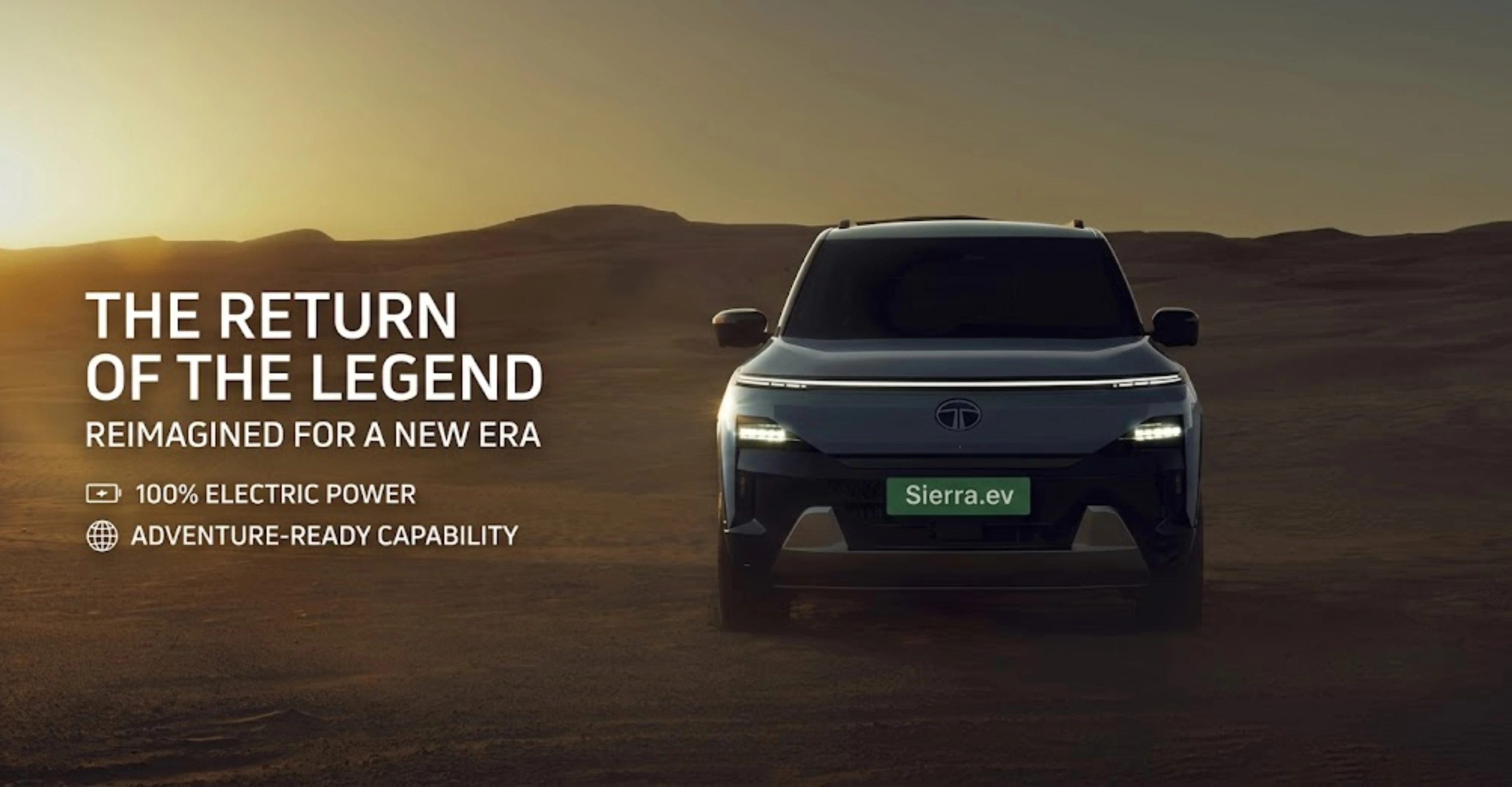
The Tata Sierra EV is arguably one of the most significant electric vehicle launches of 2026. It revives one of Tata Motors' most iconic nameplates while introducing an entirely new generation of electric technology aimed at premium SUV buyers.
Following its official launch in late June 2026, customer deliveries and wider market availability are expected to continue through August, making it one of the most important EVs reaching showrooms during this period.
The Sierra EV is expected to offer multiple battery pack options along with rear-wheel-drive and all-wheel-drive configurations. Tata has also teased features such as Boost Mode, premium digital displays, connected technology, panoramic sunroof, ventilated seats, Level 2 ADAS, over-the-air software updates, and an advanced battery management system.
The SUV is expected to feature a spacious, lounge-inspired cabin with premium materials, large storage spaces, ambient lighting, and multiple comfort features for family buyers. Tata Motors is also likely to continue its strong focus on safety by equipping the Sierra EV with multiple airbags, electronic stability control, 360-degree camera, adaptive cruise control, and advanced collision avoidance technologies.
With a claimed driving range exceeding 500 km, the Sierra EV could become one of Tata's flagship electric SUVs and a strong competitor in the premium midsize EV segment.
Expected Specifications
- Expected Price: ₹22–28 Lakh
- Expected Range: 500+ km (Claimed)
- Drive Options: RWD & AWD
- Launch: June 30, 2026
- Availability: August 2026
Which Upcoming Electric Car Should You Wait For?
The ideal electric car depends on your budget and driving requirements.
If you're looking for an affordable family EV with proven reliability, the Honda Elevate EV is expected to be an excellent option. Buyers seeking a value-oriented compact electric SUV may find the Kia Syros EV particularly attractive due to its expected pricing and feature list.
For adventure enthusiasts, the Mahindra Thar.e promises unmatched off-road capability with a dedicated electric platform and dual-motor AWD system. Buyers interested in premium electric SUVs should keep an eye on the Tata Sierra EV, while those willing to wait for Maruti Suzuki's future EV strategy may prefer the eWX.
Final Thoughts
The second half of 2026 is shaping up to be a milestone period for India's electric vehicle industry. Unlike previous years, where EV buyers had only a handful of options, the market is now expanding rapidly across multiple price segments. Manufacturers are no longer competing solely on driving range—they are also focusing on charging speed, connected technologies, software capabilities, premium interiors, and advanced safety systems.
August 2026 is expected to showcase this transformation, with several important electric SUVs either launching or becoming widely available across the country. Models like the Honda Elevate EV and Mahindra Thar.e represent the next generation of mainstream electric mobility, while the Tata Sierra EV demonstrates how established manufacturers are blending heritage with cutting-edge technology. At the same time, the Kia Syros EV and Maruti Suzuki eWX are expected to broaden consumer choice in the growing compact and premium EV segments.
Before making a purchase decision, buyers should compare not only price and claimed range but also factors such as charging infrastructure, battery warranty, after-sales service, ownership costs, and resale value. Since official specifications and launch schedules may change before launch, it is advisable to follow manufacturer announcements for the latest updates.
Frequently Asked Questions (FAQs)
1. Which electric cars are expected to launch in August 2026 in India?
Some of the major electric vehicles expected around August 2026 include the Honda Elevate EV, Mahindra Thar.e, Kia Syros EV, Maruti Suzuki eWX, while the Tata Sierra EV will become more widely available following its June launch.
2. Which upcoming electric car is expected to offer the highest driving range?
Based on current information, the Tata Sierra EV is expected to offer a claimed range of over 500 km, while the Mahindra Thar.e could also deliver approximately 450–500 km depending on the battery configuration.
3. Which will be the most affordable upcoming electric car?
Among the expected August launches, the Kia Syros EV is currently expected to have the lowest starting price, estimated between ₹14 lakh and ₹18 lakh.
4. Is Honda launching its first mainstream electric SUV in India?
Yes. The Honda Elevate EV is expected to become Honda's first mass-market electric SUV developed specifically for Indian customers.
5. Should you wait for the upcoming electric cars in August 2026?
If you're planning to purchase an electric vehicle in 2026, waiting until August could be worthwhile, as several new models are expected to offer improved battery technology, longer driving ranges, faster charging capabilities, and significantly more advanced features than many current-generation EVs.
Book a Test Drive
Free doorstep test drive at your convenience
Popular Brands


Latest Electric Car News
Hyundai EV Compact SUV India Launch: Expected Price, Range & Key Details
Hybrids vs. EVs: Which Is Better for You?
Delhi EV Policy 2026 in Effect from July 1
Upcoming Electric Cars in August 2026 in India
What to Do If Your Car Battery Is Dead
Mercedes-Benz VLE Unveiled: 8-Seater EV with 700+ KM Range
Tata Sierra EV First Look: 600+ KM Range, Triple Screens & More
Top Accessories You Should Buy for Your Tata Harrier EV
Is an EV Car Coming for ₹5 Lakh? A Major Shift in the Indian Auto Market
Top Upcoming SUVs and Electric Cars in April 2026 That Could Change the Market
Bookings Open for the Mercedes-Benz CLA Electric – A New Competitor Enters India’s EV Market
Tata’s New Budget Electric Car Coming in 2026 – Is the Nano EV Making a Comeback?
Hybrid Cars vs Electric Cars in India 2026: Which Is Better?
BYD India New Electric Sedan Launched – Price & Range Revealed
Top 5 Affordable Electric Cars in India 2026 (Best Budget EVs with Long Range)
Tata vs MG EV Comparison – Which One Is Better in 2026?
Tata EV Lineup 2026 REVEALED – Full Price Breakdown
Tesla India Booking Date LEAK – Big Update!
Hyundai Creta EV Launch Leak: Price Shock Incoming?
Tata Punch EV Waiting Period Update 2026: Real Delivery Timeline vs. Company Claims