Limited Edition Skoda Slavia Monte Carlo Adds New Colours for 200 Buyers Only
- Cars
- Published: 24 Jul, 2026
- Updated: 25 Jul, 2026
Book a Test Drive
Free doorstep test drive at your convenience
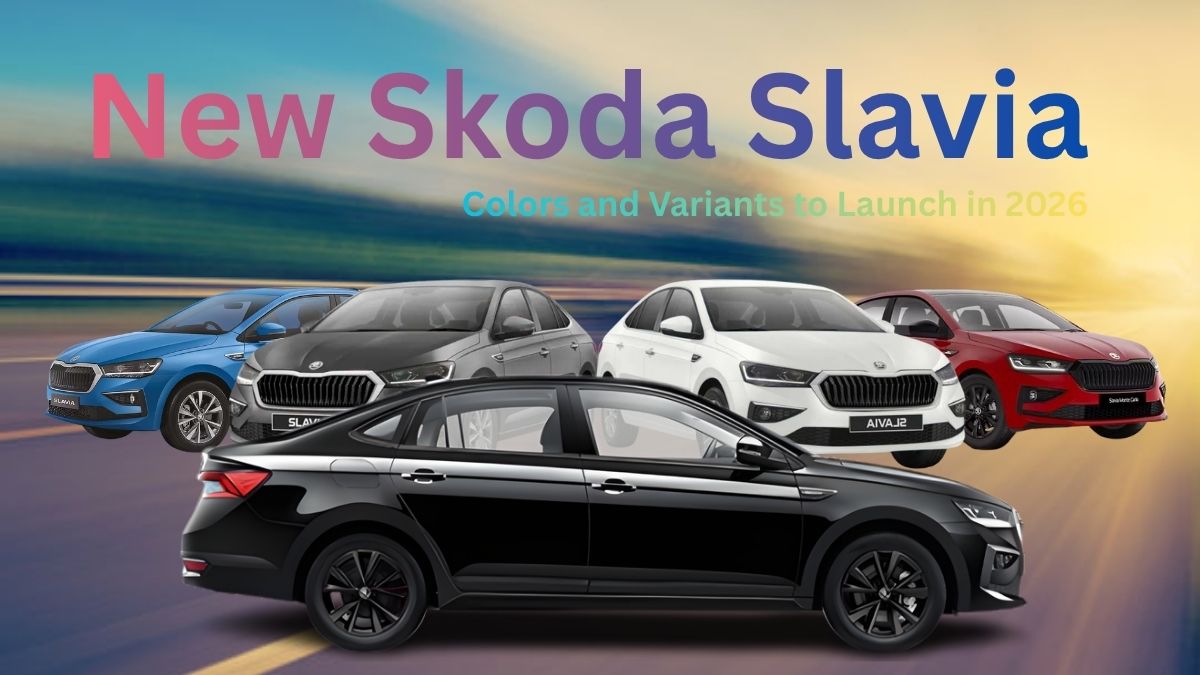
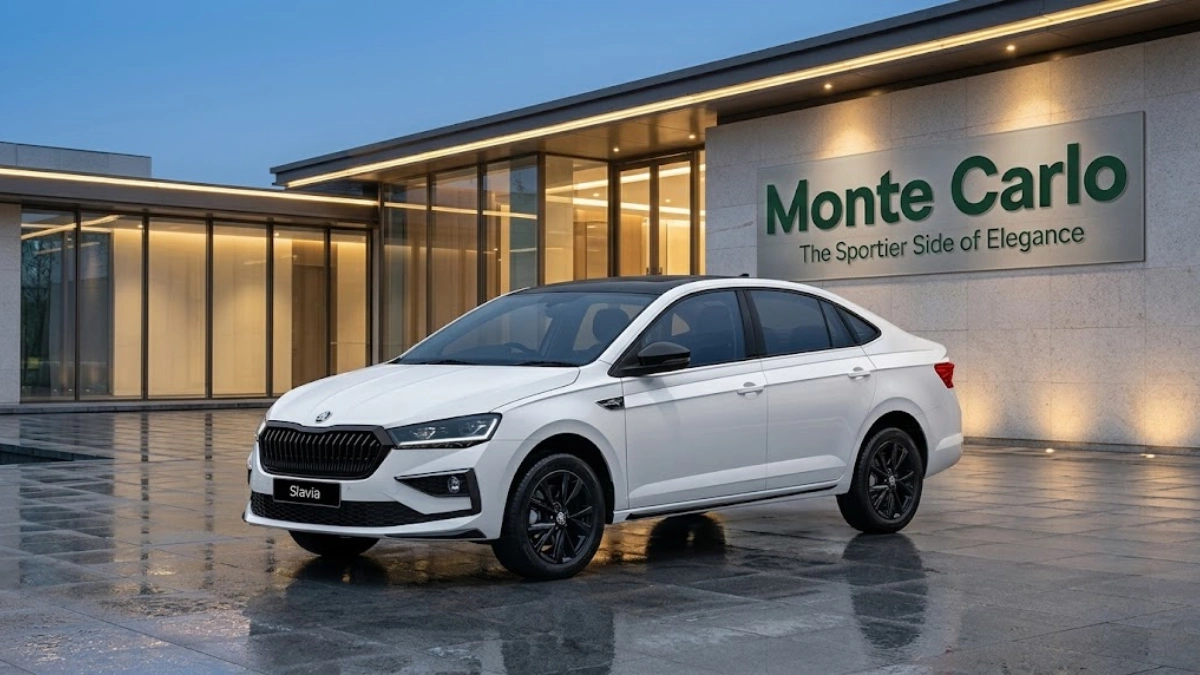
The Skoda Slavia Monte Carlo has always stood out as the sportiest version of the Slavia sedan, but now it has become even more exclusive. Skoda Auto India has introduced two striking new dual-tone colour options, Shimla Green with a Black Roof and Steel Grey with a Black Roof—available only on the Monte Carlo variant. The catch? These limited-edition colours will be offered to just 200 customers, making them one of the rarest versions of the Slavia ever sold in India.
For buyers looking to own something beyond the regular lineup, this special edition adds a fresh layer of exclusivity without changing the car's performance or feature list. In this article, we'll take a closer look at the new colours, availability, key highlights, expected pricing, and everything you need to know before booking the limited-edition Skoda Slavia Monte Carlo.
Quick Overview About Limited Edition Skoda Slavia Monte Carlo
- What's new: Two dual-tone colours — Shimla Green and Steel Grey — both paired with a contrasting black roof
- How many: Just 200 cars combined across Shimla Green and Steel Grey — not 200 units of each colour
- Who can buy them: Only buyers of the two automatic powertrains; the manual Monte Carlo isn't part of this run
- Price: No premium — the Monte Carlo continues to retail between Rs 16.69 lakh and Rs 18.19 lakh, ex-showroom
- Why it matters now: The Slavia facelift is reportedly locked in for launch around August 18, 2026, meaning this colour drop lands right at the end of the current model's life cycle
What's New: Two Exclusive Dual-Tone Colours in Limited Edition Skoda Slavia Monte Carlo
Skoda has introduced two new colour options for the Slavia Monte Carlo — Shimla Green and Steel Grey — in a dual-tone finish, limited to 200 units. Both shades pair the body colour with a contrasting gloss-black roof, strengthening the Monte Carlo's dual-tone visual identity without altering the car's familiar silhouette.
What's easy to miss in most coverage is exactly how this fits into the existing palette. According to Autocar India's breakdown, the Slavia Monte Carlo was already offered in two monotone shades — Lava Blue and Deep Black — alongside three dual-tone options with a black roof: Candy White, Brilliant Silver and Cherry Red. Add the two new arrivals, and the palette available across the Slavia range effectively grows to seven options — albeit two of them only for as long as the 200-unit run lasts.
A detail buyers should note before walking into a showroom: these colours aren't a standalone trim or special edition in the way "Monte Carlo" itself is. There's no new variant, mechanical update, or feature revision attached — it's purely a limited colour release, and it's available only with automatic gearboxes: the 1.0 TSI six-speed torque-converter and the 1.5 TSI seven-speed DSG. The manual Monte Carlo sits outside this 200-unit batch entirely.
Why Only 200 Units? The Exclusivity Strategy in Limited Edition Skoda Slavia Monte Carlo
On the surface, a 200-unit cap reads as classic scarcity marketing — and it is. Cosmetic-only special editions cost a manufacturer almost nothing in engineering terms (no re-tooling, no new crash tests, no powertrain validation), yet they generate an entire news cycle, as this very story demonstrates. But there's a more interesting way to read the number, and it involves some context most articles skip.
Over the past three months, the Slavia has been averaging around 1,000 units a month, and in May 2026 specifically it sold 861 units. Set against that backdrop, 200 cars — split across two colours and two powertrains — represents roughly a couple of weeks' worth of the model's normal throughput, not the output of a boutique, hand-built halo car. Compare that to Skoda's other 2026 limited-run play: the Kodiaq RS, capped at a genuinely scarce 50 units, which reportedly sold out within six minutes of bookings opening. The Slavia's 200-unit cap is a far gentler squeeze — enough to create urgency without meaningfully restricting supply for anyone who moves reasonably quickly.
There's also a neat historical irony here that we'll unpack fully in the heritage section below: the very first car to wear the "Monte Carlo" name, back in 1936, was itself limited to a tiny production run. Scarcity isn't a new marketing trick Skoda is bolting onto this nameplate — it's baked into the name's origin story.
Slavia Monte Carlo: Design & Features Recap
The Monte Carlo edition is based on the Slavia's top-spec Prestige trim and sits at the very top of the line-up, sharing some cosmetic upgrades with the mid-level Sportline variant. The visual treatment is unmistakably sportier than the standard car:
Exterior:
- Dual-tone paint options with a blacked-out finish for the grille, bumper elements, badges, and outside rearview mirrors
- Black highlights extend to the side skirts, door handles, and rear spoiler
- 16-inch black alloy wheels, Monte Carlo branding on the front fenders, a smoked effect for the tail-lamps, and a black boot-lip spoiler
- A gloss-black grille surround and darkened LED tail-lamps round off the exterior differentiation
Interior:
- A dual-tone red-and-black cabin theme, with red detailing around the instrument cluster and aluminium pedals
- Ventilated and powered front seats, a genuinely premium touch at this price point
Tech and safety:
- A 10-inch touchscreen infotainment system with wireless Android Auto and Apple CarPlay, and an 8-inch digital instrument cluster
- Wireless phone charging and automatic climate control
- An electric sunroof, and six airbags as standard equipment across the range
Nothing here changes for the two new colours — you're simply getting the existing, well-equipped Monte Carlo package in a shade almost nobody else on the road will have.
Engine and Transmission Options
Mechanically, absolutely nothing changes with this colour update — but it's worth recapping why the Monte Carlo's powertrains remain genuinely competitive in the segment.
1.0 TSI, 3-cylinder turbo-petrol: Produces 114 bhp and 178 Nm of torque, paired exclusively (for this limited run) with a six-speed torque-converter automatic transmission. It's the smoother, more relaxed choice for buyers who want automatic convenience without chasing outright performance.
1.5 TSI, 4-cylinder turbo-petrol: Puts out 149 bhp and 250 Nm, mated to a seven-speed dual-clutch automatic (DSG). This is the engine enthusiasts gravitate toward, and it carries a genuine segment differentiator: it remains the only powertrain in its class with Active Cylinder Deactivation Technology, which shuts down two of the four cylinders under light load to improve fuel efficiency, along with Plasma-Coated Cylinder Liners for better thermal management. In practical terms, the plasma coating replaces traditional cast-iron cylinder liners with a thinner, sprayed-on layer — it reduces internal friction and allows tighter thermal control, which is part of how Skoda extracts strong efficiency out of what is still a genuinely quick engine for the segment.
For context on precision: Skoda's own spec sheets list the 1.5 TSI's output as 147.51 bhp between 5,000-6,000 rpm, with 250 Nm available across a wide 1,600-3,500 rpm band — the kind of broad, flexible torque delivery that makes the car feel effortless in real-world driving rather than only on paper.
Price: What You'll Pay for the New Colours
The best news for anyone tempted by Shimla Green or Steel Grey: there's no exclusivity tax. Despite the added rarity, Skoda has kept pricing unchanged, with the Monte Carlo continuing to retail between Rs 16.69 lakh and Rs 18.19 lakh, ex-showroom, depending on whether you pick the 1.0 TSI automatic or the 1.5 TSI DSG.
To put that in perspective against the wider line-up, the Skoda Slavia as a whole spans Rs 10 lakh for the base variant up to Rs 18.19 lakh for the top-spec Monte Carlo, so the Monte Carlo, even before you factor in these limited colours, already represents the most expensive way into a Slavia. Getting a genuinely rare paint job at zero extra cost is a smarter piece of customer-facing strategy than it might first appear: it removes the one objection ("why would I pay more for just a colour?") that usually kills interest in cosmetic special editions. Remember that ex-showroom figures don't include RTO, insurance, or handling charges, which will push the effective on-road price meaningfully higher depending on your state.
Skoda's Rallye Monte Carlo Heritage Connection
This is where the "Monte Carlo" badge earns more credibility than most special-edition nameplates in the industry, because it isn't a marketing invention — it's tied to over a century of actual motorsport history.
Skoda's connection to the Monte Carlo Rally dates back to 1912, when a Laurin & Klement car competed in only the second-ever running of the event, with the works driver braving temperatures as low as -18°C in an open-cockpit car. The brand's first real success came in 1936, when the Skoda Popular Sport roadster finished second in its class — a result strong enough that Skoda launched a dedicated Popular Monte Carlo special edition immediately after, building just seventy examples between 1936 and 1939. That's the literal birth of the Monte Carlo name on a Skoda — and notice the parallel: the very first Monte Carlo special edition was also an ultra-limited run.
The heritage deepens from there. The Octavia TS delivered a hat-trick of class wins between 1961 and 1963, and in 1977, the Skoda 130 RS scored a famous 1-2 class finish in brutal conditions where only 43 of 198 starters even reached the finish line. The Favorit 136 L then added four consecutive class victories between 1991 and 1994, before the modern Fabia took over Skoda's WRC2 rally programme in the 2010s.
Skoda revived the "Monte Carlo" nameplate as a special-edition trim on the Fabia in 2011, and has since rolled it out across Kamiq, Scala, Kushaq, and now Slavia. Tellingly, the Slavia Monte Carlo itself wasn't launched randomly — Skoda India timed the original launch of the all-new Slavia and Kushaq Monte Carlo range to coincide with the 112th anniversary of the brand's Rallye Monte Carlo debut. This latest colour drop, then, isn't a one-off gimmick — it's the continuation of a heritage campaign Skoda has been running deliberately for years.
Sales Performance & Market Context
The timing of any special edition makes more sense once you understand where the Slavia actually sits in India's shrinking sedan market.
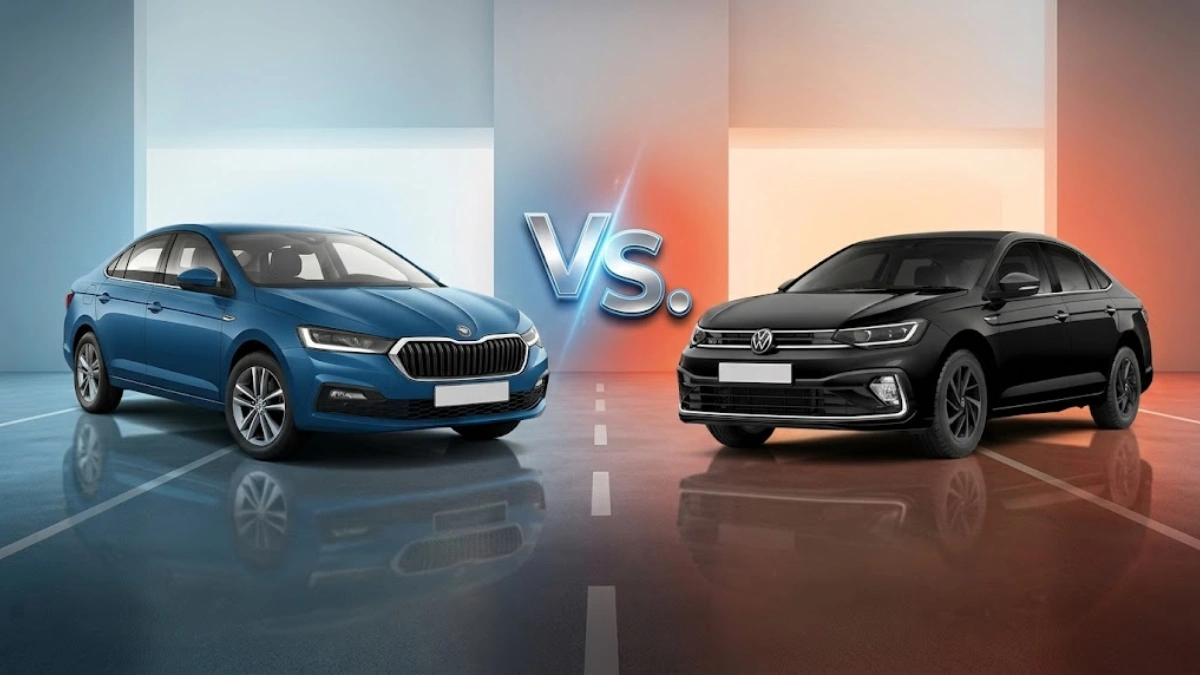
Combined domestic wholesales of the Slavia and its sister model, the Volkswagen Virtus, crossed 150,000 units by the end of January 2026, reaching 152,482 units — with the Virtus ahead at 79,104 units and the Slavia at 73,378. In the broader ranking, the Slavia sits fifth among the 11 sedans sold in India for the ten-month period, trailing the Maruti Dzire, Hyundai Aura, Honda Amaze, and the Virtus, but ahead of the Tata Tigor, Hyundai Verna, Honda City, and Toyota Camry.
Momentum has been genuinely uneven through 2026. January was a standout month, with Slavia sales climbing to 1,946 units, a 63.46% jump month-on-month, contributing to Skoda India's overall 5,739 units for the month, up roughly 39% year-on-year. By May, however, Slavia sales had cooled to 861 units, down 8.11% year-on-year — a month in which the newly facelifted Honda City surged 149.90% to overtake both the Verna and the Slavia. That last data point is genuinely instructive for this story: it's a live example of exactly what a facelift can do to a rival's momentum, which is precisely the fate Skoda will be hoping to avoid with its own Slavia update in a few weeks.
Zoom out further, and the Maruti Dzire alone accounts for more than two-thirds of all sedan sales in India, underscoring just how compact-sedan-dominated the segment has become. Mid-size sedans like the Virtus, Slavia, Verna, and City occupy a narrower ₹11.5-20 lakh niche, appealing to enthusiast buyers who prioritise handling and highway stability over the elevated seating and ground clearance of an SUV. In a segment this size-constrained, a 200-unit limited colour run is less about moving serious volume and more about giving that loyal, driving-focused buyer base a reason to keep talking about the car.
Timing: Is This Tied to the Upcoming Slavia Facelift?
This is the question most coverage has raised but not really answered — and the honest answer is: probably, but not officially.
Multiple reports now point to August 18, 2026 as the Slavia facelift's launch date, with the update expected to arrive shortly after Independence Day on August 15 — just about four weeks after this colour announcement. The facelift itself sounds substantial for a mid-cycle update: a revised design, more features, Level 2 ADAS, a panoramic sunroof, and a new 8-speed automatic gearbox are all expected, alongside a larger 10.25-inch digital driver's display and front parking sensors, plus a rear-seat massage function similar to the one recently added to the Kushaq facelift.
Skoda hasn't drawn any explicit line between the two events. In fact, the company has not officially linked the new colours to the upcoming facelift, and the sources closest to this specific story are careful to frame it as coincidental timing. But industry pattern-matching is hard to ignore here: manufacturers routinely release cheap, cosmetic special editions in a model's final weeks specifically to sustain media coverage and showroom footfall without cannibalising anticipation for the real update. It's also plausible — though this part is speculative rather than confirmed — that Skoda is using the response to Shimla Green and Steel Grey as an informal read on colour preferences ahead of finalising the facelift's own palette.
The practical takeaway for anyone genuinely interested: the Slavia's price is expected to rise once the facelift arrives, and the specific Monte Carlo trim structure may well be reshuffled with the update. If this exact combination of colour, price, and current-generation styling appeals to you, waiting a month buys you new features — but there's no guarantee it buys you the same car at the same price.
Conclusion
Judged purely on substance, this is a minor update — two paint options, zero mechanical changes, and a production cap generous enough that "limited edition" is doing more marketing work than literal scarcity work. But judged as a piece of brand strategy, it's a smart, low-risk move: it costs Skoda almost nothing to execute, it genuinely echoes a hundred-plus years of authentic motorsport heritage rather than an invented backstory, and it keeps the current Slavia Monte Carlo relevant in showrooms and headlines right up until its facelifted successor takes over. The absence of any price premium is the detail that elevates this from a cynical cash-grab to a genuinely reasonable value proposition — buyers get something distinctive at no extra cost, provided they're happy with an automatic gearbox and are comfortable acting before the 200-unit cap (or the mid-August facelift, whichever comes first) closes the window.
Book a Test Drive
Free doorstep test drive at your convenience
Popular Brands





Latest Car News
Tata Sierra Dark Edition vs Regular Sierra: What Is Different?
Tata Altroz vs Maruti Suzuki Brezza: Which One Should You Buy in 2026?
Wagon R vs Swift: Which Is Cheaper to Maintain?
BMW 7 Series Facelift Interior Updates: Know Everything

How to Check Oil Level in Car: Step-by-Step Guide
Latest Cars Under ₹5 Lakh in India in September 2026

Maruti Alto K10 September Offers: Get Up to ₹62,500 Savings on Purchase
Tata Tigor Facelift Under ₹6 Lakh: A New Budget Sedan Is Coming
Hyundai Creta August 2026 Sales: With 16,288 Units Becomes India's Best-Selling Mid-Size SUV
Maruti Baleno Facelift Booking Price: Expected Booking Amount, EMI & Loan Calculation
Kia Sorento 6 Seater vs 7 Seater: Which One Should You Choose?

Kia Sorento AI Assistant Explained: Features, Commands, and Indian Language Support
What Is the Difference Between Tata Curvv and New Curvv Series X?

Tata Car Sales August 2026: Model-Wise Sales & Growth Report
Car Sales Report of August 2026: Tata Motors, Maruti, Mahindra Lead Growth
Pajero 2026 vs Fortuner: Which SUV Could Be Better?
Volvo EX90 Booking Price: Expected Booking Amount, EMI & Loan Calculation
Next Generation Tata Nexon 2027: Expected Launch, Price, Design & Features
MG Hector Tomahawk EV Variant-Wise Price & Features Comparison
Maruti Baleno Facelift vs Toyota Glanza: Complete Comparision