
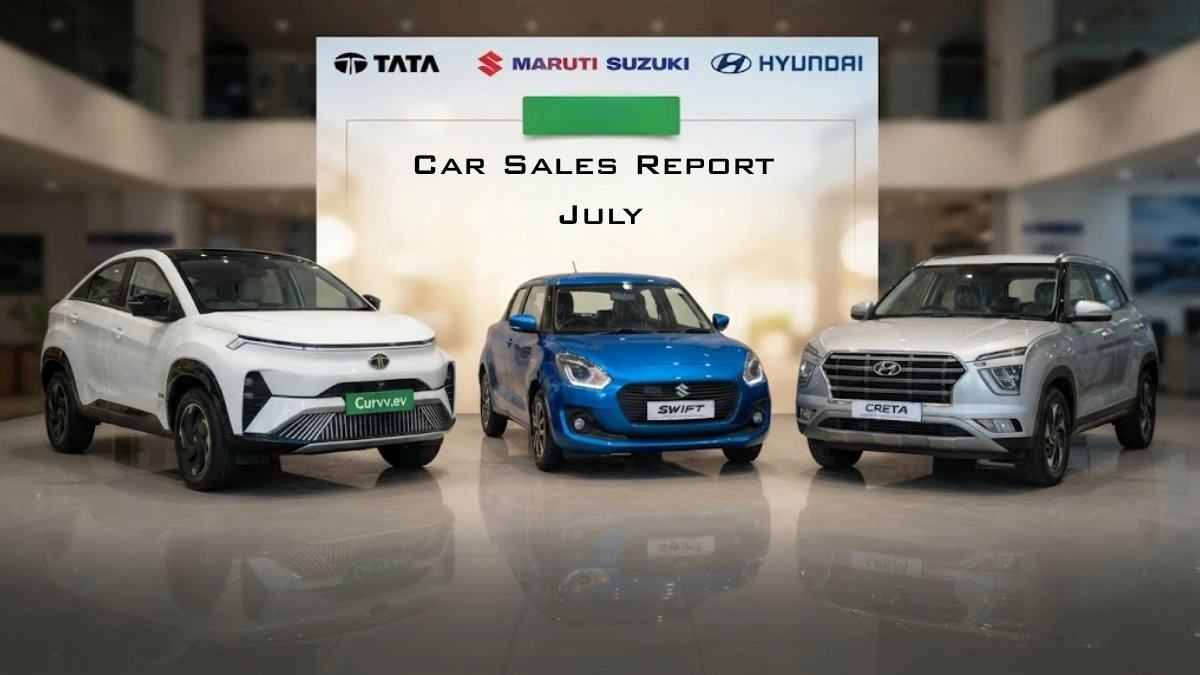
Car Sales Report July 2026: Maruti Remains No.1, Tata, Mahindra & Hyundai Record Strong Growth
- Cars
- Published: 05 Aug, 2026
- Updated: 05 Aug, 2026
Book a Test Drive
Free doorstep test drive at your convenience
India's passenger vehicle industry just delivered one of its best months in years. Total wholesale dispatches crossed 4.7 lakh units in July 2026, a 33% jump over July 2025 — a number that reflects genuine, broad-based demand rather than just one or two carmakers having a good month. Here's a full breakdown of who did what.
July 2026 Passenger Vehicle Sales Highlights
Maruti Suzuki extended its commanding lead at the top of the charts, inching close to the 2 lakh-unit mark for the month, while Tata Motors held on to second place by a slim margin over Mahindra. Hyundai staged a sharp comeback after a supplier fire disrupted its June output, reclaiming fourth spot, with Toyota completing the top five.
Further down the order, Kia, MG and Nissan all posted double- and triple-digit percentage growth over last year, pointing to broad-based momentum across the industry heading into the festive season. On the retail side, India's passenger vehicle registrations reached 4,08,753 units in July 2026, growing 18.4% YoY, with Maruti Suzuki retaining a commanding 39.7% market share.
Two things stand out immediately: Tata Motors posted the fastest growth among the top players, and just 452 units separated Tata Motors and Mahindra in the battle for second place — one of the tightest runner-up races the industry has seen in a while.
July 2026 Car Sales Report
Here's the full wholesale (domestic) picture for July 2026, based on manufacturer-reported figures:
Separately, on the Vahan retail registration side, combined Skoda and Volkswagen registrations stood at 8,176 units, down 7.8% YoY, with their combined market share slipping from 2.6% to 2.0% — one of the few soft spots in an otherwise strong month.
Maruti Suzuki Continues to Dominate the Indian Car Market
There's no real challenge to brand Maruti Suzuki right now. Domestic passenger vehicle sales rose to 1,96,203 units in July, up sharply from 1,47,187 units in June. Including sales to other OEMs and exports, the company's total volume for the month came in at 2,41,421 units, with domestic sales alone hitting an all-time high of 2,00,123 units.
The growth wasn't concentrated in one segment either. Utility vehicles — including the Brezza, Ertiga, e Vitara, Fronx, Grand Vitara, Invicto, Jimny, Victoris and XL6 — contributed 78,851 units, while the compact and mid-size segment, led by the Baleno, Swift, Dzire and WagonR, remained the company's largest volume driver with 90,822 units. That's a genuinely diversified spread across both mass-market hatchbacks/sedans and the increasingly important SUV segment.
Tata Motors Records Impressive Growth in July 2026
Tata had arguably the standout month among the top five. Tata Motors posted one of its strongest monthly sales growth figures in recent years, registering around 59% year-on-year growth in July 2026, selling a total of 63,760 vehicles including domestic and exports, against 40,175 units in July 2025.
In the domestic market specifically, Tata sold 62,611 passenger vehicles — marginally higher than June's 62,076 units — despite temporary production disruptions at its Sanand plant due to heavy rainfall and flooding. The Punch micro-SUV recorded its highest-ever monthly sales, reinforcing its position as one of the company's best-selling models.
The EV story is arguably the bigger headline here: Tata's EV portfolio crossed 15,000 monthly wholesales for the first time, with the company recording 15,217 EV wholesales in July compared to 7,124 units in the same month last year — that's roughly a 114% jump in electric vehicle sales alone, underlining just how much of Tata's growth is now coming from its EV line-up (Nexon EV, Punch EV, Curvv EV, and Harrier EV).
Mahindra Registers Strong SUV Sales
Mahindra's SUV-only strategy continues to pay off, even if July's numbers were essentially flat sequentially. Mahindra sold 60,048 vehicles in the Utility Vehicles segment domestically, a growth of 20%, and 60,887 units including exports. Overall auto sales, including commercial vehicles, stood at 1,03,860 vehicles for the month, a 26% growth including exports.
Nalinikanth Gollagunta, CEO of the Automotive Division at M&M, noted that the company achieved SUV sales of 60,048 units delivering 20% growth, with total vehicle sales at 1,03,860 units reflecting a 26% YoY growth and all-round demand traction across the portfolio.
Notably, month-on-month, Mahindra's SUV sales were almost unchanged from the 60,393 units sold in June, and the company is looking to the expected launch of the updated Scorpio N in August to provide fresh momentum heading into the festive season.
Hyundai Shows Positive Growth with Popular SUV Line-up
Hyundai's July was as much a recovery story as a growth story. The company recorded its highest-ever monthly domestic sales for July, selling 54,210 units — a sharp rebound from 39,635 units in June, when a fire at a supplier's facility had disrupted production.
Zooming out to the total picture, Hyundai Motor India recorded its highest-ever monthly total sales (domestic plus exports) of 75,360 units in July 2026, a strong YoY growth of 25.4%, and that included monthly domestic sales of 54,210 units, up 23.3% YoY.
The scale of the month-on-month jump — +36.77% over June — makes clear just how much of Hyundai's June shortfall was supply-side rather than demand-side. Once the supplier issue was resolved, pent-up orders converted quickly into dispatches.
Here's the Top 10 Best Selling Car Brands in July 2026
Ranked strictly by domestic wholesale volume for the month:
- Maruti Suzuki – 1,96,203 units
- Tata Motors – 62,611 units
- Mahindra – 60,048 units
- Hyundai – 54,210 units
- Toyota – 30,516 units
- Kia – 28,200 units
- MG Motor – 8,158 units
- Honda – 6,014 units
- Nissan – 4,518 units
- Renault – 3,293 units
Toyota's performance deserves a specific mention: Toyota Kirloskar Motor reported domestic sales of 30,516 units in July, up from 28,441 units in June, with the Innova Hycross, Urban Cruiser Hyryder and Glanza continuing to anchor volumes. Cumulative dispatches for January-July rose 13% year-on-year to 2,33,854 units, while sales in the first four months of FY2027 (April-July) grew 8% to 1,28,746 units — steady rather than spectacular, but consistent.
Which Car Segment Performed Best in July 2026?
The SUV/UV segment was clearly the star performer across almost every manufacturer:
- Maruti's utility vehicles contributed 78,851 units to its record month
- Mahindra's entire domestic volume of 60,048 units came from the Utility Vehicles segment alone
- Tata's Punch micro-SUV hit its highest-ever monthly sales
- Kia's Seltos continued to be the brand's bread and butter, averaging over 10,000 units a month since the start of the year
That said, the mass-market hatchback/sedan segment hasn't been left behind — Maruti's compact and mid-size segment, led by the Baleno, Swift, Dzire and WagonR, remained the company's single largest volume driver with 90,822 units, actually outpacing its own UV numbers.
The electric vehicle segment is the fastest-growing story within the report: Tata's EV wholesales more than doubled year-on-year to 15,217 units, while JSW MG Motor India notched its highest-ever monthly wholesales for the second month running, moving 8,158 units, with electric vehicles accounting for more than 80% of total volumes — the NEV portfolio's strongest monthly performance yet.
Biggest Winners of July 2026 Car Sales
If you rank manufacturers purely by percentage growth rather than absolute volume, the leaderboard flips quite a bit:
- Nissan – Sales more than tripled, up 218% YoY, on the back of its newly launched Tekton
- Tata Motors – +58.42% YoY, the highest growth among the top-five carmakers by volume
- Honda – +48.49% YoY
- Maruti Suzuki – +42.41% YoY, remarkable given its already-massive base
- Kia – +27.40% YoY, its best-ever July performance
- Renault – +27.90% YoY
Tata recorded the highest year-on-year growth among the top carmakers in July, while Nissan's sales more than tripled following the launch of the Tekton — making these two the clearest standout stories of the month, even though neither tops the sales charts in absolute terms.
Key Reasons Behind Strong July 2026 Car Sales
A combination of factors converged to make July an unusually strong month:
- New model launches driving fresh bookings — new model launches added to the tally, with strong advance bookings translating into higher dispatches.
- Supply-side recovery — production at Hyundai and Kia's supplier plants normalised after a fire had disrupted output in the preceding month, unlocking pent-up demand.
- Ongoing GST-driven tailwind — last year's GST rate reforms on vehicles, along with a favourable market backdrop through the year, gave the industry the boost it needed despite rising input costs.
- Festive-season front-loading — festive discounting from some brands helped pull forward demand ahead of the bigger festive quarter.
- New nameplates gaining traction — the recently launched Kia Syros EV has garnered strong initial bookings, and Nissan's Tekton launch has been a major driver of its own volume surge.
It's also worth noting the flip side: rising manufacturing costs have seen prices increasing for multiple brands even as volumes grew — so the growth isn't purely a function of falling prices; genuine demand recovery and new product cycles are doing a lot of the work.
Market Share Analysis of Leading Car Brands
Based on retail registration data (Vahan) for July 2026: Maruti Suzuki retained a commanding 39.7% market share of the 4,08,753 units registered during the month. Tata and Mahindra are locked in an extremely tight fight for the No. 2 spot — just 452 units separated the two manufacturers.
Further down the table, MG registered 7,003 units, with volumes almost flat year-on-year at +1.1% while declining 5.2% sequentially, and Honda registered 5,802 vehicles, delivering 20.2% YoY growth. Meanwhile, combined Skoda and Volkswagen registrations fell 7.8% YoY and 3.7% MoM to 8,176 units, with their combined market share contracting by 0.6 percentage points to 2.0% — a rare instance of a manufacturer group losing ground in an otherwise growing market.
It's worth flagging that wholesale (factory dispatch) numbers and Vahan retail registration numbers don't always match exactly month to month, since dealer stocking patterns and registration timelines can create small gaps between the two data sets. Both are useful, but for slightly different reasons — wholesale reflects what manufacturers pushed to dealers, retail reflects what customers actually drove home.
July 2026 vs July 2025 Sales Comparison
The year-on-year improvement across the board is the real story of this report:
| Brand | July 2025 | July 2026 | YoY Change |
| Maruti Suzuki | 1,37,776 | 1,96,203 | +42.41% |
| Tata Motors | 39,521 | 62,611 | +58.42% |
| Mahindra | 49,871 | 60,048 | +20.41% |
| Hyundai | 43,966 | 54,210 | +23.30% |
| Toyota | 29,159 | 30,516 | +4.65% |
| Kia | 22,135 | 28,200 | +27.40% |
| MG Motor | 6,687 | 8,158 | +22% |
| Honda | 4,050 | 6,014 | +48.49% |
| Nissan | 1,421 | 4,518 | +218% |
Every single manufacturer in the top 9 posted positive year-on-year growth — a rare instance of near-universal expansion across the industry in the same month, rather than growth being concentrated in just one or two players.
Expert Analysis – What These Sales Numbers Mean for India's Auto Industry
Taken together, these numbers point to an industry that's recovering from short-term supply disruptions (the Hyundai/Kia supplier fire, Tata's Sanand flooding) while simultaneously benefiting from longer-term structural tailwinds — GST-linked price adjustments from the previous year, a maturing EV segment, and a wave of genuinely new products (Tekton, Hilux, Syros EV) rather than just facelifts.
The tight race between Tata and Mahindra for the No. 2 spot is particularly worth watching. Tata's growth is increasingly EV-led, while Mahindra's is almost entirely SUV-led with ICE powertrains still doing the heavy lifting — two very different strategies converging on similar volume outcomes. If Tata's EV momentum continues at anything close to its current pace, it could meaningfully separate the two brands in the coming months, especially with festive-season demand typically favouring larger-ticket SUV purchases.
The EV segment's growth — both Tata's 114% jump and MG's EVs crossing 80% of total volumes — also suggests India's EV transition, while still a small share of overall industry volume, is now compounding meaningfully rather than growing off a flat base. That's a genuinely different story than the EV narrative of just two or three years ago.
One note of caution for readers: month-on-month comparisons can be distorted by one-off events (a supplier fire, a flood-related plant shutdown, a single blockbuster launch), so it's worth watching at least two or three more months of data before reading July's numbers as a permanent shift in the competitive order.
Upcoming Launches That May Impact August 2026 Sales
Several planned launches could shape how the competitive order shifts next month:
- Mahindra Scorpio N (updated version) – expected in August, this could help boost Mahindra's sales and provide fresh momentum as the company heads into the festive season.
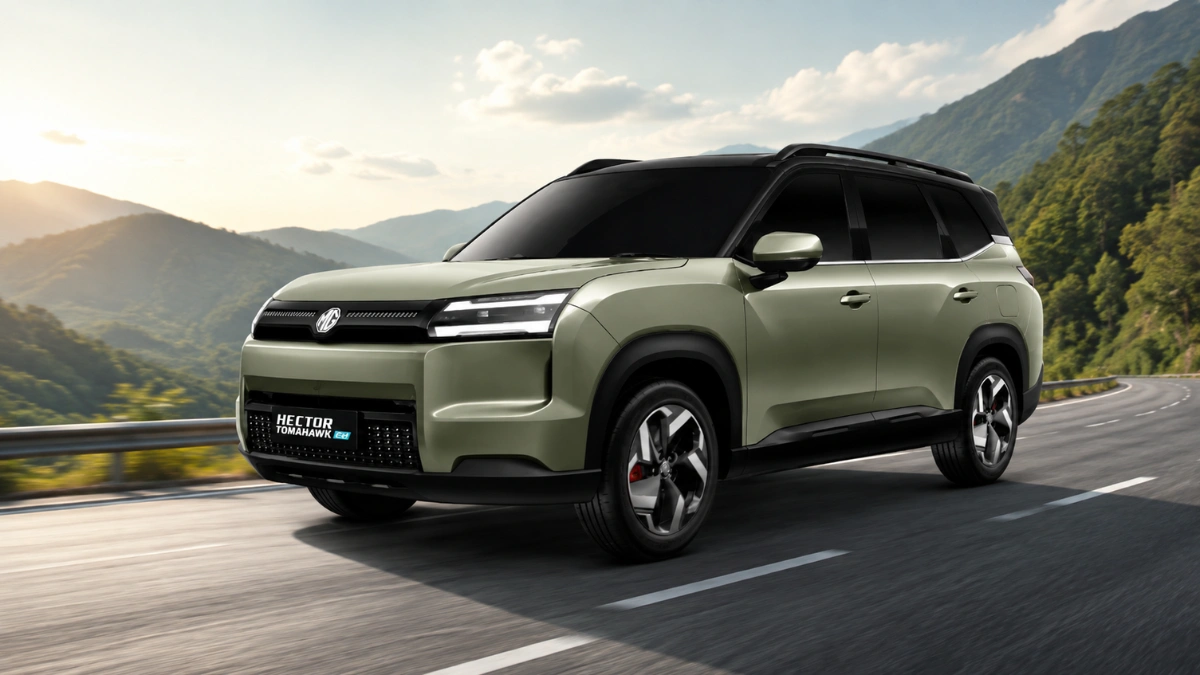
- MG's new energy SUV – in August, MG will launch a "new energy SUV" in both PHEV and EV avatars, based on the Wuling Starlight 560, expected to be called the Hector Hawk.
- Continued ramp-up of the Toyota Hilux – the ninth-generation Toyota Hilux has already been launched, strengthening Toyota's SUV/pickup portfolio and expected to add incremental volume through August.
- Kia Syros EV – still in its early sales ramp-up phase after a strong initial booking response; August will be a clearer test of sustained demand.
- Nissan Tekton – having driven the bulk of Nissan's July surge, its continued momentum (or a natural cooling-off after the launch rush) will be a key thing to watch.
Given how tightly Tata and Mahindra are running for second place, any one of these launches landing well could meaningfully tilt August's standings.
Conclusion
July 2026 turned out to be one of the strongest months on record for India's passenger vehicle industry, with total wholesale dispatches crossing 4.7 lakh units and virtually every major manufacturer posting healthy year-on-year growth. Maruti Suzuki remains firmly in control at the top, but the real intrigue lies just below it — Tata Motors and Mahindra are separated by a wafer-thin margin for second place, Hyundai bounced back strongly from a supply disruption, and smaller players like Nissan and Honda posted some of the sharpest percentage gains in the entire market. With several fresh launches lined up for August and the festive season fast approaching, this momentum looks set to carry forward, though whether Tata can hold its slim edge over Mahindra will be one of the more interesting storylines to track in the months ahead.
Book a Test Drive
Free doorstep test drive at your convenience
Popular Brands





Latest Car News
Tata Altroz vs Maruti Suzuki Brezza: Which One Should You Buy in 2026?
Wagon R vs Swift: Which Is Cheaper to Maintain?
BMW 7 Series Facelift Interior Updates: Know Everything

How to Check Oil Level in Car: Step-by-Step Guide
Latest Cars Under ₹5 Lakh in India in September 2026

Maruti Alto K10 September Offers: Get Up to ₹62,500 Savings on Purchase

Tata Tigor Facelift Under ₹6 Lakh: A New Budget Sedan Is Coming
Hyundai Creta August 2026 Sales: With 16,288 Units Becomes India's Best-Selling Mid-Size SUV
Maruti Baleno Facelift Booking Price: Expected Booking Amount, EMI & Loan Calculation

Kia Sorento 6 Seater vs 7 Seater: Which One Should You Choose?

Kia Sorento AI Assistant Explained: Features, Commands, and Indian Language Support
What Is the Difference Between Tata Curvv and New Curvv Series X?
Tata Car Sales August 2026: Model-Wise Sales & Growth Report
Car Sales Report of August 2026: Tata Motors, Maruti, Mahindra Lead Growth
Pajero 2026 vs Fortuner: Which SUV Could Be Better?
Volvo EX90 Booking Price: Expected Booking Amount, EMI & Loan Calculation
Next Generation Tata Nexon 2027: Expected Launch, Price, Design & Features
MG Hector Tomahawk EV Variant-Wise Price & Features Comparison
Maruti Baleno Facelift vs Toyota Glanza: Complete Comparision
Upcoming Cars in September 2026 in India: New Cars, Launch Dates & Expected Prices