Hyundai Creta Next Gen Upgrades: Biggest Changes Expected
- Cars
- Published: 28 Jul, 2026
- Updated: 28 Jul, 2026
Book a Test Drive
Free doorstep test drive at your convenience
The Hyundai Creta has spent over a decade rewriting the rules of India's mid-size SUV segment, and it's still comfortably at the top of the sales charts. But even a segment leader can't stand still forever, especially with rivals like the second-generation Kia Seltos already switching to a bigger, tech-heavier platform. Hyundai's answer is the third-generation Creta — codenamed SX3 — and based on spy shots, leaks and industry reports gathered over the past several months, it looks like the biggest generational leap this nameplate has ever taken. Here's a detailed, fact-based look at everything expected.
Hyundai Creta Next Gen at a Glance
- Codename: SX3
- Expected reveal: The all-new Creta is expected to be unveiled at the 2027 Bharat Mobility Show in February, with its market launch to follow soon after.
- Expected India launch: Estimates cluster around March 2027, though Autocar India's own advice column suggests a reveal around November-December 2026 is possible, with a small buffer that could push the launch into January 2027.
- New platform: The current Creta uses the K2 platform, while the third-generation model is expected to move to the newer K3 architecture — the same platform underpinning the already-launched second-generation Kia Seltos.
- Size: Expected to grow to around 4,500mm in length, up from 4,330mm today — an increase of roughly 170mm.
- Biggest headline features: A large Pleos Connect touchscreen, a Software-Defined Vehicle (SDV) architecture, an expanded Level 2 ADAS suite, and — for the first time on the Creta — a strong hybrid powertrain.
Why Hyundai is Bringing a Next-Generation Creta
The current Creta facelift is still relatively young, having launched on 16 January 2024, so this isn't a case of the car ageing badly. It's a case of the ground shifting under it. Kia has already launched the all-new second-generation Seltos, built on the larger K3 platform, with increased size, Level 2 ADAS and a 30-inch panoramic display — and since the Creta and Seltos are engineering cousins, Hyundai simply cannot let its own model fall behind its sister brand's newest offering.
There's also a broader segment shift at play. The Creta now has to answer to hybrid rivals like the Maruti Suzuki Grand Vitara and newer SUV-coupe body styles, while the all-new Tata Sierra has raised the bar on boot space with a class-leading 622 litres. On top of that, Hyundai's own global product strategy is moving toward software-defined vehicles, and the Creta — as the company's best-selling model in India — is a natural flagship to introduce this technology locally.
New Exterior Design Upgrades
This won't be a mild refresh — spy shots suggest a genuine visual overhaul.
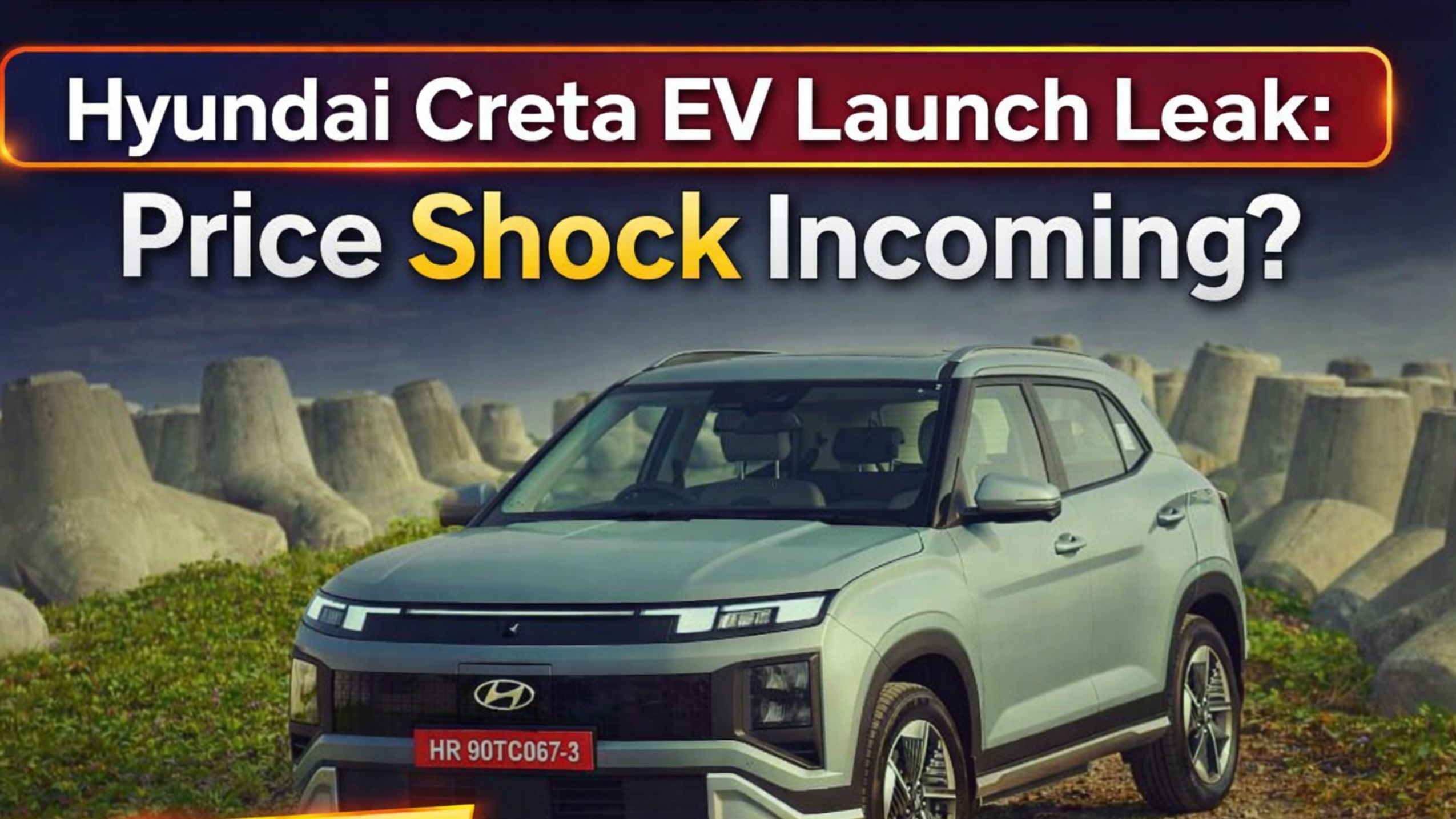
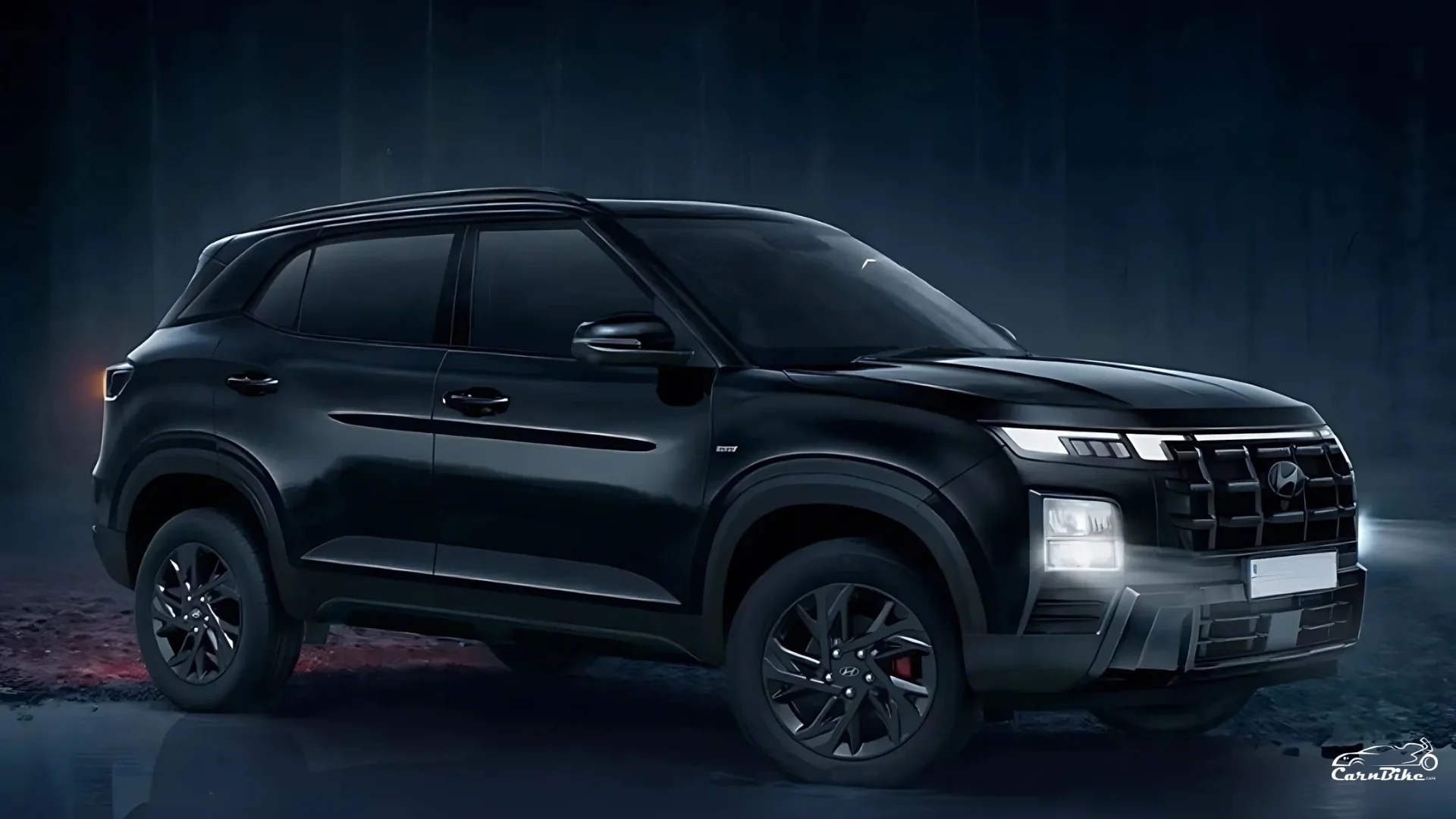
- Front fascia: The new Creta draws major design inspiration from the Hyundai Crater concept, featuring thick body cladding around the wheel arches, a faux skid plate, a muscular build and an upright bonnet. Thick LED daytime running light treatment is expected, similar to the new Hyundai Santa Fe and Tucson, alongside Venue-inspired LED headlamps.
- Branding: A new 4-dot Hyundai logo replaces the current badge, in line with Hyundai's latest global design language.
- Rear: Connected LED tail lamps with pixel-type elements and a newly designed tailgate are expected.
- Wheels: Larger 19-inch alloy wheels have been spotted on test mules, though it's worth noting some reports suggest this size may not make it to the India-spec version.
- Overall stance: Ditching the current model's softer, rounded shape, the new Creta is substantially larger, more muscular, and carries a boxy silhouette — a significant departure from today's smoother, more rounded design.
- Silhouette details: Spy shots also reveal dual-tone ORVMs with integrated turn signals, a shark-fin antenna and a slightly tapering roofline.
Bigger Dimensions & New Platform
This is arguably the most consequential change of the entire generation, because it touches everything else on this list.
The move to the K3 platform is expected to increase the Creta's length from the current 4,330mm to around 4,500mm, a jump of roughly 170mm. The wheelbase is expected to grow from 2,610mm to around 2,690mm, which directly translates to more rear-seat legroom. The current Creta measures 4,330mm long, 1,790mm wide and 1,635mm tall, and the new model is expected to grow in width and height as well, not just length.
For a real-world preview of what this platform delivers, look no further than the Seltos: the second-generation Seltos, on the same K3 platform, grew by 95mm in length to 4,460mm and by 80mm in wheelbase to 2,690mm compared to its predecessor. The Creta is expected to follow a similar — if slightly larger — trajectory.
On practicality, the usable boot space could increase to around 450-460 litres, up from the current 433 litres, though it likely still won't match the Sierra's segment-leading 622-litre capacity. Beyond size, the K3 platform promises improvements in structural rigidity and crash safety, better NVH (noise, vibration and harshness) control, and improved cabin packaging.
Cabin & Interior Upgrades
The interior is where the "next-gen" feeling will likely be most obvious to anyone stepping inside.
- Massive central screen: Spy images reveal a massive freestanding touchscreen — reported at around 14.6 inches — replacing the current dual-screen layout, with some reports suggesting the unit could be even bigger, possibly larger than 15 inches.
- Smaller driver display: Instead of a full digital instrument cluster, the new Creta gets a smaller, slimmer driver display for essential information, with most functions controlled through the central screen for a cleaner, more minimalist dashboard.
- Gear selector relocation: A column-mounted shift-by-wire gear selector is expected, similar to what's already used in the Hyundai Creta Electric and Kia Carens Clavis EV.
- Premium touches: Physical buttons on the steering wheel are retained for essential functions alongside the touchscreen, reducing over-reliance on touch controls.
- Comfort features: Ventilated seats, a panoramic sunroof and enhanced connected-car technology are expected, along with ventilated rear seats.
- Rear passenger comfort: A dedicated "Zero-Gravity" seat button on the front passenger side reclines the seat fully and extends a leg ottoman for executive-class comfort, building on the current model's Boss Mode concept. Dedicated rear air vents and adjustable headrests for all three rear occupants are also expected.
- Materials: Many of the primary touchpoints appear to use soft-touch materials and premium trims, though final confirmation awaits clearer images.
Technology Upgrades
This is where the next-gen Creta genuinely breaks new ground for the brand in India.
The new Creta will evolve into a Software Defined Vehicle (SDV), built around Hyundai's new Pleos Connect system, which integrates infotainment, instrumentation and connectivity into one central interface. This system will first appear globally in the Grandeur sedan in South Korea and the Ioniq 3 in Europe before making its way to India in the Creta.
Key features expected as part of this tech leap:
- An AI assistant called Gleo, along with a modular app market
- Wireless Apple CarPlay and Android Auto — a feature currently missing on the existing Creta
- Over-the-air (OTA) software updates, which the brand says will extend beyond software to mechanical and performance-related updates
- Split-screen functionality and three-finger gesture controls for repositioning or closing app windows
- Hyundai has also showcased a new Android Automotive Operating System that could begin debuting in the Creta from Q1 CY2027, suggesting the software rollout may happen in phases
Safety Upgrades
Safety tech is expected to take a significant step up alongside the mechanical changes.
The current Hyundai Creta already offers 6 airbags, electronic stability control, hill-start assist control, a tyre-pressure monitoring system and rear parking sensors as standard, with higher variants adding Hyundai SmartSense Level 2 ADAS features like lane-keeping assist, forward collision avoidance, blind-spot collision warning, rear cross-traffic avoidance and smart cruise control with stop-and-go.
For the next generation, expect this to expand meaningfully: the current Creta offers a Level 2 ADAS suite with 20 safety features, while the next-gen model is expected to get a more extensive Level 2+ suite — similar to the new Seltos's 28 features — potentially including navigation-based smart cruise control, frontal collision warning and junction-crossing assist. Earlier spy shots have also revealed dual front radars, hinting at more advanced autonomous safety functions. The improved K3 platform itself is also expected to bring better crash structure and higher safety ratings out of the gate.
Hybrid Engine Could Be the Biggest Upgrade
If there's one single change that could redefine the Creta's value proposition, it's this. The next-gen Creta is expected to become Hyundai's first strong hybrid offering in India, a genuine first for the nameplate.
At launch, the SUV is likely to retain its existing 1.5-litre naturally aspirated petrol, 1.5-litre turbocharged petrol and 1.5-litre turbocharged diesel engines, with both manual and automatic transmission choices, and a strong hybrid variant is expected to be introduced sometime after the initial launch rather than from day one. There's some difference of opinion on exactly what powers this hybrid: one report points to a new 1.2-litre turbocharged petrol engine currently in development, which is hybrid-ready and might first debut in the Hyundai Bayon, while others describe it more generally as an electrified version of the existing 1.5-litre petrol unit. Either way, this would put the Creta in direct competition with hybrid rivals like the Maruti Grand Vitara/Victoris and Toyota Urban Cruiser Hyryder for the first time.
On the AWD front, top variants are expected to get all-wheel drive paired with a multi-link rear suspension, as seen in recent spy shots — another first if it makes it to the India-spec car.
Performance & Ride Quality Improvements
Even without new engines at launch, the switch to K3 architecture is expected to noticeably change how the Creta drives and feels.
The new platform promises improvements in structural rigidity, better NVH levels, and improved cabin packaging that unlocks more interior space. Looking at how this plays out on the related Seltos gives a useful real-world reference: Autocar India notes the new Seltos has a comfort-oriented suspension setup that absorbs broken roads well without feeling unsettled at highway speeds, which bodes well for how the similarly-underpinned Creta might ride. The longer wheelbase should also translate into a more stable, planted feel on the highway, alongside genuinely improved rear-seat comfort thanks to the extra legroom.
Hyundai Creta Next Gen vs Current Creta
Hyundai Creta Next Gen vs Rivals
The best way to judge where the next-gen Creta will land is to look at its already-launched platform-sibling, the new Kia Seltos, plus the rest of the segment as it stands today.
The most telling data point here is the Seltos, since it's essentially a preview of the Creta's future underpinnings. The new Seltos's starting price is higher than the outgoing Creta's by just Rs 26,000, despite the substantial platform, size and tech upgrades it brings — a reasonable indication that Hyundai can likely pull off a similar jump without pricing the Creta out of reach. However, on outright feature count, even the new Seltos misses out on a powered tailgate (offered by the Victoris, Duster, Sierra and Curvv) and a passenger display (offered by the Sierra) — so segment leadership on paper won't automatically mean winning every single feature battle.
Expected Price
Hyundai hasn't announced official pricing, and given the launch is still roughly six to nine months away, treat these purely as estimates.
CarWale's current projection places the next-gen Creta facelift price in the range of Rs 11.00 lakh to Rs 21.50 lakh, a modest premium over today's Rs 10.91–20.11 lakh range. This tracks closely with what happened when Kia updated the Seltos onto the same platform: the new Seltos's starting price rose by just Rs 20,000 over the outgoing model, despite the much bigger dimensional and technological leap. If Hyundai follows a similar pricing philosophy — larger, more capable car, but a restrained increase — a starting price around Rs 11–11.5 lakh and a top-end price near Rs 21–21.5 lakh (likely for a hybrid or AWD variant once those arrive) looks like a realistic expectation.
Should You Wait for the Next-Generation Hyundai Creta?
Wait if: You want the hybrid powertrain, the bigger cabin and boot, the new Pleos Connect tech, or simply the most modern version of the segment's best-selling SUV — especially since Autocar India's advice column notes big launches can sometimes slip by a month or two to align production and dealer stock, so a little patience may be needed regardless. Given the launch is realistically 6-9 months out, this is a genuinely long wait, so only hold off if these specific upgrades matter to you.
Buy now if: You need a car in the next few months, want to lock in current pricing and heavier year-end discounts on outgoing stock, or don't specifically need the hybrid/bigger platform. The current Creta remains a thoroughly competent, well-equipped SUV with a strong safety package and a wide engine choice — it isn't being replaced because it's a bad car, but because the segment is moving forward around it.
If the hybrid engine specifically is your main interest, it's worth noting that even after the base next-gen Creta launches, the hybrid variant is expected to follow later — so buyers specifically wanting a hybrid Creta may face an even longer wait than those happy with the standard petrol or diesel versions.
Conclusion
The next-generation Hyundai Creta isn't a cosmetic refresh — it's a genuine platform and technology transformation, arguably the biggest change this nameplate has undergone since it first launched in India. A larger body, a longer wheelbase, a completely reimagined software-driven cabin, an expanded ADAS suite, and for the first time — a hybrid powertrain option together represent Hyundai's clearest statement yet that it intends to keep the Creta at the top of the segment rather than let newer rivals like the Seltos, Sierra and Victoris close the gap. The core recipe that made the Creta India's favourite mid-size SUV isn't changing; Hyundai is simply modernising every layer around it. Expect an official reveal around the 2027 Bharat Mobility Show, with a market launch to follow shortly after and expect the wait to be worth it for anyone chasing the segment's most advanced package.
Book a Test Drive
Free doorstep test drive at your convenience
Popular Brands





Latest Car News
Tata Altroz vs Maruti Suzuki Brezza: Which One Should You Buy in 2026?
Wagon R vs Swift: Which Is Cheaper to Maintain?
BMW 7 Series Facelift Interior Updates: Know Everything

How to Check Oil Level in Car: Step-by-Step Guide

Latest Cars Under ₹5 Lakh in India in September 2026

Maruti Alto K10 September Offers: Get Up to ₹62,500 Savings on Purchase
Tata Tigor Facelift Under ₹6 Lakh: A New Budget Sedan Is Coming
Hyundai Creta August 2026 Sales: With 16,288 Units Becomes India's Best-Selling Mid-Size SUV
Maruti Baleno Facelift Booking Price: Expected Booking Amount, EMI & Loan Calculation

Kia Sorento 6 Seater vs 7 Seater: Which One Should You Choose?

Kia Sorento AI Assistant Explained: Features, Commands, and Indian Language Support
What Is the Difference Between Tata Curvv and New Curvv Series X?

Tata Car Sales August 2026: Model-Wise Sales & Growth Report

Car Sales Report of August 2026: Tata Motors, Maruti, Mahindra Lead Growth
Pajero 2026 vs Fortuner: Which SUV Could Be Better?
Volvo EX90 Booking Price: Expected Booking Amount, EMI & Loan Calculation
Next Generation Tata Nexon 2027: Expected Launch, Price, Design & Features
MG Hector Tomahawk EV Variant-Wise Price & Features Comparison

Maruti Baleno Facelift vs Toyota Glanza: Complete Comparision
Upcoming Cars in September 2026 in India: New Cars, Launch Dates & Expected Prices