Hyundai Creta vs Kia Seltos – Which is the Best Mid-Size SUV?
- Cars
- Published: 10 Feb, 2026
- Updated: 09 Sep, 2026

Book a Test Drive
Free doorstep test drive at your convenience
Two SUVs. One segment. A rivalry that just won't quit. For years, deciding between the Hyundai Creta and Kia Seltos has felt like picking a side in India's biggest automotive tug-of-war, and in 2026, the stakes just got higher. Kia has thrown down the gauntlet with an all-new, second-generation Seltos, bigger and bolder than before, while Hyundai fires back with a freshly updated Creta that still commands serious loyalty on Indian roads. So which one actually deserves your hard-earned money? Grab a coffee, we're breaking down every spec, every rupee, and every real-world detail so you can walk into the showroom knowing exactly what you're getting.
Hyundai Creta vs Kia Seltos – Quick Comparison
(Prices and specs as of September 2026 and subject to change, always confirm current figures with your nearest dealer before booking.)
Creta vs Seltos – What Is Actually Different?
On paper the two look similar, both are 1.5-litre, three-engine, mid-size SUVs aimed at the same family buyer. But under the skin they're no longer as close as they used to be. The Seltos you can buy today is a brand-new second-generation model that sits on Kia's new K3 platform, launched in India at a starting price of Rs 10.99 lakh. Hyundai Creta, on the other hand, is still built on a reinforced version of Hyundai's older K2 platform, updated through a facelift rather than a ground-up redesign.
That single fact explains most of the differences you'll read below: the Kia Seltos is now physically bigger, carries a fresher safety architecture, and has newer infotainment hardware, while the Creta counters with a longer market track record, a wider dealer network, and (for now) a lower starting price.
Which SUV Has Better Design and Road Presence?
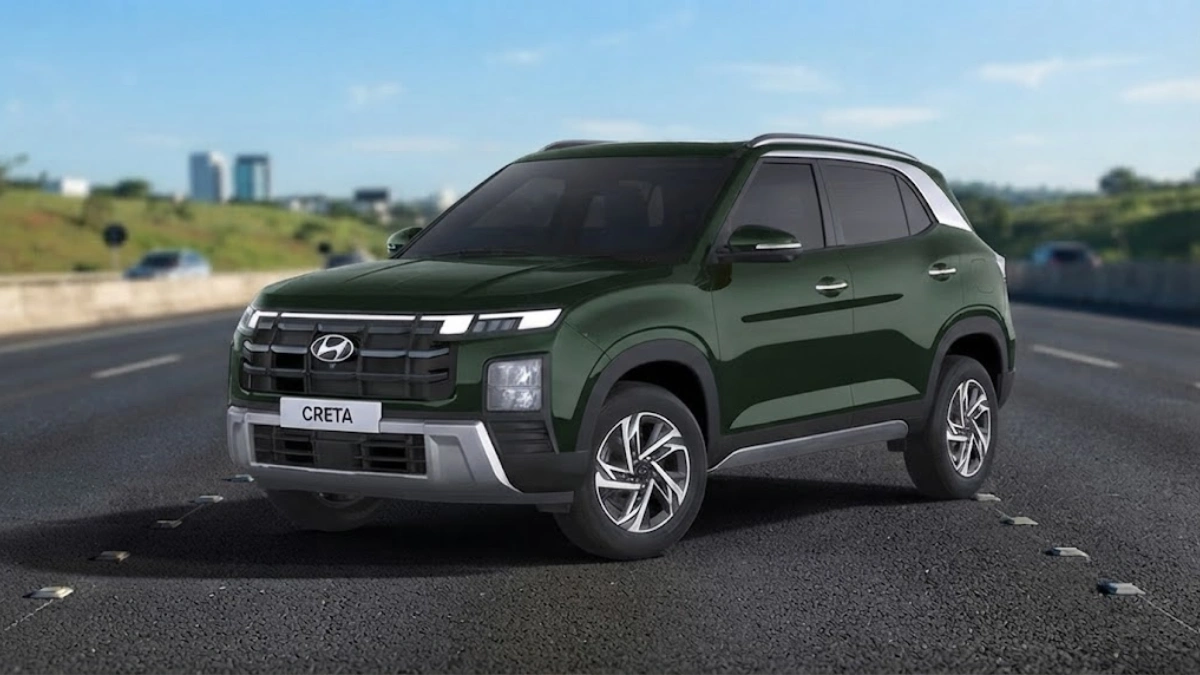
The Creta's current design leans on a bold front fascia with connected LED elements and a chunky, upright stance that's aged well since its last update. It looks premium without shouting for attention, a safe choice if you want your SUV to blend in at a corporate car park just as easily as a family gathering.
The new Seltos goes the other way. With its larger footprint, 4460mm in length and 1830mm in width against the Creta's 4300mm and 1790mm, it simply looks and feels bigger on the road. Kia has also given it a sharper LED light signature and a wider stance, so if road presence and a more assertive look matter to you, the Seltos currently has the edge purely on size and stance.
Creta vs Seltos: Which Has More Space?
This is where the new Seltos' bigger dimensions translate directly into buyer benefit. With a 2690mm wheelbase against the Creta's 2610mm, the Seltos has 80mm more room between its axles, which usually shows up as extra rear knee room. Boot capacity tells the same story: 447 litres in the Seltos versus 433 litres in the Creta, enough for an extra soft bag or a second stroller on a family trip.
That said, the Creta isn't cramped by any means, it still comfortably seats five adults with reasonable rear legroom, and its slightly narrower body can actually be an advantage in tight city lanes and multi-level parking. If outright interior and boot space is your priority, though, the Seltos edges ahead this generation.
Hyundai Creta vs Kia Seltos – Engine & Performance Compared
Both SUVs offer the same three-engine strategy that's become standard in this segment:
Hyundai Creta:
- 1.5L naturally aspirated petrol – 115hp
- 1.5L turbo-petrol – 160hp
- 1.5L diesel – 116hp, offered with manual, IVT, torque-converter automatic and DCT options depending on variant.
Kia Seltos (2nd gen):
- 1.5L NA petrol – 113bhp/145Nm
- 1.5L turbo-petrol (T-GDI) – 157bhp/253Nm
- 1.5L turbo-diesel – 114bhp/250Nm, paired with 6-speed manual, CVT, iMT, DCT or torque-converter automatic gearboxes across the range.
On paper, the power figures are nearly identical because both companies draw from the same Hyundai-Kia engine family. The turbo-petrol DCT variants of both cars are the enthusiast's pick, quick, refined, and the most fun to drive in daily traffic. If outright performance numbers are your deciding factor, there's genuinely very little to separate the two; this comparison will likely come down to gearbox refinement and tuning preference rather than raw specs.
Which SUV Gives Better Mileage?
Both SUVs are closely matched on fuel efficiency too:
- Hyundai Creta: ARAI-claimed mileage ranges from 17 to 21.8 kmpl depending on engine and transmission.
- Kia Seltos: claimed mileage ranges from 17.0 to 20.7 kmpl across its variants.
The Creta's top-end figure is marginally higher, largely thanks to its diesel-manual combination, which tends to be the most fuel-efficient configuration in this segment. If mileage is your single biggest concern, the diesel-manual variants of either car, but especially the Creta, are worth a closer look.
Which Is Safer – Hyundai Creta or Kia Seltos?
This is currently the Seltos' strongest card. The new-generation Seltos has already been tested and has secured a 5-star Bharat NCAP rating for both adult and child occupant protection, backed by 24 standard safety features including six airbags, ABS with EBD, and Electronic Stability Control, plus Level 2 ADAS with 21 features such as adaptive cruise control and automatic emergency braking on higher variants.
The Creta's situation is a little more nuanced. As of 2026, the current Creta has not received a published Bharat NCAP rating, and the only official score available is from an older, lower-specification version tested by Global NCAP in 2022, which scored 3 stars for both adult and child occupant protection. Importantly, that test was conducted on a car with fewer airbags, the current Creta comes with 6 airbags as standard across every variant, from base to top-end, and industry expectation is that a reinforced structure should perform meaningfully better whenever it is formally tested. Until Bharat NCAP publishes an official result for the current Creta, though, it's not something we can confirm, and that uncertainty is a genuine point in the Seltos' favour for a safety-first buyer right now.
Creta vs Seltos – Price & Variant Comparison
At the entry level, the two are almost neck and neck: the Creta starts at ₹10.91 lakh against the Seltos' ₹11.00 lakh, a gap of less than ₹10,000. Where the pricing starts to diverge is at the top end. The Creta's range-topping Diesel King Knight AT tops out at ₹20.11 lakh, while the Seltos' fully-loaded X-Line(O) diesel automatic goes up to ₹21.82 lakh, roughly ₹1.7 lakh more for the flagship trim.
In terms of variant spread, the Creta has the deeper lineup with around 40 variants across its E, EX, EX(O), S(O), SX and SX Premium trims (plus special editions), giving buyers finer control over budget vs features. The Seltos' new-generation lineup is comparatively fresher and slightly leaner, but still spans a full range from base HTE trims up to the sporty X-Line.
Which SUV Is Cheaper to Own?
This is harder to call definitively for the new Seltos since it only launched in January 2026, long-term service cost and resale data are still being established. That said, a few practical factors matter here:
- Service network: Hyundai has a considerably larger dealer and service network across India than Kia, which typically means shorter wait times and easier access to spare parts, especially outside metro cities.
- Resale value: The Creta has been India's best-selling mid-size SUV for years, and that sales volume historically supports stronger resale value and a larger used-car market.
- Running costs: Fuel efficiency is close enough between the two that it won't meaningfully move your monthly costs either way.
Overall, if long-term ownership convenience and resale confidence matter more to you than having the newest platform, the Creta currently has the edge, simply on the strength of Hyundai's larger, more mature service ecosystem in India.
Which SUV Should You Buy Based on Your Needs?
- Safety-first family buyer: Go with the Seltos, its confirmed 5-star Bharat NCAP rating is hard to ignore.
- Buyer who wants maximum space and road presence: The Seltos, thanks to its larger dimensions and bigger boot.
- Buyer prioritizing service network and resale value: The Creta, backed by Hyundai's wider dealer footprint and stronger track record.
- Budget-conscious buyer wanting the lowest entry price: The Creta, marginally cheaper at the base variant.
- Buyer who wants the newest tech and platform: The Seltos, being the freshly-launched second generation.
- Mileage-focused buyer: The Creta, with a slightly higher top-end ARAI figure.
Hyundai Creta vs Kia Seltos – Which One Should You Buy?
If you had to pick just one axis to decide on, let it be this: the Seltos wins on space, safety certification, and freshness because it's a genuinely new-generation product; the Creta wins on ownership peace of mind, dealer reach, and proven reliability because it's a known quantity with years of real-world data behind it. Neither is a "wrong" choice, it comes down to whether you value being an early adopter of the newer platform, or backing the safer, more established bet.
Our Opinion
If we had to recommend one SUV today, it would lean toward the Kia Seltos, mainly on the strength of its confirmed 5-star Bharat NCAP rating, larger cabin, and genuinely new platform, all while pricing at the entry level stays nearly identical to the Creta. However, if Hyundai's after-sales network in your city is significantly stronger than Kia's, or if you simply prefer buying into a known, long-running nameplate, the Creta remains a thoroughly sound and slightly more affordable choice. Our honest advice: test-drive both before deciding, on-road comfort and cabin feel are subjective enough that this comparison should end with your own seat time, not just a spec sheet.
Book a Test Drive
Free doorstep test drive at your convenience
Popular Brands





Latest Car News
BMW 7 Series Facelift Interior Updates: Know Everything

How to Check Oil Level in Car: Step-by-Step Guide

Latest Cars Under ₹5 Lakh in India in September 2026

Maruti Alto K10 September Offers: Get Up to ₹62,500 Savings on Purchase

Tata Tigor Facelift Under ₹6 Lakh: A New Budget Sedan Is Coming
Hyundai Creta August 2026 Sales: With 16,288 Units Becomes India's Best-Selling Mid-Size SUV
Maruti Baleno Facelift Booking Price: Expected Booking Amount, EMI & Loan Calculation

Kia Sorento 6 Seater vs 7 Seater: Which One Should You Choose?

Kia Sorento AI Assistant Explained: Features, Commands, and Indian Language Support
What Is the Difference Between Tata Curvv and New Curvv Series X?

Tata Car Sales August 2026: Model-Wise Sales & Growth Report

Car Sales Report of August 2026: Tata Motors, Maruti, Mahindra Lead Growth
Pajero 2026 vs Fortuner: Which SUV Could Be Better?
Volvo EX90 Booking Price: Expected Booking Amount, EMI & Loan Calculation

Next Generation Tata Nexon 2027: Expected Launch, Price, Design & Features
MG Hector Tomahawk EV Variant-Wise Price & Features Comparison

Maruti Baleno Facelift vs Toyota Glanza: Complete Comparision
Upcoming Cars in September 2026 in India: New Cars, Launch Dates & Expected Prices
MG Hector Hawk SUV vs Tata Harrier: Expected Price, Features & Key Differences
Skoda Superb Diesel in India: Will the Diesel Engine Make a Comeback?