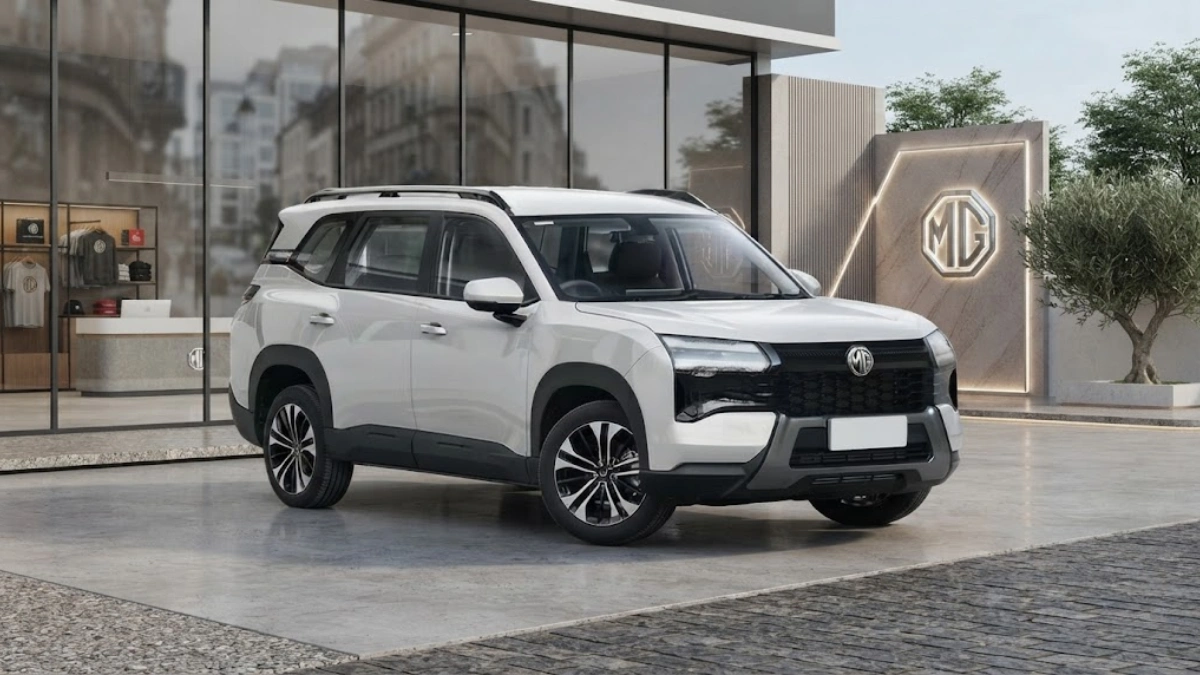
Tata Aeris Petrol vs CNG: Which One Should You Buy for Daily Use?
- Cars
- Published: 28 Sep, 2026
Book a Test Drive
Free doorstep test drive at your convenience
Choosing between the Tata Aeris petrol and CNG is not just about the ₹1 lakh price difference. It depends on how much you drive, where you drive and how much boot space you need.
If you drive around 1,500 km or more every month, mainly in the city, CNG can help reduce running costs. For lower monthly usage, frequent highway trips or better boot space, petrol may be more practical. This guide compares both options on running cost, performance, boot space, convenience, safety and resale to help you choose the right Aeris for your daily use.
The Two Powertrains
Both versions use Tata's 1.2-litre three-cylinder engine, offered with a 5-speed manual or 5-speed AMT. The petrol makes 86hp and 113Nm, while the CNG version makes 76hp and 97Nm. These are the same powertrains as the pre-facelift Tigor and the current Tiago.
Price: What the CNG Premium Really Is
Ex-showroom (Delhi), introductory prices:
The pattern is simple: CNG costs about ₹1 lakh more than the same petrol variant, and AMT costs about ₹50,000 more than the manual. So a CNG AMT carries roughly ₹1.5 lakh over a petrol manual of the same trim. Only the base variant is restricted, while all the others let you choose petrol or CNG with manual or AMT.
Running Cost: The Number That Decides It
This is the section to read carefully. CNG's edge over petrol depends on today's fuel prices, and the gap has narrowed. CNG in New Delhi was ₹86.98 per kg on 27 September 2026, and it costs more in other cities: ₹97 in Bangalore and ₹112 in Hyderabad. With petrol at roughly ₹95 a litre in Delhi, a kilogram of CNG saves you far less than it did a few years ago.
I could not find official ARAI mileage figures in the launch coverage. One report expects the petrol version to return around 16kmpl in real-world use. On a review platform, User posted within days of launch, claims about 20.8 kmpl petrol and 28.9 km/kg CNG. I would not rely on it. It is one unverified data point, and real-world figures depend on traffic, load and driving style.
Worked example (assumptions, not official figures):
- Petrol: ₹95 per litre at 16 km per litre gives about ₹5.9 per km.
- CNG: ₹87 per kg at an assumed 22 km per kg gives about ₹4.0 per km.
- Saving: about ₹1.9 per km.
- Break-even on a ₹1 lakh premium: 1,00,000 ÷ 1.9 gives roughly 52,000 km.
Do this with your own numbers:
- Cost per km = fuel price ÷ km per litre (or per kg).
- Saving per km = petrol cost per km − CNG cost per km.
- Break-even km = ₹1,00,000 ÷ saving per km.
- Compare that with how many kilometres you expect to drive before you sell the car.
If your local CNG is close to petrol in price, or your real CNG mileage is lower than 22 km/kg, the break-even stretches out considerably. Confirm real-world figures with a test drive or from owners before you commit.
Performance and Driving Feel
The petrol engine has the edge in power and torque, and you will feel it in three situations:
- Overtaking and highway cruising: the CNG has about 10hp and 16Nm less to work with.
- A full car: with four or five adults and luggage, the CNG works harder.
- Hills and flyovers: petrol pulls more comfortably.
The petrol engine suits daily commutes and occasional highway runs, and offers a relaxed drive, while CNG gives lower running cost but a small compromise in highway performance. For bumper-to-bumper city driving, most people won't notice the difference. For regular 100 km-plus highway trips, they will.
Boot Space: The Biggest Practical Trade-off
The petrol Aeris has a 419-litre boot, while CNG versions drop to 227 litres. That is a large gap. The petrol boot is bigger than its main rivals: the Amaze offers 416 litres, the Aura 402 and the Dzire 382.
The CNG's 227 litres is still respectable for the segment, because Tata uses dual cylinders while its rivals all have a single CNG tank, which is expected to make it the largest CNG sedan boot in the segment. But 227 litres means:
- Two medium suitcases plus a few soft bags, not a full family trip's luggage.
- Tighter loading for strollers, big shopping runs or sports gear.
- Less flexibility if you often travel with four or five people.
If your car mostly carries one or two people and a laptop bag, this won't matter. If your weekends involve luggage, it might decide the whole choice.
Automatic Option
The AMT is available on both engines. Tata has made a CNG automatic available across much of the range, including the top trim. The AMT versions also get paddle shifters for manual control. If you want low running costs and no clutch in traffic, a CNG AMT is an unusual combination in this segment. It is also the most expensive Aeris, at ₹9.74 lakh for the top Accomplished trim.
Convenience and Daily Life
The single biggest factor is where you can fill up. If your commute passes a CNG station, or one is within a few minutes of home, CNG is easy. If the nearest one is 10 km out of your way or has long queues, the time and fuel spent getting there eats into your savings and patience. Check the CNG station map for your city before you decide.
Safety and Maintenance
Both versions share the Aeris safety package. Six airbags, three-point seatbelts with reminders for all occupants, rear parking sensors and ISOFIX anchors are standard. CNG versions also get a leak detection system. There is no independent crash-test rating for the Aeris yet.
For CNG ownership, follow good practice:
- Use only authorised CNG service centres for the kit.
- Never retrofit or tamper with the system.
- Keep the cylinders' periodic inspection and testing up to date.
- Note that CNG can put a little more heat and wear on the engine over time, so stick to the service schedule.
Resale Value
This is a new nameplate, so there is no resale history. In general, CNG cars in India sell well in the used market, especially in cities with strong CNG infrastructure, but buyers elsewhere may shy away from them. Petrol is the safer choice when you don't know where you will sell. Resale can also shift with fuel prices, so I would not build a purchase on it.
Which One Fits You?
Choose CNG if you:
- Drive 1,500 km or more every month, mostly in the city.
- Have a CNG station on your regular route.
- Travel light most of the time.
- Plan to keep the car for four or more years.
- Want an automatic with low running costs.
Choose petrol if you:
- Drive under 1,000 km a month.
- Take frequent highway or long family trips.
- Regularly carry luggage or four or five passengers.
- Live where CNG stations are scarce or crowded.
- Want the strongest resale flexibility.
Typical cases:
- Office commuter, 40 km a day in city traffic: CNG (manual or AMT), because the kilometres recover the premium.
- Family car for weekends and occasional trips: petrol, because of the boot and the power.
- First-time buyer on a tight budget: the base Smart petrol at ₹5.29 lakh, or the Smart CNG MT at ₹6.29 lakh if the mileage is high.
- Someone who wants the CNG with the most features: CNG AMT, at ₹9.74 lakh for the top trim.
Before You Book
- Test drive both versions on your own commute, and ask for a chance to load the boot.
- Work out your break-even kilometres using your city's fuel prices.
- Find your nearest CNG stations and check the queue times.
- Ask the dealer for the real on-road price for both, plus any CNG-specific charges.
- Confirm delivery timelines for the exact variant, since CNG and AMT combinations can have longer queues.
Conclusion
The Tata Aeris CNG is a smart buy for high-mileage city drivers who travel light. The Aeris petrol is the better all-rounder for lighter use, highway trips and full-family luggage. Fuel prices have narrowed CNG's advantage, so run your own break-even number before paying the extra ₹1 lakh. If that number is comfortably below the kilometres you will drive, choose CNG. If not, save the money and take the petrol.
Book a Test Drive
Free doorstep test drive at your convenience
Popular Brands





Latest Car News
Tata Aeris Petrol vs CNG: Which One Should You Buy for Daily Use?

Tata Sierra Dark Edition vs Regular Sierra: What Is Different?
Tata Altroz vs Maruti Suzuki Brezza: Which One Should You Buy in 2026?
Wagon R vs Swift: Which Is Cheaper to Maintain?

BMW 7 Series Facelift Interior Updates: Know Everything

How to Check Oil Level in Car: Step-by-Step Guide

Latest Cars Under ₹5 Lakh in India in September 2026

Maruti Alto K10 September Offers: Get Up to ₹62,500 Savings on Purchase

Tata Tigor Facelift Under ₹6 Lakh: A New Budget Sedan Is Coming

Hyundai Creta August 2026 Sales: With 16,288 Units Becomes India's Best-Selling Mid-Size SUV

Maruti Baleno Facelift Booking Price: Expected Booking Amount, EMI & Loan Calculation

Kia Sorento 6 Seater vs 7 Seater: Which One Should You Choose?

Kia Sorento AI Assistant Explained: Features, Commands, and Indian Language Support

What Is the Difference Between Tata Curvv and New Curvv Series X?

Tata Car Sales August 2026: Model-Wise Sales & Growth Report

Car Sales Report of August 2026: Tata Motors, Maruti, Mahindra Lead Growth
Pajero 2026 vs Fortuner: Which SUV Could Be Better?
Volvo EX90 Booking Price: Expected Booking Amount, EMI & Loan Calculation

Next Generation Tata Nexon 2027: Expected Launch, Price, Design & Features
MG Hector Tomahawk EV Variant-Wise Price & Features Comparison