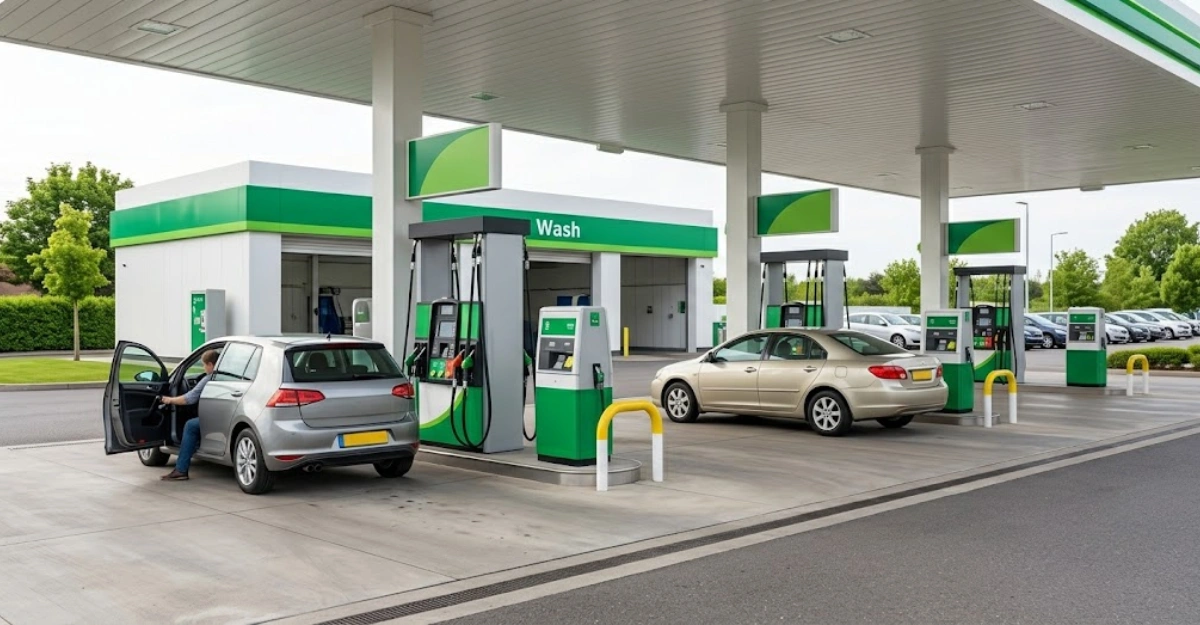
New CAFE-3 Norms Explained: What Changes for Small Cars, SUVs and EVs
- Cars
- Published: 30 Sep, 2026

Book a Test Drive
Free doorstep test drive at your convenience
India's next set of fuel-efficiency rules for passenger cars is finally official, and the biggest change may not be the number itself, but who gets relief under the new formula. The Ministry of Power has notified the CAFE-3 (Corporate Average Fuel Economy) norms, ending a lengthy debate between automakers over how India's next generation of emission targets should treat small cars, SUVs and electric vehicles.
The rules will come into effect from April 2027 and remain applicable until March 2032. They will influence how carmakers plan their future vehicle lineups, powertrains and technology investments over the next five years.
For car buyers, however, there is no immediate change to today's showroom prices or vehicle regulations. The bigger impact is likely to appear gradually as manufacturers adjust their portfolios to meet the new fleet-level targets.
So, what exactly has changed?
First, What Exactly is CAFE?
CAFE rules are designed to control the average CO2 emissions of a carmaker's entire passenger-vehicle fleet. That last part is important.
CAFE does not say that every individual car sold by a manufacturer must meet one fixed emission number. Instead, the government calculates the manufacturer's fleet performance based on the vehicles it sells. So a company can continue selling larger, higher-emission vehicles as long as its overall fleet remains within the prescribed target.
This is why CAFE rules can influence everything from the engines manufacturers develop to the number of EVs and hybrids they introduce.
CAFE-3 Starts in April 2027
The new framework will cover the FY2027-28 to FY2031-32 period, effectively running from April 2027 through March 2032. The rules apply to passenger vehicles in the M1 category, which broadly includes cars such as hatchbacks, sedans, SUVs and MPVs with up to eight passenger seats, excluding the driver. The final notification comes after more than two years of consultation and disagreement within the auto industry. The debate became particularly intense around one question:
Should India's smallest cars receive special treatment?
The final answer is no.
Small Cars Don't Get a Separate Exemption
One of the biggest talking points surrounding CAFE-3 was a proposed concession for very lightweight petrol cars.
An earlier September 2025 draft proposed a 3g/km concession for petrol cars weighing up to 909 kg. Maruti Suzuki had pushed for such relief, while several other manufacturers, including Tata Motors and JSW MG Motor, opposed the separate carve-out. The government has now removed that separate concession from the final rules.
But that doesn't mean lightweight cars have simply been left at a disadvantage.
Instead of creating a special category for sub-909 kg cars, the government has changed the main formula used to calculate the emission target for each manufacturer's fleet. That distinction is important because the final formula itself provides relatively softer targets for lighter fleets than the earlier proposal would have.
So How Does the New Weight Formula Work?
CAFE-3 continues to use vehicle weight as one of the factors in determining a manufacturer's target.
The final notification moves the reference weight to 1,229 kg, compared with 1,170 kg in the September 2025 draft. The weight adjustment also becomes flatter, with the annual multiplier declining from 0.00158 in FY28 to 0.00131 in FY32. In simple terms, the final system changes the way different fleets are treated rather than handing one specific category of small cars a separate concession.
For example, under the final formula, a 909-kg car has an FY28 target of around 82.8g/km, while a 2,500-kg vehicle has a target of around 142.4g/km.
The difference becomes clearer when compared with the earlier draft. The 909-kg car would have faced a roughly 76g/km target under that proposal, while the 2,500-kg vehicle was looking at around 151.4g/km.
So the final formula is relatively more forgiving toward lighter vehicles than the earlier draft, while making the target tougher for very heavy vehicles.
What Does This Mean for Small-Car Buyers?
For buyers of hatchbacks and other entry-level cars, the immediate answer is: nothing changes from tomorrow morning. CAFE-3 doesn't suddenly make today's small cars more expensive or change their fuel-efficiency ratings.
The potential impact comes later.
Manufacturers will have to make their overall fleets more efficient from April 2027. They can achieve that through better engines, lighter vehicle technology, hybrids, EVs and other efficiency improvements. So the small-car segment is not being exempted, but it also isn't being directly targeted with a new individual-car penalty.
What happens to prices will depend on how manufacturers choose to absorb the cost of meeting the new standards.
What About SUVs?
The answer is more nuanced than simply saying "SUVs get an advantage."
CAFE-3 still accounts for vehicle weight when calculating the target. Heavier vehicles are allowed higher emission targets than lighter ones, but the final formula is stricter for very heavy vehicles than the earlier draft would have been. That means manufacturers with large SUV-heavy fleets will still need to improve their overall efficiency.
A company selling large numbers of petrol and diesel SUVs could therefore need to balance those sales with more efficient vehicles, including hybrids and EVs, to keep its fleet average within the prescribed limit. For buyers, this could eventually influence the powertrain choices manufacturers offer, rather than eliminating SUVs from their lineups.
EVs Get One of the Biggest Compliance Advantages
Electric vehicles remain a major tool for manufacturers under CAFE-3.
The final rules retain the super-credit system, under which cleaner vehicles can count as more than one vehicle for compliance calculations. A battery electric vehicle gets a 3x factor, meaning one BEV can be treated as three vehicles when calculating the manufacturer's fleet performance. Range-extended electric vehicles also receive a 3x factor.
Other powertrains receive different multipliers:
- Battery EVs: 3x
- Range-extended EVs: 3x
- Plug-in hybrids and strong hybrids using flex-fuel: 2.5x
- Strong hybrids: 1.6x
- Flex-fuel vehicles: 1.1x
These credits give manufacturers another way to bring down their fleet-average emissions without making every vehicle in their portfolio electric.
Why Does the 3x EV Credit Matter?
Imagine a manufacturer selling 100 cars, with only a portion of them being electric.
Under a normal counting system, every vehicle contributes one unit to the fleet calculation. But under the CAFE-3 super-credit system, an EV effectively carries more compliance weight. That gives manufacturers a financial and regulatory reason to increase EV sales because a growing electric portfolio can help offset emissions from their petrol and diesel models.
This doesn't mean every manufacturer will suddenly turn its entire lineup electric. But it creates a strong incentive to keep expanding EV offerings.
A New Credit-Debit System Adds More Flexibility
CAFE-3 also introduces a credit-debit mechanism. If a manufacturer performs better than its prescribed target, it can earn credits. If it falls short, it accumulates debits.
These are recorded in a manufacturer-level passbook, allowing companies some flexibility in managing compliance across the regulatory period. Credits can also be carried forward within the relevant compliance block and traded between manufacturers.
The first compliance block covers FY28-FY30, while the second covers FY31-FY32.
There is also a mechanism for manufacturers with a remaining deficit to buy credits from the Bureau of Energy Efficiency. The prescribed buyout price starts at ₹2,500 per gram of CO2 per kilometre in FY28 and rises by ₹500 each year to ₹4,500 in FY32.
What Happened to Hydrogen Cars?
Hydrogen fuel-cell vehicles were given a super-credit in an earlier proposal, but they do not appear in the final super-credit table. That leaves battery EVs with one of the strongest compliance multipliers under the final framework.
Will CAFE-3 Make Cars More Expensive?
This is where buyers need to wait and watch rather than expect an immediate answer.
The CAFE notification itself does not announce a price increase for petrol cars, SUVs, hybrids or EVs. However, meeting stricter fleet-level efficiency requirements can require manufacturers to invest in:
- More efficient engines
- Hybrid technology
- EV platforms
- Lightweight materials
- Improved transmission technology
- New emission and efficiency technologies
How much of that cost eventually reaches customers will depend on each manufacturer's strategy. Therefore, it would be premature to say that CAFE-3 will automatically make small cars or SUVs ₹X more expensive.
What CAFE-3 Could Mean for Different Buyers
If you're buying a small car
Don't expect an immediate price or specification change because of CAFE-3. Over the next few years, however, manufacturers may increasingly focus on improving engine efficiency, reducing weight and adding electrified powertrains to their portfolios.
If you're buying an SUV
The new rules don't mean SUVs are being pushed out. However, manufacturers with heavier fleets will still have to manage their average emissions, which could encourage more efficient engines, hybrid versions and EV alternatives.
If you're considering an EV
The 3x super-credit gives manufacturers a clear compliance incentive to sell more battery-electric vehicles. That could support a wider range of EVs in the market as companies plan their portfolios for the 2027-32 CAFE period.
If you're planning to buy a car in 2026
There is no reason to treat CAFE-3 as an immediate buying deadline.
The new rules start in April 2027, so today's purchase is governed by the regulations currently applicable to the vehicle. For most buyers, CAFE-3 is more relevant as a signal of where India's car market is heading over the next five years.
Why CAFE-3 Could Change the Cars We See in Showrooms
The biggest effect of CAFE-3 may not be visible on launch day.
It could show up gradually in the products manufacturers introduce between 2027 and 2032.
Automakers will have to think about their entire fleet rather than individual models. A company selling large numbers of petrol SUVs may need more efficient models elsewhere in its portfolio. Another manufacturer with a strong EV lineup may have greater flexibility because of the super-credit system. That means CAFE-3 could influence which engines, hybrids and EVs manufacturers choose to develop and how quickly those technologies reach different segments.
Conclusion
CAFE-3 has finally settled one of the auto industry's most closely watched regulatory debates. There will be no separate special concession for small cars, but the government has changed the broader weight-based formula rather than simply imposing the earlier draft's targets. The final framework is relatively more lenient for lighter fleets than the previous proposal while setting tougher targets for very heavy vehicles. At the same time, EVs retain a significant compliance advantage through the 3x super-credit, while hybrids and flex-fuel vehicles also receive additional credit.
For car buyers, the impact won't arrive overnight. The real story will unfold from April 2027 to March 2032, as manufacturers adjust their product strategies, powertrains and technology investments to meet the new fleet targets.
So if you're buying a car today, CAFE-3 doesn't change your immediate purchase decision. But if you're looking at how India's car market could evolve over the next five years, these rules are worth keeping an eye on.
Book a Test Drive
Free doorstep test drive at your convenience
Popular Brands





Latest Car News

Buying a Skoda in October? Here's What Changes From October 1, 2026
New CAFE-3 Norms Explained: What Changes for Small Cars, SUVs and EVs
Tata Aeris Petrol vs CNG: Which One Should You Buy for Daily Use?
Tata Sierra Dark Edition vs Regular Sierra: What Is Different?
Tata Altroz vs Maruti Suzuki Brezza: Which One Should You Buy in 2026?

Wagon R vs Swift: Which Is Cheaper to Maintain?
BMW 7 Series Facelift Interior Updates: Know Everything

How to Check Oil Level in Car: Step-by-Step Guide

Latest Cars Under ₹5 Lakh in India in September 2026

Maruti Alto K10 September Offers: Get Up to ₹62,500 Savings on Purchase

Tata Tigor Facelift Under ₹6 Lakh: A New Budget Sedan Is Coming

Hyundai Creta August 2026 Sales: With 16,288 Units Becomes India's Best-Selling Mid-Size SUV
Maruti Baleno Facelift Booking Price: Expected Booking Amount, EMI & Loan Calculation

Kia Sorento 6 Seater vs 7 Seater: Which One Should You Choose?

Kia Sorento AI Assistant Explained: Features, Commands, and Indian Language Support
What Is the Difference Between Tata Curvv and New Curvv Series X?

Tata Car Sales August 2026: Model-Wise Sales & Growth Report

Car Sales Report of August 2026: Tata Motors, Maruti, Mahindra Lead Growth
Pajero 2026 vs Fortuner: Which SUV Could Be Better?
Volvo EX90 Booking Price: Expected Booking Amount, EMI & Loan Calculation