Is an EV Car Coming for ₹5 Lakh? A Major Shift in the Indian Auto Market
- Electric-Cars
- Published: 10 Apr, 2026
Book a Test Drive
Free doorstep test drive at your convenience
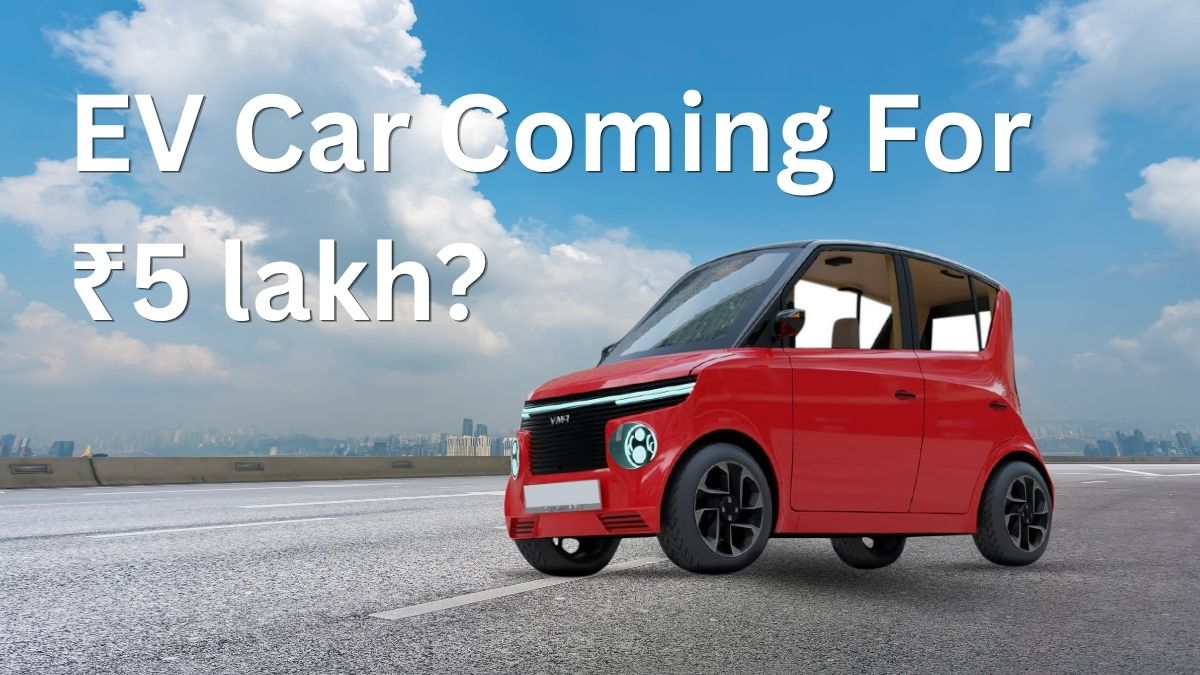
The Indian automobile industry is standing at the edge of a historic transformation. With rising fuel prices, increasing environmental concerns, and rapid technological advancements, electric vehicles (EVs) are no longer a futuristic dream—they are becoming a present-day reality. But the biggest buzz right now is this: will India soon see an electric car priced around ₹5 lakh?
If this becomes true, it will not just be another product launch. It will be a disruptive moment that could completely reshape the Indian auto market.
The Big Question: Can a ₹5 Lakh EV Really Exist?
For years, EVs in India have been positioned in the premium or mid-range category. Most electric cars currently available start around ₹8–10 lakh and go much higher depending on features and battery capacity. This price gap has kept EVs out of reach for a large portion of India’s middle-class population.
But a ₹5 lakh electric car would change everything.
This price point sits directly in India’s most competitive entry-level car segment—the same space where many first-time car buyers make their purchase decisions. If an EV enters this bracket, it could trigger a massive shift in consumer behavior.
Why ₹5 Lakh EV Is Such a Game-Changer
India’s auto market is extremely price-sensitive. For decades, the ₹5–7 lakh range has dominated entry-level car sales. Petrol cars like hatchbacks have ruled this segment due to affordability and familiarity.
Now imagine replacing them with an electric alternative.
A ₹5 lakh EV could:
- Bring first-time buyers directly into the EV ecosystem
- Reduce dependence on petrol and diesel cars
- Accelerate EV adoption by 3x to 5x
- Force traditional automakers to rethink their strategies
In short, it would not just compete with petrol cars—it could begin replacing them in urban markets.
Who Could Make This Possible?
Industry experts believe that both Indian manufacturers and global players are exploring ultra-affordable EV platforms for India.
The strategy behind such a low-cost EV would likely include:
- Highly localized manufacturing under “Make in India” initiatives
- Simplified vehicle design to reduce production costs
- Smaller battery packs optimized for city driving
- Focus on essential features instead of luxury additions
The goal is not to build a premium electric car, but a practical and affordable mobility solution for the masses.
The Battery Cost Challenge
The biggest barrier to a ₹5 lakh EV is the battery. In most electric vehicles, the battery alone accounts for 30–40% of the total cost. This makes affordability extremely difficult.
However, there is good news.
Over the past few years, battery prices have been falling steadily due to improvements in technology and large-scale production. Lithium Iron Phosphate (LFP) batteries, in particular, are becoming popular because they are cheaper, safer, and more durable.
If this trend continues, it becomes increasingly realistic to imagine a low-cost EV entering the Indian market within the next few years.
Range Expectations: What Will Buyers Get?
A ₹5 lakh EV will not compete with high-end electric cars in terms of performance or range. Instead, it will focus on practical city usage.
Expected range could be:
- Around 150 to 250 km per charge
This is more than sufficient for most urban commuters in India, where daily travel distances are often under 40 km.
For city driving, office commutes, and local errands, such a range is completely practical.
Charging Infrastructure: Is India Ready?
One of the most common concerns about EV adoption is charging infrastructure.
The reality is that India is improving rapidly in this area. In major cities:
- Public charging stations are increasing
- Fast chargers are being installed along highways
- Residential societies are slowly adopting home charging solutions
Additionally, a ₹5 lakh EV would likely be designed with simplicity in mind—meaning overnight home charging would cover most user needs.
For urban users, this could be as simple as plugging in the car like a smartphone every night.
Running Cost Advantage: The Real Winner
Even more important than the purchase price is the running cost.
Here’s a simple comparison:
- Petrol car cost per km: ₹6–₹8
- Electric car cost per km: ₹1–₹1.5
This difference becomes huge over time. For an average driver, switching to an EV could save thousands of rupees every month.
For middle-class families, this long-term savings factor could be more attractive than the initial purchase price itself.
What Features Can We Expect?
At a ₹5 lakh price point, expectations must be realistic. Luxury features will be limited, but essential functionality will be prioritized.
A typical low-cost EV might include:
- Compact hatchback design
- Basic touchscreen infotainment system
- Air conditioning
- Power steering
- Digital instrument cluster
- Basic connected car features
The focus will be on utility, efficiency, and affordability—not premium styling or high-end performance.
Government Support: A Major Driving Force
The Indian government has been actively promoting EV adoption through various initiatives:
- FAME subsidy programs
- Tax benefits for EV buyers
- Reduced registration charges in several states
- Investment in charging infrastructure
If a ₹5 lakh EV enters the market, government subsidies could make it even cheaper in real terms—possibly bringing the effective cost even lower for buyers.
Impact on Petrol Cars and Oil Consumption
The introduction of a mass-market affordable EV would have wide-ranging consequences.
- Entry-level petrol car sales could decline sharply
- Fuel consumption across cities could reduce
- India’s dependence on imported oil could decrease
- Automakers would be forced to accelerate electrification
This would not just be a shift in cars—it would be a shift in energy consumption patterns.
Challenges That Still Remain
Despite the excitement, several challenges remain:
- Battery lifespan and replacement costs
- Limited charging infrastructure in rural areas
- Resale value uncertainty for EVs
- Range anxiety among first-time buyers
- Initial production scale limitations
These challenges will not disappear overnight. However, they are gradually being addressed through innovation and policy support.
Could This Be the “Smartphone Moment” for Cars?
Many experts compare this potential shift to the smartphone revolution.
Just as smartphones replaced feature phones, affordable EVs could eventually replace entry-level petrol cars. The key difference is accessibility.
A ₹5 lakh EV could become the tipping point that pushes electric mobility into the mainstream Indian household.
Final Thoughts
If an electric car truly arrives in India at the ₹5 lakh price point, it will mark one of the biggest disruptions in the country’s automotive history.
It would mean:
- Affordable clean mobility for the masses
- Lower running costs for consumers
- Reduced pollution in major cities
- A complete reshaping of the entry-level car market
The question is no longer whether EVs will dominate India—but how quickly the transition will happen.
And if the ₹5 lakh EV becomes reality, that future might arrive much sooner than we expect.
The Indian auto market is on the verge of a revolution. And it’s electric.
Book a Test Drive
Free doorstep test drive at your convenience
Popular Brands


Latest Electric Car News
Hyundai EV Compact SUV India Launch: Expected Price, Range & Key Details
Hybrids vs. EVs: Which Is Better for You?
Delhi EV Policy 2026 in Effect from July 1
Upcoming Electric Cars in August 2026 in India
What to Do If Your Car Battery Is Dead
Mercedes-Benz VLE Unveiled: 8-Seater EV with 700+ KM Range
Tata Sierra EV First Look: 600+ KM Range, Triple Screens & More
Top Accessories You Should Buy for Your Tata Harrier EV
Is an EV Car Coming for ₹5 Lakh? A Major Shift in the Indian Auto Market
Top Upcoming SUVs and Electric Cars in April 2026 That Could Change the Market
Bookings Open for the Mercedes-Benz CLA Electric – A New Competitor Enters India’s EV Market
Tata’s New Budget Electric Car Coming in 2026 – Is the Nano EV Making a Comeback?
Hybrid Cars vs Electric Cars in India 2026: Which Is Better?
BYD India New Electric Sedan Launched – Price & Range Revealed
Top 5 Affordable Electric Cars in India 2026 (Best Budget EVs with Long Range)
Tata vs MG EV Comparison – Which One Is Better in 2026?
Tata EV Lineup 2026 REVEALED – Full Price Breakdown
Tesla India Booking Date LEAK – Big Update!
Hyundai Creta EV Launch Leak: Price Shock Incoming?
Tata Punch EV Waiting Period Update 2026: Real Delivery Timeline vs. Company Claims