
Audi Q5 Vs Audi Q5 Sportback: Must Know Everything Before You Buy
- Cars
- Published: 07 May, 2026
Book a Test Drive
Free doorstep test drive at your convenience
Buying a luxury SUV in India is never a simple transaction. When you're writing a cheque anywhere between ₹75 lakh and ₹85 lakh on-road, the decision carries the weight of import taxes, limited service networks, depreciation realities unique to the Indian market, and the practical demands of Indian roads that no European car review will ever address. This blog exists for that exact reason.
The Audi Q5 has been one of the most consistently popular premium SUVs in India since its arrival, competing head-on with the BMW X3 and Mercedes-Benz GLC in what is arguably the most fiercely contested luxury SUV segment in the country. Its coupe-bodied sibling, the Q5 Sportback, has been revealed globally and India-bound models are expected with the latest generation. With the third-generation Q5's India launch expected around September 2026, priced in the range of ₹65 to ₹73 lakh ex-showroom, there has never been a better or more complex time to understand exactly what you are buying.
Let's go through every dimension that matters for an Indian buyer, in an Indian context, with verified Indian pricing and real-world data.
The State of the Q5 in India Right Now (May 2026)
Before comparing the two body styles, it's important to understand the market moment you're walking into.
The current second-generation Q5 (B9 platform, facelifted 2021) is the car you can buy today from an Audi India showroom. The Q5 price in India ranges between ₹65.55 lakh for the Premium Plus and ₹70.73 lakh for the Technology trim, both ex-showroom. On-road prices across cities range between ₹75.87 lakh and ₹81.85 lakh.
In November 2025, Audi introduced a limited-run Signature Line edition of the Q5 in India at ₹69.86 lakh ex-showroom. Following GST 2.0 norm implementation in September 2025, the Q5's starting price came down to ₹63.75 lakh ex-showroom.
Audi has also introduced a 10-year extended warranty and 15-year roadside assistance programme for Q5 buyers in India — a significant ownership reassurance in a market where long-term parts and service confidence has historically been a concern for luxury car buyers.
The Q5 Sportback, meanwhile, is the newer, sportier body style. The new Q5 Sportback was revealed in November 2024 with petrol and diesel engine options globally. Audi India has seen a surprisingly good uptake of both the Q3 Sportback and S5 Sportback based entirely on their added style quotient, which bodes well for eventual Q5 Sportback demand in India.
The third-generation Q5, which underpins the next chapter for both variants, is coming. It is expected to arrive via the CKD (Completely Knocked Down) route, with assembly likely at the Aurangabad facility to keep pricing competitive — the same strategy Audi has used successfully with the current Q5.
The Fundamental Difference: What Separates Them
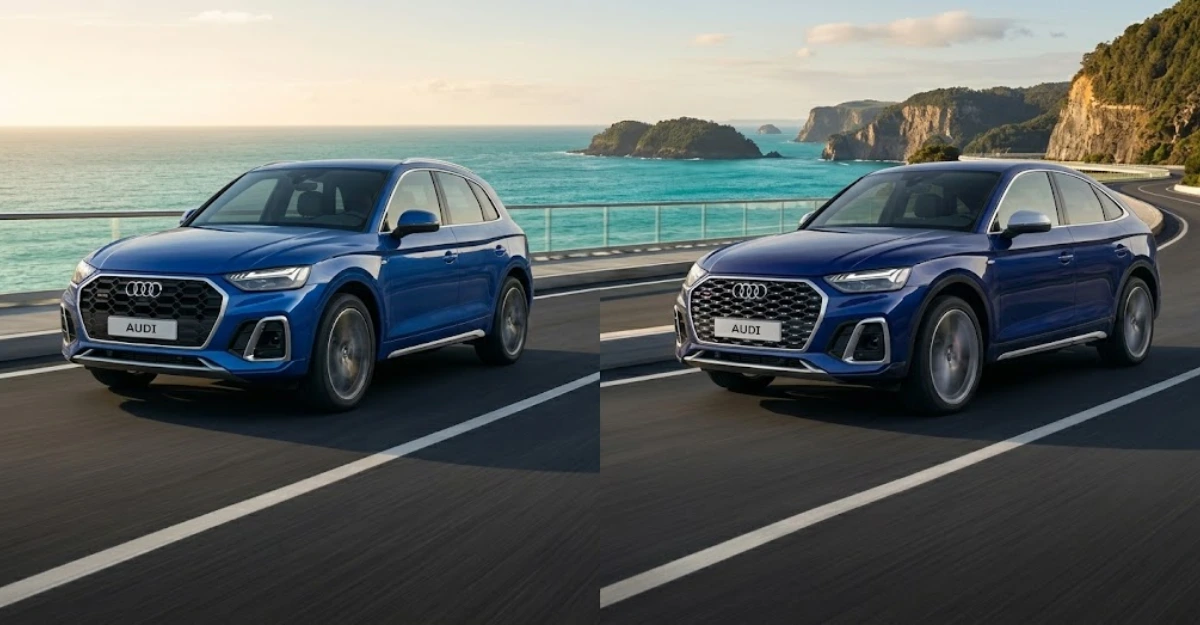
The standard Q5 is a traditional, upright luxury SUV. The Q5 Sportback takes the same mechanicals and wheelbase but adds a dramatically sloped coupe-like roofline over the rear. The wheelbase on both is identical at 2,827 mm. The Q5 measures 4,682 mm in length and stands 1,655 mm tall, with a width of 1,893 mm.
The Sportback is approximately 37 mm lower in overall height due to the sloping roofline. This is not a cosmetic change. It affects rear headroom, boot space, rear visibility, and the entire personality of the car. Everything in this comparison flows from that single architectural decision.
The Engine Story: India Gets Petrol Only
This is the first place where the Indian context diverges sharply from a global review. While the Q5 is sold with petrol, diesel, and plug-in hybrid options in European markets, there is no diesel engine on offer under the VW Group in India, and the new Q5 is no exception.
In India, both the Q5 and Q5 Sportback are powered by a single powertrain: a 2.0-litre turbo petrol engine producing 249 hp and 370 Nm of torque, paired with a 7-speed S-tronic dual-clutch automatic gearbox and quattro all-wheel drive as standard. The 0-100 km/h sprint takes 6.1 seconds.
For the incoming third generation, the 2.0-litre TFSI petrol motor is expected to produce around 204 hp and 340 Nm, supported by a MHEV Plus mild-hybrid system using a 1.7 kWh lithium-ion battery that adds up to 24 hp and 230 Nm in short bursts. The system is paired with a seven-speed S-tronic dual-clutch transmission.
Real-World Performance on Indian Roads
This is where a purely international specification sheet becomes insufficient. Indian roads are a very specific stress test for any luxury vehicle.
On Indian roads, the Q5's suspension balance works well — it manages to absorb most road imperfections without making the car feel floaty. In daily traffic, it feels effortless with light steering that makes it easy to manoeuvre in tight spaces. The NVH control is strong, with the cabin insulation keeping excessive noise out even in dense traffic.
However, there is a slightly jerky performance in stop-and-go traffic — a known characteristic of dual-clutch gearboxes at very low speeds, most noticeable in Bengaluru and Mumbai's bumper-to-bumper conditions. Selecting Comfort mode (rather than Dynamic) largely mitigates this.
The quattro AWD system, which is often treated as a luxury feature in Europe, is actually meaningfully useful in India — particularly for monsoon driving in cities like Mumbai, Chennai, and Kolkata where standing water and slippery surfaces are seasonal realities.
In Autocar India's real-world fuel efficiency testing, the Q5 achieved closer to 8 kmpl in the city and around 10 kmpl on the highway — lower than the ARAI-claimed figure of 13.47 kmpl. At current petrol prices in India (approximately ₹100–105 per litre across major cities), this translates to a monthly fuel bill of approximately ₹10,000–₹14,000 for typical urban usage patterns of 1,500–2,000 km per month.
Exterior Design: The Most Decisive Factor for Indian Buyers
Let's be direct about something that the Indian luxury car market makes very clear: in this segment, aesthetics matter enormously. A significant proportion of Q5 buyers in India are owner-drivers who also want a car that makes a statement in the office parking lot, at the five-star hotel porch, and at family events.
The standard Q5 is understated, confident, and refined. Though launched in 2018 and facelifted in 2021, it still looks smart with sharp lines and angular edges that will find favour with more discreet buyers. It is the car you choose when you want people to recognise the four rings, respect the badge, and not have to explain what a Sportback is.
The Q5 Sportback is the car for a buyer who wants more visual drama. The same front clip — identical grille, identical headlights — gives way to a dramatically swept roofline from the B-pillar backward, more pronounced rear arches, smaller rear quarter windows, and a full-width LED light bar at the back. With sporty performance must come the requisite look, and the Sportback serves as a good visual differentiator. For a car that's meant to be owner-driven, the slightly compromised rear-seat space is less of a problem.
The third-generation Q5 takes this further. The new design features an octagonal grille, sweptback Matrix LED headlamps, contrast-coloured inserts on either side of the front bumper, flush roof rails, and new wraparound LED taillights with an LED light bar on the tailgate. On larger alloy wheels, both variants will look substantially more contemporary than the current model.
Interior and Space: The India-Critical Comparison
Step inside both cars and the front cabin is essentially identical. The same MMI touchscreen, the same Virtual Cockpit, the same steering wheel, the same material quality. The incoming third generation gets a dramatically upgraded interior: a curved OLED display combining an 11.9-inch Audi Virtual Cockpit and a 14.5-inch MMI touch display, with an optional 10.9-inch passenger display. The cabin materials include sustainable options like Dinamica microfiber and recycled fabrics.
Where the two variants diverge significantly is in the rear.
Rear Headroom: The standard Q5 offers more generous headroom in the second row. The Sportback sacrifices approximately 35–38 mm due to the sloping roofline. For Indian families where three adult passengers in the rear is not unusual — think airport transfers, family functions, or long-distance trips with parents — this matters. Anyone over 5'10" (178 cm) will feel marginally compressed in the Sportback over longer journeys.
Rear Legroom: Identical on both. The wheelbase is the same. The Q5's rear bench offers good space and comfort, though the seats are a touch firm.
Boot Space: This is perhaps the most practically significant difference. The standard Q5 has a luggage carrying capacity of 550 litres. The Q5 Sportback offers approximately 510 litres with seats up and considerably less with seats folded flat — roughly 120 litres less at full extension due to the tapering roofline.
For Indian context: 550 litres comfortably accommodates four large suitcases for a family road trip from Delhi to Shimla or Goa. The Sportback's reduced 510-litre figure still accommodates three large bags, but the load bay height diminishes noticeably toward the tailgate. If you regularly take weekend getaways with full luggage or carry sports equipment, this difference becomes a genuine daily reality.
Technology: Identical Across Both Variants
The Q5 comes equipped with LED lighting, panoramic sunroof, gesture-controlled tailgate, 19-inch alloy wheels, three-zone climate control, powered front seats with lumbar support and memory function, 10.1-inch touchscreen with MMI navigation plus, 12.3-inch digital driver's display, connected car tech, a 755-watt 19-speaker Bang & Olufsen music system, wireless smartphone charger, multiple driving modes, adaptive dampers, and a 30-colour ambient light package.
In terms of safety, the Q5 has scored a five-star rating in Euro NCAP crash tests and comes with eight airbags, a 360-degree camera with parking assist, ABS with EBD, ESC, TPMS, ISOFIX, hill-hold assist, and front and rear parking sensors.
Pricing: The Real Numbers
Understanding what you actually pay in India requires going beyond the ex-showroom price. Import duties, GST, state-wise road tax, insurance, and registration charges push the on-road price significantly higher than the headline number.
Current Q5 (2026 model year) ex-showroom: Premium Plus variant: ₹65.55 lakh Technology variant: ₹70.73 lakh Signature Line edition: ₹69.86 lakh
On-road prices range between ₹75.87 lakh and ₹81.85 lakh depending on the city.
On-road price in Delhi starts at approximately ₹75.58 lakh including RTO charges and insurance.
For Mumbai, Bengaluru, and Chennai, the on-road price will be marginally different due to varying state road tax structures. Maharashtra's road tax structure for luxury vehicles, for example, tends to push Mumbai prices higher than Delhi.
Incoming Q5 Sportback pricing expectation: Based on the established global premium of approximately 4–6% over the standard Q5, the Q5 Sportback in India is likely to carry a premium of ₹2.5–4 lakh ex-showroom over the equivalent Q5. This is consistent with how Audi India priced the Q3 Sportback premium over the standard Q3 when both were on sale simultaneously.
The third-generation Q5: Expected to be priced in the range of ₹65–73 lakh ex-showroom when it launches in September 2026. Given that it will arrive via the CKD route from the Aurangabad plant — the same as the current model — pricing continuity is expected.
Running Costs: The Most Honest Conversation in Indian Luxury Car Ownership
This is the section most international car reviews skip entirely, but for Indian buyers, it often determines whether a luxury car remains enjoyable or becomes a source of financial stress after three years.
Service costs: Service intervals are every 10,000 km or 12 months, whichever comes first. Average service costs range from ₹18,000 to ₹30,000 per visit depending on consumables. Tyre replacement costs ₹22,000–₹28,000 per set for original Pirelli or Continental tyres. Brake pads and rotors run ₹35,000–₹50,000 after 40,000 km of usage.
Extended warranty: An extended warranty is recommended and costs approximately ₹3.5 lakh for five years beyond the standard three-year coverage. However, Audi India's recently announced 10-year extended warranty programme changes this calculus significantly — it's one of the most competitive ownership assurance packages in the segment.
Resale value: This is where the Indian luxury car market delivers a reality check that no brochure will tell you. Resale value after three to four years typically ranges between 55% and 60% of the original purchase price — lower than Japanese or Korean competitors due to parts scarcity and perception of high running costs.
Practically: a Q5 bought at ₹80 lakh on-road today will likely fetch ₹44–48 lakh in the used market after three to four years. The Q5 Sportback's coupe-SUV style tends to perform marginally better in the used market due to its more distinctive look attracting younger second-hand buyers — but the difference is modest.
Insurance: Premium luxury SUV insurance in India runs approximately ₹2–2.5 lakh per year for comprehensive coverage with zero-depreciation add-on for a car priced above ₹70 lakh ex-showroom. This cost is identical between the two variants as both fall in the same vehicle category and insured declared value bracket.
Competition Context: Where the Q5 Stands in India's Luxury SUV Battle
The Q5 does not exist in a vacuum. Understanding how it compares to rivals is essential for making a fully informed decision.
The BMW X3 starts at ₹61.50 lakh in India with sportier dynamics and slightly lower ownership costs. The Mercedes-Benz GLC begins at ₹63.90 lakh and offers a more opulent interior with frequent promotional offers. The Lexus NX is priced from ₹64.10 lakh with a hybrid option and superior reliability ratings. The Volvo XC60 is priced around ₹62.70 lakh, with class-leading safety and minimalist Scandinavian design.
The Q5's competitive advantages over this field in the Indian context are specific: Audi's quattro AWD system is arguably the most trusted all-wheel-drive setup in its segment. The Virtual Cockpit digital driver display remains one of the cleanest, most intuitive digital cockpits available. The brand's premium positioning in India is strong — the four rings carry consistent recognition across socioeconomic groups that matters in this country's status-conscious urban markets.
The Q5 Sportback, when it arrives, will add a direct rival to the BMW X4 and Mercedes-Benz GLC Coupe. None of these coupe-SUV rivals has yet established a dominant market position in India — the segment remains genuinely open, and the Q5 Sportback's strong Audi brand identity could give it a meaningful advantage.
Final Verdict
The standard Q5 is the more rational, more versatile, and more practical vehicle for the majority of Indian luxury SUV buyers. In a country where roads are demanding, families are large, luggage is substantial, and resale markets favour conventional body styles, the standard Q5's advantages are not minor footnotes — they are daily realities.
The Q5 Sportback is for a very specific buyer: someone who owns multiple vehicles, who prioritises personal style over family practicality, and who drives themselves rather than being driven. In Indian metro contexts — particularly among Bengaluru's tech executive community, Delhi's young business owners, and Mumbai's financial sector professionals — this buyer absolutely exists and is a growing demographic.
What you should not do is buy the standard Q5 wishing it looked like the Sportback, or buy the Sportback and spend the next three years regretting the boot space every time you pack for a family road trip.
Both cars will be backed by Audi India's newly extended warranty and roadside assistance programmes. Both will appreciate in the used market relative to their peers. Both will deliver the quattro confidence and Audi interior quality that justify the significant outlay required to own one.
The Q5 is the answer to the question: "What is the best all-round luxury SUV in India under ₹80 lakh on-road?" The Q5 Sportback is the answer to a different question entirely: "What is the most stylish, driver-focused statement I can make in this segment without going to a full sports car?"
Know which question you're asking. Then buy accordingly.
Book a Test Drive
Free doorstep test drive at your convenience
Popular Brands





Latest Car News
MG Hector Hawk SUV vs Tata Harrier: Expected Price, Features & Key Differences
Skoda Superb Diesel in India: Will the Diesel Engine Make a Comeback?
Tata Punch Becomes India's Best-Selling SUV in July 2026 with 21,313 Units Sold
Car Sales Report July 2026: Maruti Remains No.1, Tata, Mahindra & Hyundai Record Strong Growth
Tata Curvv EV Discount August 2026: Save Big with Limited-Time Offers
Kia Sorento Booking in India: Launch Date, Price & Booking Process
Skoda Slavia Facelift Launch Date in India
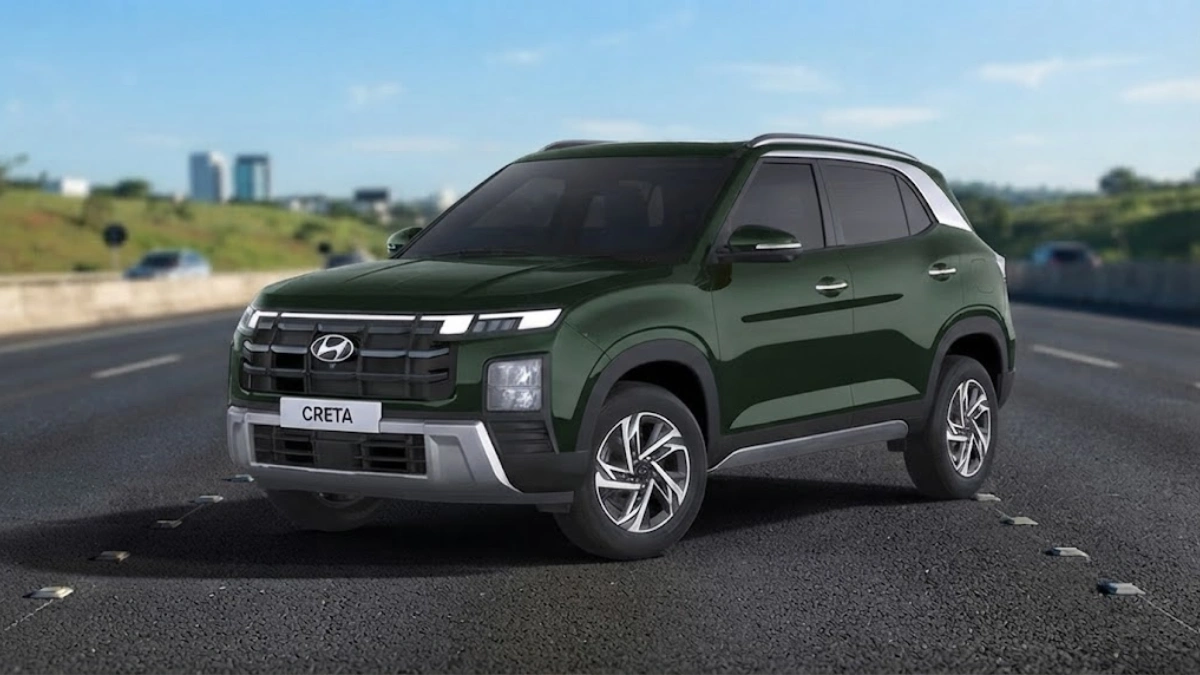
Hyundai Creta Next Gen Upgrades: Biggest Changes Expected
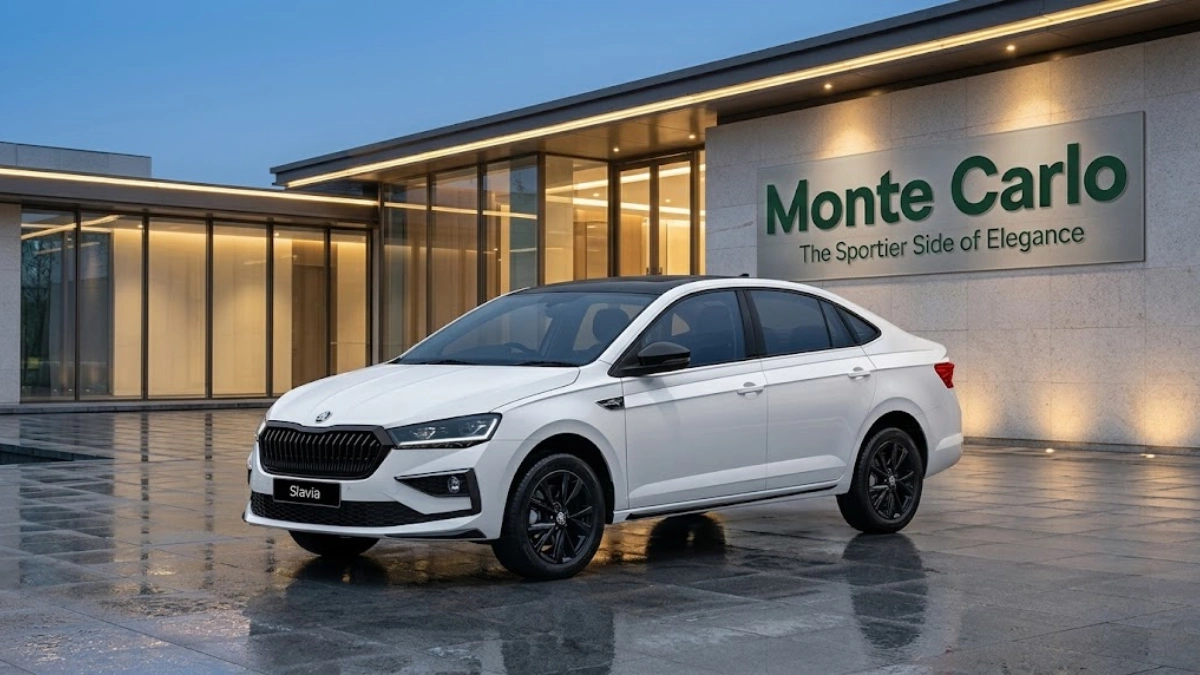
Limited Edition Skoda Slavia Monte Carlo Adds New Colours for 200 Buyers Only
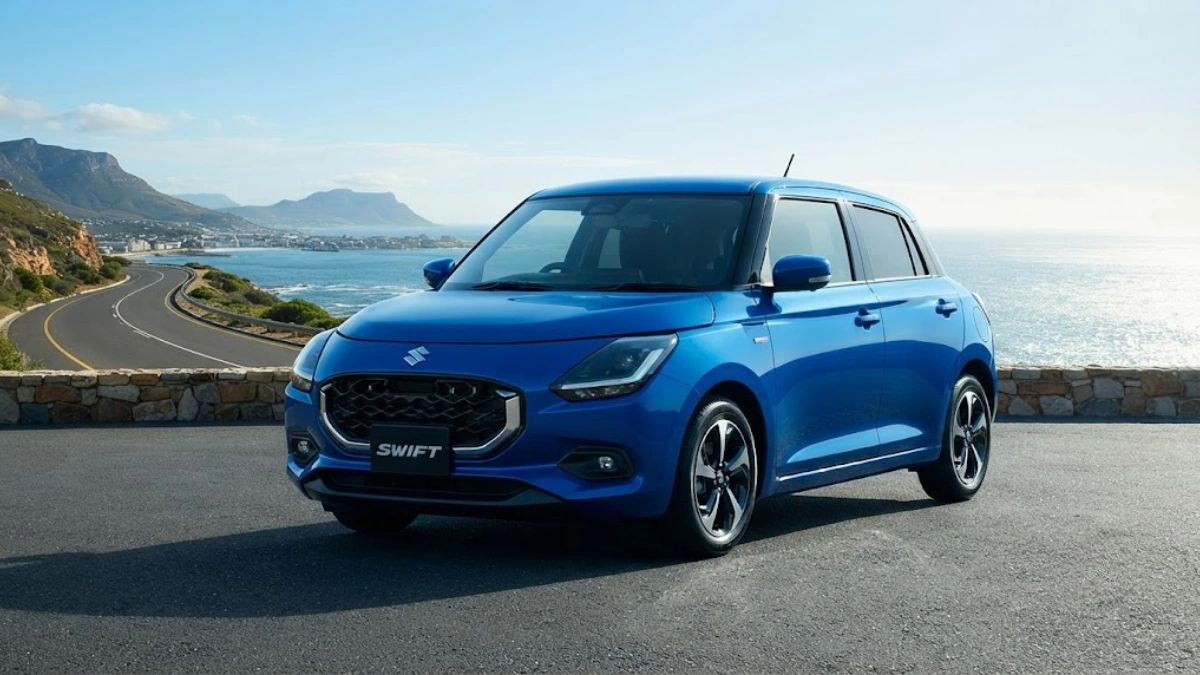
Suzuki Loses India Market Share as Buyers Demand More Features
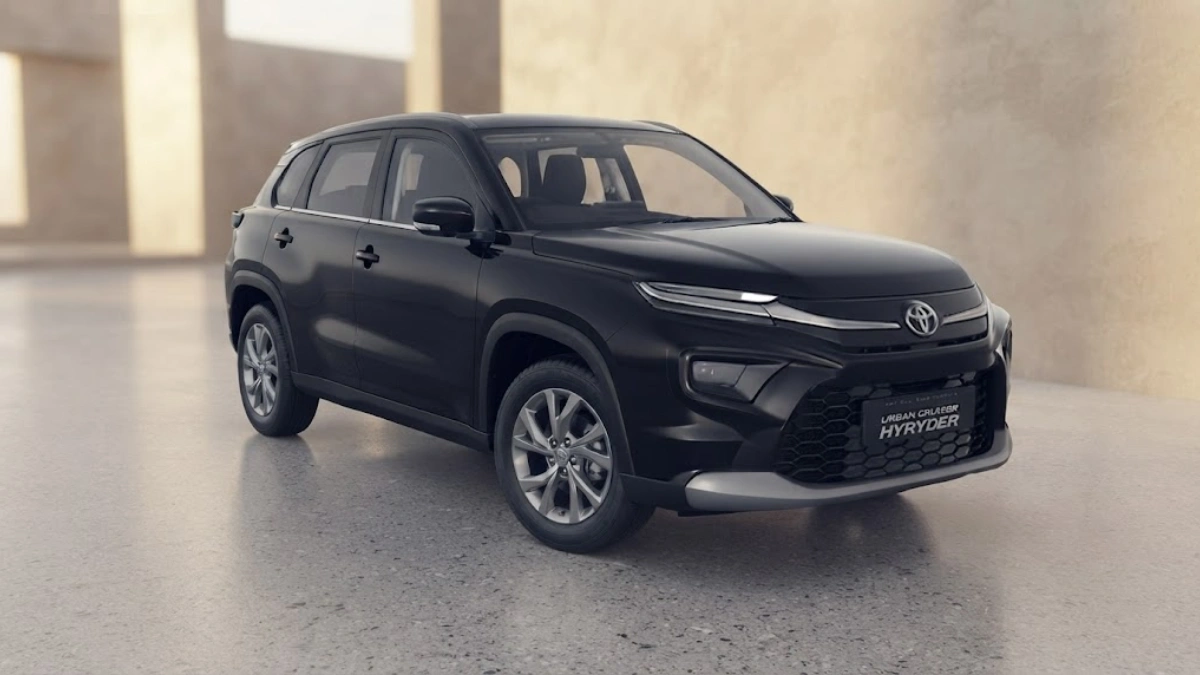
Hybrid Car Sales Decline 8% in June 2026: Complete Analysis
How to Book Maruti Brezza Facelift: Complete Booking Guide
Alto K10 vs Tiago: Which Is Better?
Maruti Brezza Facelift 2026: What's New Compared to the Current Model?
Renault Duster Adventure Edition vs Standard Duster: What's Different?
Skoda Slavia Facelift 2026 vs Volkswagen Virtus: Which Sedan Should You Wait For?

Volkswagen Tayron Life Launched in India at ₹41.99 Lakh
Volkswagen Announces 50% Reduction In Global Car Line-up
Tata Nexon Pure Plus : Know Everything Before Buying in July
Best Selling Cars of June 2026 in India