
Skoda Kylaq Test Drive Review: Best SUV Under ₹10L or Just Hype?
- Cars
- Published: 24 Apr, 2026
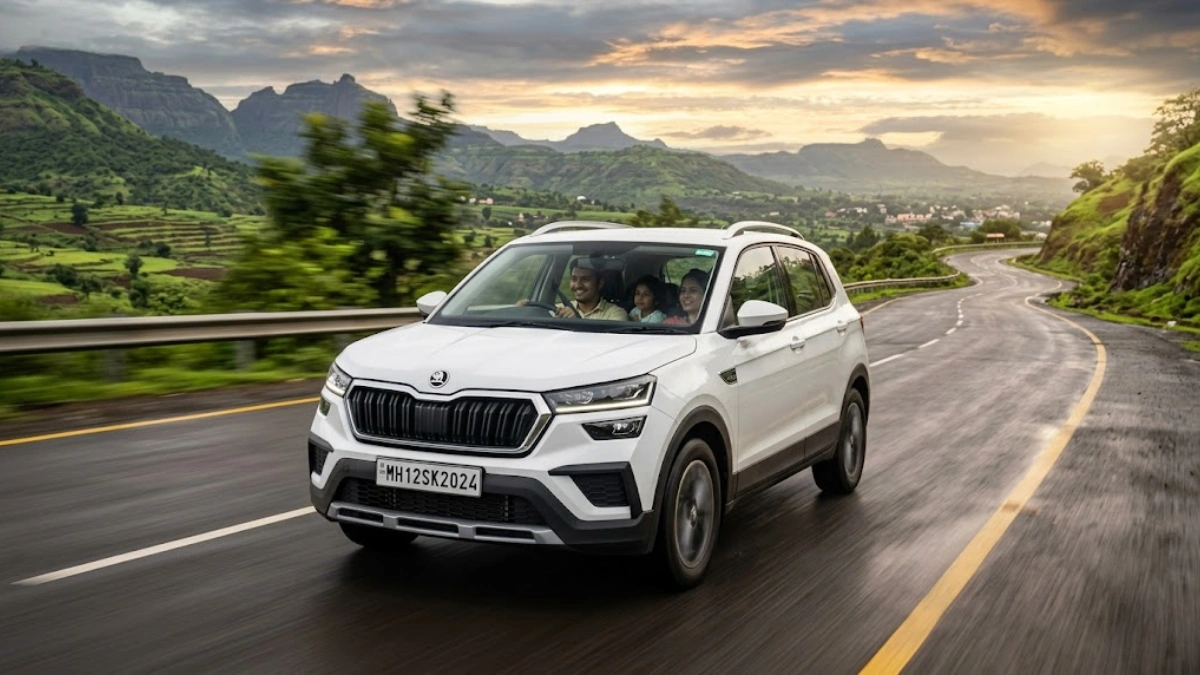
Book a Test Drive
Free doorstep test drive at your convenience
When Skoda announced a sub-₹10 lakh SUV for India, the reaction was equal parts excitement and scepticism. Excitement, because Skoda's engineering reputation on the MQB platform had already been validated by the Kushaq and Slavia. Scepticism, because sub-₹10 lakh is a brutally competitive price band — one dominated by the Maruti Suzuki Brezza, Tata Nexon, Hyundai Venue, and Kia Sonet — where buyers are experienced, price-sensitive, and deeply aware of what they're trading off.
The Kylaq launched in January 2025 at a starting price of ₹7.89 lakh (ex-showroom), making it Skoda's most affordable car ever sold in India. The question this review answers is simple: is it genuinely good, or is the Skoda badge doing most of the heavy lifting?
What You're Actually Buying: The Basics First
The Skoda Kylaq is a sub-4-metre compact SUV built on a cost-optimised version of the MQB-A0-IN platform — the same architecture underpinning the Kushaq, Slavia, Virtus, and Taigun. The localisation level has been pushed to approximately 93–95% to achieve the price point, which is the highest localisation Skoda has achieved on any product in India.
Engine: Single option — 1.0-litre three-cylinder TSI petrol
- Power: 115 PS at 5,000–5,500 RPM
- Torque: 178 Nm at 1,750–4,500 RPM
- Gearbox options: 6-speed manual or 6-speed torque converter automatic
Dimensions:
- Length: 3,997 mm (just under the 4-metre tax threshold)
- Width: 1,783 mm
- Height: 1,619 mm
- Wheelbase: 2,566 mm
- Ground clearance: 189 mm
- Boot space: 446 litres
Variants at launch (2025): Classic, Signature, Signature+, Prestige
Price range: ₹7.89 lakh – ₹14.40 lakh (ex-showroom, introductory pricing at launch)
Now let's get into what the test drive actually reveals.
1. The 1.0 TSI Engine: Strong Where It Counts, Honest About Where It Doesn't
The 1.0 TSI is a proven, globally deployed engine. In the Kylaq — which weighs 1,045–1,095 kg, roughly 100–130 kg lighter than the Kushaq — the power-to-weight ratio works visibly in its favour. The 178 Nm arrives at 1,750 RPM, and the usable band between 2,000–4,500 RPM means you're rarely downshifting in city traffic. On a highway entry ramp, where most sub-compact SUVs struggle, the Kylaq merges with real confidence.
Most rivals in this bracket use naturally aspirated engines making 80–90 PS and 110–115 Nm. The difference in real-world pull is not subtle.
The limitation: Three-cylinder vibration at idle and low-load urban conditions is present — felt through the steering wheel and gear lever. Skoda has done meaningful NVH work, but physics has limits without balancer shafts. At 100–110 km/h highway cruise, it largely disappears. If you're upgrading from a four-cylinder car, the refinement step-down is noticeable in the first week. It's not a dealbreaker — but know it exists.
Real-world fuel efficiency:
- City: 12–14 km/l (manual), 11–13 km/l (automatic)
- Mixed: 15–17 km/l
- Highway at 90–100 km/h: 18–20 km/l
ARAI figures of 21.9 km/l (manual) and 20.4 km/l (automatic) follow the industry norm of overestimating real-world use. The Kylaq's numbers are competitive — not exceptional.
2. Ride Quality: The Biggest Surprise, With One Honest Caveat
Suspension: MacPherson strut (front), torsion beam (rear), 195/60 R16 tyres across all variants.
The taller 60-profile sidewall is a deliberate Indian-market tuning choice — taller than what the Kushaq or Slavia run — and it pays off in the city. Speed breakers, potholes, broken surfaces: the Kylaq handles all of these with composure that punches above its price point. The 189 mm ground clearance adds to the daily confidence. Ride character is supple, not fidgety.
The caveat: The torsion beam rear has limits. Over successive, closely-spaced bumps at medium speeds or on undulating ghat roads, the rear can feel unsettled compared to cars using multilink independent rear suspension — like the Tata Nexon. For urban commuting and flat highway use, this never surfaces as a real-world problem. If you regularly drive B-roads or hilly terrain, test the car specifically on that type of surface — not the showroom's smooth demonstration route.
High-speed stability is solid. At 120 km/h on an expressway, the MQB platform's structural rigidity keeps the car settled and composed.
3. Interior: Skoda Spends Wisely in the Right Places — and Saves Where You'll Notice
The 1,783 mm width is among the broadest in the sub-4-metre SUV class, and it shows immediately — shoulder room is genuinely good for all five occupants. The 446-litre boot is the segment's largest, beating the Nexon (382 litres), Venue (350 litres), and Brezza (328 litres) comfortably.
Where the money went: Steering wheel, gear lever, door inserts, and dashboard top surface on Signature and above are finished noticeably above segment average. Panel gaps are tight. Doors close with authority. The 10.1-inch touchscreen (Signature+ and Prestige) supports wireless Android Auto and Apple CarPlay with low tap latency and good sunlight legibility.
Where it was saved: Lower dashboard, door panels, and seat bolsters are hard plastic throughout — standard for this price point, and no different from what Venue, Sonet, or Brezza offer. The expectation gap is a Skoda-specific problem: buyers familiar with the Kushaq or Slavia will feel the material step-down more acutely than buyers new to the brand.
Rear AC vents are absent on base and mid variants — a real omission in Indian summers. They arrive on the Prestige variant, which at ~₹14 lakh starts competing directly with the base Kushaq.
4. Safety: The Argument That's Hardest to Counter
The Kylaq achieved a 5-star Global NCAP rating — the first sub-₹10 lakh car in India to do so at the time of testing (2025). Adult occupant protection: 31.52/34. Child occupant protection: 45/49. These are strong scores, not marginal ones.
Standard across every variant, including the base ₹7.89 lakh Classic: 6 airbags (front, side, curtain) · ABS with EBD · ESC · Hill Hold · Multi-collision braking · ISOFIX anchors
Several competitors at this price offer 2 airbags on base variants and charge extra for ESC. The Kylaq standardises all of it. For a buyer comparing a ₹8 lakh Kylaq against a ₹8 lakh rival with 2 airbags and no stability control, the safety gap is structural — not marginal. This is arguably the Kylaq's single strongest real-world argument, and one Skoda's own marketing strangely undersells.
5. The Automatic Gearbox: The Right Call for This Car
The Kylaq uses a 6-speed torque converter automatic, not the 7-speed DSG found in the 1.5 TSI Kushaq and Slavia. For a sub-compact SUV that will spend most of its life in urban traffic, this is the correct decision.
Torque converters handle slow, stop-start conditions with a smoothness and predictability that dry dual-clutch transmissions cannot match at low speeds. The Kylaq automatic creeps naturally, responds cleanly to throttle lift, and doesn't hunt nervously at crawl speeds. The DSG's low-speed jerkiness — a well-documented characteristic of dry clutch DCTs — is not present here.
The trade-off: slightly less efficiency and less sporty character at highway speeds. The real-world efficiency difference between the two transmission types is 0.5–1.5 km/l — immaterial for most buyers. Sport mode on Signature+ and above sharpens throttle response without drama. Paddle shifters, where fitted, respond well.
For 90% of Kylaq buyers, the automatic is the right choice. The manual suits those who want engagement and lower running costs.
The Competitors — An Honest Comparison
Kylaq vs. Tata Nexon: The Nexon has a longer wheelbase, available diesel engine, more feature options at the top end, and also achieves 5-star NCAP. The Kylaq counters with stronger engine refinement (the 1.0 TSI is more polished than the Nexon's 1.2 turbo petrol), superior build quality perception, and a more composed highway ride. They are genuinely close. Choose the Nexon if you want diesel or a wider infotainment feature set. Choose the Kylaq if driving dynamics and build solidity matter more.
Kylaq vs. Maruti Suzuki Brezza: The Brezza has a far wider service network (over 3,500 Maruti service centres vs. Skoda's approximately 250+ touchpoints), better resale value backed by Maruti's brand equity, and a naturally aspirated engine that requires less specialised maintenance. The Kylaq has better performance, stronger safety credentials, and superior build quality. Service accessibility is a real consideration — if you live in a tier-2 or tier-3 city where the nearest Skoda dealer is 60+ km away, that matters more than it does in a metro.
Kylaq vs. Hyundai Venue: The Venue has more variant options, a wider feature list at comparable prices, a stronger infotainment system, and Hyundai's excellent service network. The Kylaq has a more powerful and torquier engine, better structural rigidity, and 6 standard airbags where the Venue's base variants offer fewer. Choose the Venue for feature richness; choose the Kylaq for driving experience and safety standardisation.
Kylaq vs. Volkswagen Taigun base variants: They share the same platform and engine. The Taigun is longer (above 4 metres) and loses the sub-4-metre tax benefit, making it more expensive at equivalent equipment levels. The Kylaq is the rational choice if budget is the primary constraint.
The Real Ownership Considerations Nobody Mentions at the Showroom
Service cost and availability: Skoda has worked to expand its service network in India, but 250–280 service touchpoints nationally remain thin compared to Maruti (3,500+), Hyundai (1,300+), and Tata (900+). In metropolitan areas — Mumbai, Delhi, Bengaluru, Hyderabad, Pune, Chennai — this is not a practical concern. In smaller cities and rural areas, it requires verification before purchase. Check the nearest authorised service centre distance specifically for your home city before committing.
Skoda India has introduced a 4-year/1,00,000 km warranty (as of their 2023–2024 warranty revision), and the Kylaq carries this at launch. Scheduled service intervals for the 1.0 TSI are every 15,000 km or 12 months. Service costs for the TSI engine are higher than a comparable naturally aspirated Maruti or Hyundai — the turbocharger and direct injection system require more precise maintenance and higher-grade engine oil (0W-20 or 0W-30 full synthetic). Budget approximately ₹8,000–₹12,000 per service cycle as a realistic estimate, compared to ₹4,000–₹6,000 for a Brezza or Venue.
Long-term turbo reliability: The 1.0 TSI has been in Indian market service since 2021 across the Kushaq and Slavia. Three-plus years of real-world data show no systemic turbocharger reliability issues specific to the Indian-spec engine when serviced on schedule with recommended oil grades. Carbon buildup on intake valves — an inherent characteristic of direct-injection engines — is manageable with periodic walnut blasting service at 60,000–80,000 km intervals. Your service advisor should proactively advise this; if they don't, ask.
The Verdict: Best Under ₹10L or Just Hype?
Neither, entirely.
The Skoda Kylaq is a genuinely good car sold at a price that required real engineering discipline and supply chain work to achieve. The 5-star NCAP rating is real. The 1.0 TSI engine is legitimately better than what most competitors offer at this price. The build quality and ride composure are segment-leading at their price points. These are not marketing claims — they are verifiable, measurable facts.
The hype element exists in what gets glossed over: the three-cylinder refinement at idle, the torsion beam rear suspension's limits on challenging surfaces, the thin service network outside metros, and the higher cost of ownership relative to Japanese and Korean alternatives.
Buy the Kylaq if: You live in or near a metro, do a meaningful mix of city and highway driving, value active safety as a non-negotiable, and are willing to pay slightly more per service visit for a car that feels more premium to drive daily.
Look elsewhere if: You're in a city with no nearby Skoda service centre, if the majority of your driving is sub-20 km/h urban crawl where engine refinement matters more than performance, or if you need a diesel option for long-distance, high-mileage use.
The Kylaq is not a perfect car. No car at ₹8–10 lakh is. But it is an honest car — and in a segment full of compromises dressed up as features, that is worth more than it sounds.
Book a Test Drive
Free doorstep test drive at your convenience
Popular Brands





Latest Car News
Upcoming Cars in September 2026 in India: New Cars, Launch Dates & Expected Prices
MG Hector Hawk SUV vs Tata Harrier: Expected Price, Features & Key Differences
Skoda Superb Diesel in India: Will the Diesel Engine Make a Comeback?
Tata Punch Becomes India's Best-Selling SUV in July 2026 with 21,313 Units Sold
Car Sales Report July 2026: Maruti Remains No.1, Tata, Mahindra & Hyundai Record Strong Growth
Tata Curvv EV Discount August 2026: Save Big with Limited-Time Offers
Kia Sorento Booking in India: Launch Date, Price & Booking Process
Skoda Slavia Facelift Launch Date in India
Hyundai Creta Next Gen Upgrades: Biggest Changes Expected
Limited Edition Skoda Slavia Monte Carlo Adds New Colours for 200 Buyers Only
Suzuki Loses India Market Share as Buyers Demand More Features
Hybrid Car Sales Decline 8% in June 2026: Complete Analysis
How to Book Maruti Brezza Facelift: Complete Booking Guide
Alto K10 vs Tiago: Which Is Better?
Maruti Brezza Facelift 2026: What's New Compared to the Current Model?
Renault Duster Adventure Edition vs Standard Duster: What's Different?
Skoda Slavia Facelift 2026 vs Volkswagen Virtus: Which Sedan Should You Wait For?
Volkswagen Tayron Life Launched in India at ₹41.99 Lakh
Volkswagen Announces 50% Reduction In Global Car Line-up
Tata Nexon Pure Plus : Know Everything Before Buying in July