
Audi Q9 Launch Soon: What to Expect From Audi's Premium 7-Seater SUV
- Cars
- Published: 14 May, 2026
Book a Test Drive
Free doorstep test drive at your convenience
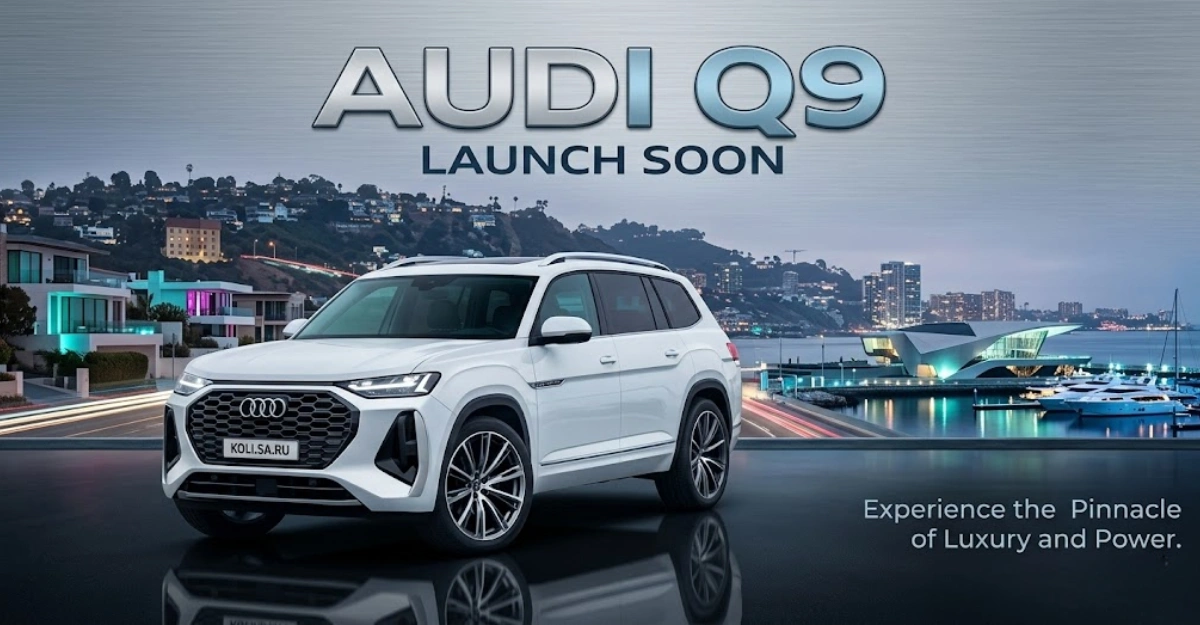
For years, one gap in Audi's formidable SUV lineup was obvious to anyone paying attention. While BMW offered the X7 and Mercedes-Benz had the GLS dominating the full-size luxury SUV space, Audi's biggest offering remained the Q7 — a capable vehicle, but one that regularly drew complaints about its tight third row. That wait is now officially over. Audi has formally confirmed plans to launch the Q9 in the summer of 2026, making it the first full-size flagship SUV in the brand's history, targeting customers in North America and beyond.
This is not a rumour or a concept. The Q9 is real, it is coming soon, and there is quite a lot we already know about it.
Why the Q9, and Why Now?
In the U.S., full-size three-row SUVs such as the Mercedes GLS and BMW X7 remain in steady demand. The X7 alone recorded 31,575 sales in 2025, its highest annual total since its 2019 market launch. Audi, with one of the strongest luxury brand identities in the world, has been watching that money flow to its rivals for years.
Audi practically has every crossover size class covered, from the Euro market-oriented Q2 to the chunky Q8 — yet no dedicated full-size, three-row flagship existed. The Q9 fills that hole decisively. This SUV is designed to appeal to customers who are not ready to go all-electric but still want cutting-edge technology and Audi's signature interior comfort.
Platform and Architecture: Built on Something New
The Audi Q9 will ride on the brand's new Premium Platform Combustion (PPC) architecture. PPC replaces the long-running MLB platform that underpinned several Audi models as well as vehicles like the Porsche Cayenne and Lamborghini Urus within the Volkswagen Group.
The Q9 is a stretched version of the next-generation 2027 Q7. Prototypes confirm shared front-end elements, but the grille, lower intake, and rear quarter glass panel and pillar look unique. In terms of size, experts expect it to be longer than the current Q7, which measures 5,070 mm in length, likely reaching or exceeding 5,200 mm. That extra length is not just a vanity figure — it translates directly into something buyers in this segment have been demanding for years: a genuinely usable third row.
Seating: A Proper 7-Seater at Last
The seating story is one of the most important parts of the Q9's appeal. A 2+3+2 seating layout will be standard, while a 2+2+2 layout will be available optionally. Third-row passengers will be able to slide and tilt the second-row seats forward to aid ingress, and the third-row seatbacks feature an electric folding function for convenient expansion of cargo space.
For maximum business-class comfort, buyers can choose the optional six-seat layout, where the middle row comprises two electrically adjustable individual seats with active ventilation in both the cushion and backrest — a level of comfort typically found in business class. For families needing to transport more people, the seven-seater model allows all three seats in the second row to be fitted with child seats, making everyday life significantly easier for parents.
This level of flexibility is what separates the Q9 from its predecessor. The Q7 was always a compromise in the third row; the Q9 is designed from the start to be a genuine people carrier without sacrificing premium character.
Interior: A Cabin Designed as a Sanctuary
Audi has already given the world a preview of the Q9's interior, and it is impressive by any measure. The Q9 will feature a three-screen display setup, wireless Apple CarPlay and Android Auto, dual wireless phone chargers, a panoramic sunroof, four-zone climate control, and powered, ventilated, and heated seats for both the first and second rows.
Other highlights include a Bang & Olufsen 4D audio system, electronically operated doors, and selectable drive modes. On the safety front, the Q9 is expected to offer multiple airbags, electronic stability control, a 360-degree camera, a Level 2 advanced driver assistance suite, an electronic parking brake with auto-hold, and front and rear parking sensors.
For the first time in any Audi, all doors can be operated electrically. Whether using a key, the myAudi app, the MMI touchscreen, the brake pedal, or the seatbelt buckle — opening and closing the doors is intuitive and effortless. Thanks to their wide opening angle, entry is always easy whether carrying heavy bags or maneuvering a stroller.
Audi CEO Gernot Döllner summarised the philosophy behind the cabin clearly: "With the Q9, 'Vorsprung durch Technik' is increasingly defined by the in-car experience. Cars have long been much more than just a means of transportation; they are mobile living spaces for our customers."
Powertrain Options: Combustion Leads, Hybrid Follows
Audi has not yet released the final engine lineup, but the picture is becoming clearer. The Q9 is expected to offer a 2.0-litre turbo four-cylinder producing around 265 horsepower, a 3.0-litre turbocharged V6 delivering around 340 horsepower, and potentially a twin-turbo V8 in a performance-focused SQ9 variant. All engines are expected to pair with an eight-speed automatic transmission and standard quattro all-wheel drive.
Audi is also expected to offer a 3.0-litre turbocharged gasoline engine with mild-hybrid technology as an option, while a plug-in hybrid variant is expected later in its lifecycle. Neither the new Q7 nor the Q9 will receive a plug-in hybrid powertrain at launch in 2026.
The towing capacity is expected to be substantial. Since it is built on the same platform as the Q7, which has an estimated 7,000 to 8,000 lb towing capacity, the Q9 is expected to match or exceed that figure.
Design: Big, Bold, and Unmistakably Audi
While the full exterior has not been fully unveiled yet, camouflaged prototypes have revealed quite a bit. Up front, the Q9 gets a massive gloss black grille with an illuminated Audi logo and a hexagonal pattern for the detailing, flanked by slim DRL strips with pixelated detailing and large rectangular headlamp clusters. At the rear, the Q9 gets a connected LED taillight bar, an illuminated Audi badge, and a layered bumper with quad exhaust tips for a practical yet sporty finish.
The proportions will be unmistakably those of a flagship. Think of it as the Q8 grown up and given a third row — retaining athletic SUV lines while packaging far more practical space underneath.
Pricing: What to Expect to Pay
Official pricing has not been confirmed, but industry analysts expect the Q9 to slot between $90,000 and $100,000 USD at launch — competitive with the BMW X7 xDrive40i at $78,845 and the Mercedes-Benz GLS 450 at $84,200 when accounting for Audi's traditionally richer standard equipment. Dealer markups for new flagship models often inflate real-world prices during the initial launch period.
For India, Audi is expected to bring the Q9 in the second half of 2027, with prices likely starting at around Rs 1.50 crore (ex-showroom). Global markets including the UAE and broader Middle East are also on Audi's radar for the Q9.
The Competition It Needs to Beat
The Q9 enters a well-established battlefield. Its primary rivals are the BMW X7, the Mercedes-Benz GLS, and to a degree the Range Rover and Cadillac Escalade. Each of those competitive models from BMW, Mercedes, and Cadillac also offers a high-performance variant, so it is likely that an Audi S9 will arrive at some point. What remains an open question is whether we will eventually get an RS Q9 at the very top of the Audi SUV food chain.
The Q9 is entering this race late, but Audi's strategy seems deliberate rather than rushed. It is less about being first and more about getting it right. With the market hungry for options beyond EVs, Audi's timing looks more calculated than delayed.
The Verdict Before the Drive
The Audi Q9 represents something genuinely significant — not just a new model, but an admission by one of Germany's finest automakers that size and space can coexist with refinement and technology. For families who have long admired Audi's build quality but were frustrated by the Q7's cramped third row, the Q9 is the answer they have been waiting for.
It is arriving at the right time, built on the right platform, with the right features, and aimed at exactly the right market. The world premiere is expected in summer 2026, and the full spec sheet will follow. Until then, one thing is already clear from everything Audi has shown and said: the Q9 is not simply a bigger Q7. It is Audi's most serious statement yet in the premium family SUV space.
Keep an eye on the summer 2026 reveal — this one will be worth watching.
Book a Test Drive
Free doorstep test drive at your convenience
Popular Brands





Latest Car News
MG Hector Hawk SUV vs Tata Harrier: Expected Price, Features & Key Differences
Skoda Superb Diesel in India: Will the Diesel Engine Make a Comeback?
Tata Punch Becomes India's Best-Selling SUV in July 2026 with 21,313 Units Sold
Car Sales Report July 2026: Maruti Remains No.1, Tata, Mahindra & Hyundai Record Strong Growth
Tata Curvv EV Discount August 2026: Save Big with Limited-Time Offers
Kia Sorento Booking in India: Launch Date, Price & Booking Process
Skoda Slavia Facelift Launch Date in India
Hyundai Creta Next Gen Upgrades: Biggest Changes Expected
Limited Edition Skoda Slavia Monte Carlo Adds New Colours for 200 Buyers Only
Suzuki Loses India Market Share as Buyers Demand More Features
Hybrid Car Sales Decline 8% in June 2026: Complete Analysis
How to Book Maruti Brezza Facelift: Complete Booking Guide
Alto K10 vs Tiago: Which Is Better?
Maruti Brezza Facelift 2026: What's New Compared to the Current Model?
Renault Duster Adventure Edition vs Standard Duster: What's Different?
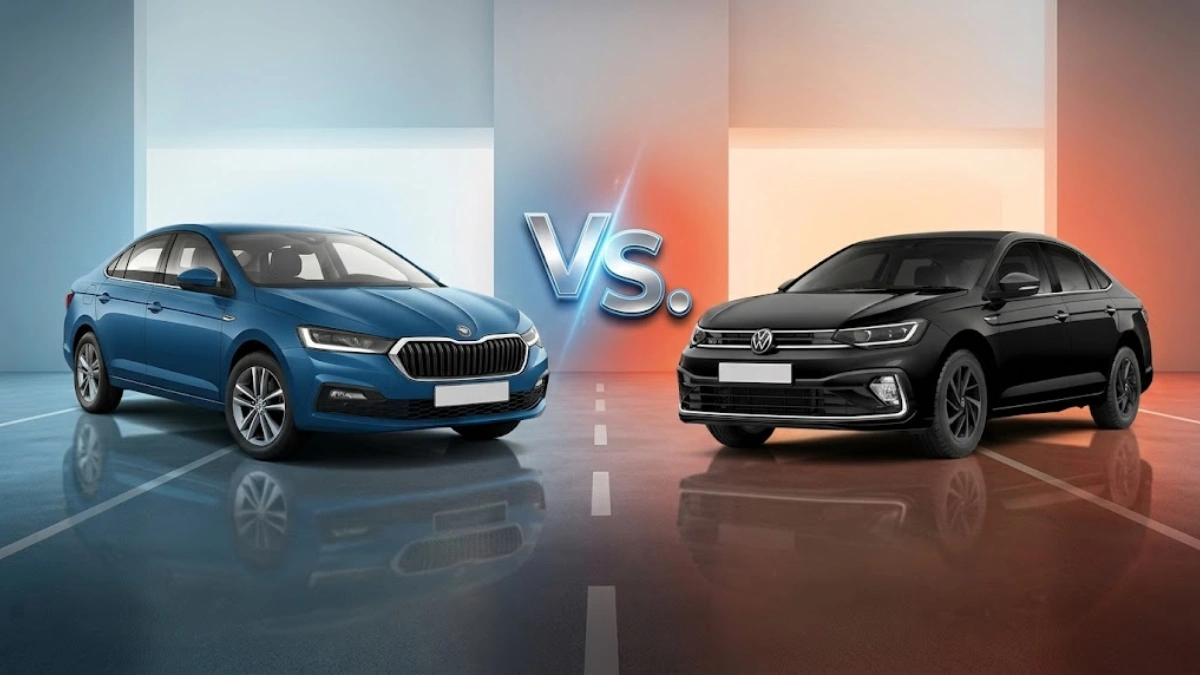
Skoda Slavia Facelift 2026 vs Volkswagen Virtus: Which Sedan Should You Wait For?
Volkswagen Tayron Life Launched in India at ₹41.99 Lakh
Volkswagen Announces 50% Reduction In Global Car Line-up
Tata Nexon Pure Plus : Know Everything Before Buying in July
Best Selling Cars of June 2026 in India