Ather Konarc vs TVS iQube vs Bajaj Chetak: Which Electric Scooter Is Better?
- Electric-bike
- Published: 31 Aug, 2026
- Updated: 31 Aug, 2026
Book a Test Drive
Free doorstep test drive at your convenience
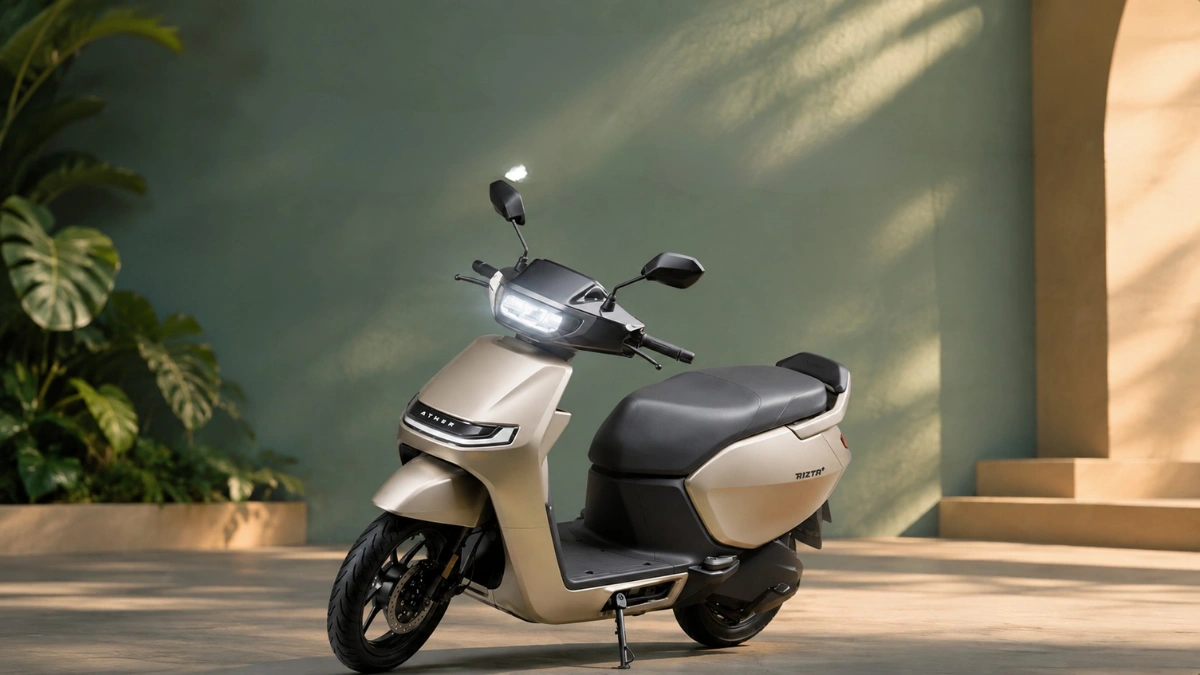
A retro icon, a connected-tech favourite, and a brand-new challenger just walked into the same price bracket — and only one can win your garage. On August 29, 2026, Ather Energy launched the Konarc at its Community Day: its first-ever metal-bodied scooter, built on a completely new "EL" platform, and priced to go straight after the segment's two reigning champions. The TVS iQube has spent years perfecting range and app-based smarts. The Bajaj Chetak has traded on retro looks and Bajaj's enormous service muscle. Now the Konarc wants a piece of both audiences at once, with an entry price that undercuts them right out of the gate.
So which one actually deserves your ₹1–1.5 lakh? All three chase the same city commuter, but they get there through very different trade-offs — some obvious, some you'd only discover after a few months of real ownership. Here's a deep, practical, spec-by-spec breakdown to help you cut through the marketing and decide for yourself.
Ather Konarc vs TVS iQube vs Bajaj Chetak: Quick Comparison
| Parameter | Ather Konarc | TVS iQube | Bajaj Chetak |
| Ex-showroom price | ₹99,999 – ₹1.45 lakh (200 km variant TBA) | ₹1.17 lakh – ₹1.75 lakh | ₹96,400 – ₹1.34 lakh |
| Battery options | 2.1 / 2.7 / 3.5 kWh (200 km version coming) | 2.3 / 3.1 / 3.5 / 4.7 / 5.3 kWh | 2.5 / 3.0 / 3.5 kWh |
| Claimed range (IDC) | 100–200 km | 94–212 km | 113–155 km |
| Top speed | 70 km/h (80 km/h on Konarc Z) | 75–82 km/h | 60–80 km/h |
| Motor | 4–4.7 kW PMSM | 3–4.4 kW hub motor | Up to 4.8 kW hub motor |
| Body construction | Steel unibody (metal) | Mostly plastic panels | Steel monocoque (metal) |
| Kerb weight | 129 kg | 118–125 kg | 134 kg |
| Braking | Drum-drum (no ABS) | Drum/disc combinations, CBS | CBS, disc on top variants |
| Standout feature | New EL platform, MagicKey, combined charging | 118+ connected features, Alexa skill | Retro metal design, Bajaj service reach |
This table gives you the headline numbers, but the real differences show up once you dig into pricing tiers, real-world range, and how each brand treats ownership. Let's break it down section by section.
Ather Konarc vs TVS iQube vs Bajaj Chetak Price Comparison
The Konarc is Ather's clear attempt to undercut the segment on price. The entry 100 km / 2.1 kWh variant is priced at an aggressive ₹99,999 (ex-showroom, Bengaluru), though deliveries for this specific variant only start in Q1 2027. The two variants actually shipping sooner — the 125 km Konarc S at ₹1,21,999 and the 161 km Konarc S at ₹1,44,999 — begin deliveries in September 2026. A 200 km Konarc S and the feature-rich Konarc Z (with MagicKey and a TFT touchscreen) are confirmed but priced closer to their Q2–Q3 2027 launch windows.
TVS iQube sits at the higher end of this trio. Depending on the city and dealer, the base 2.2/2.3 kWh variant is typically listed between ₹1.17 lakh and ₹1.20 lakh ex-showroom (some regional listings show it lower, closer to ₹94,000–₹95,000, so always confirm local pricing). The mid variants — 3.1 kWh and 3.5 kWh — land between ₹1.38 lakh and ₹1.46 lakh, while the range-topping iQube ST with the 5.3 kWh battery goes up to roughly ₹1.75 lakh. TVS also periodically runs special editions like the iQube MillionR, priced around ₹1.40 lakh.
Bajaj Chetak occupies the middle ground. The base C2501 (2.5 kWh) starts around ₹96,400–₹1.02 lakh depending on city and ongoing offers, the mid C3001 (3.0 kWh) comes in a notch higher, and the 35 Series (C3503, C3502, C3501 with 3.5 kWh packs) tops out at roughly ₹1.34 lakh ex-showroom, translating to an on-road price closer to ₹1.49–1.57 lakh in metros once RTO and insurance are added.
Bottom line on price: Konarc undercuts both rivals at entry level, but its cheapest and longest-range variants aren't shipping immediately. iQube is the priciest of the three once you go past the base trims, largely because of its feature loading. Chetak sits comfortably in between, with the most metal-for-money at the base end.
Battery and Range Comparison
Range is where TVS currently has bragging rights on paper. The top-spec iQube ST with its 5.3 kWh battery claims up to 212 km on the IDC cycle — the highest number in this comparison by a wide margin, though real-world range on any electric scooter typically comes in 20–30% lower than the claimed figure depending on load, riding mode, and traffic.
Ather's Konarc counters with a tiered approach: 100 km, 125 km, 161 km, and (eventually) 200 km IDC-rated variants, all using aluminium-cased battery packs with an IP67 water and dust resistance rating. The 3.5 kWh top pack delivers the claimed 161–200 km depending on which variant you pick, putting it within striking distance of the iQube's mid-tier options.
Bajaj Chetak's range has quietly improved with the 35 Series update. The base C2501 does a claimed 113 km, the C3001 stretches to 127 km, and the 3.5 kWh 35 Series scooters (3501/3502/3503) now claim 151–155 km IDC — a meaningful jump from earlier Chetak generations that struggled to break 100 km in real-world use.
Practical takeaway: If maximum single-charge range is your priority, the iQube ST's 5.3 kWh pack wins outright. If you want the best range-per-rupee at the entry price point, the Konarc's tiered battery options let you pay only for the range you actually need. Chetak's 35 Series is respectable but doesn't reach the extremes offered by TVS's top variant.
Performance Comparison
On paper, performance is fairly close, though each brand tunes for a slightly different feel. The Konarc's PMSM motor produces 4 kW on the base variant and 4.7 kW on the larger-battery versions, with 16 Nm of torque and a claimed 0–40 km/h time of 5.0 seconds (4.7 seconds on the higher variants). Top speed is capped at 70 km/h across the Konarc S range, with the more premium Konarc Z stretching to 80 km/h. Ather also quotes a 16-degree gradeability figure, useful for scooters that regularly climb flyovers or steep residential lanes.
TVS's iQube uses a hub-mounted motor with outputs ranging from roughly 3 kW on lower variants to 4.4 kW on the ST. Top speed varies from 75 km/h on the entry trims to 82 km/h on the ST, with 0–40 km/h times as quick as 4.2 seconds on some variants — genuinely brisk for a family-oriented commuter scooter.
Bajaj's Chetak got a notable performance bump in its 2026 update. The flagship C3501 now makes 4.8 kW (up from 4.5 kW), and top speeds across the lineup rose by roughly 7 km/h — the C2501 now does 60 km/h, the C3001/C3503 hit 70 km/h, and the C3502/C3501 reach 80 km/h. This directly addressed a long-standing criticism that older Chetaks felt underpowered in city traffic, especially with a pillion on board.
Practical takeaway: The iQube generally feels the quickest off the line among lower-priced variants, the Chetak has closed the power gap significantly with its 2026 revisions, and the Konarc's numbers are competitive but conservative — Ather seems to have prioritized range and reliability over outright punch for this commuter-focused platform.
Features and Technology Comparison
This is where TVS's experience shows. The iQube's connected ecosystem — TVS's SmartXonnect platform — includes turn-by-turn navigation, geo-fencing, anti-theft alerts, OTA software updates, Hill Hold, Q-Park Assist (reverse parking mode), call/SMS alerts, and even Alexa voice-assist integration on higher trims. TVS advertises over 100 connected features across the range, and the top-spec ST gets a 7-inch TFT touchscreen along with a front disc brake and IP67-rated electronics.
The Ather Konarc introduces some genuinely new tricks for the segment. The Konarc S uses Ather's DeepView dashboard, while the Konarc Z steps up to a full TFT touchscreen. Notable additions include AutoPop (an automated main-stand mechanism) and, on the Z variant, MagicKey — a keyless system similar in spirit to what premium two-wheelers offer. Ather has also built in combined/fast-charging technology and its Atherstack Pro software layer, drawing on the company's strength in software from the 450 series. That said, ABS is not offered on the Konarc, and it relies on drum brakes at launch.
Bajaj's Chetak keeps things comparatively simple at the base level — the C2501 uses an LCD display — but the 35 Series adds a 5-inch TFT touchscreen. Bajaj bundles its more advanced connected features (Bluetooth, navigation, music control, side-stand indicator) into an optional "TecPac" add-on costing roughly ₹3,000–₹9,000, rather than making it standard across the range. Safety basics like automatic headlamp-on (AHO), hazard lights, and combined braking are standard, but none of the three scooters in this comparison currently offers ABS.
Practical takeaway: TVS iQube is the clear leader in out-of-the-box connected features. Ather Konarc brings novel mechanical conveniences (AutoPop, MagicKey) that rivals don't have. Bajaj Chetak keeps tech optional, which can be a cost-saving positive if you don't care about app connectivity, or a negative if you want everything bundled in.
Design, Comfort and Practicality
Each scooter takes a distinct design direction. The Konarc breaks from Ather's sporty 450-series styling in favor of a simpler, family-oriented shape — a longer seat, a handlebar-mounted headlight, a horizontal LED DRL on the front apron, and 14-inch front/12-inch rear wheels. Crucially, it's Ather's first scooter with a steel unibody metal body rather than plastic panels, aimed at buyers who associate metal construction with durability. Kerb weight comes in at 129 kg.
The TVS iQube leans into a familiar, understated silhouette that resembles a traditional petrol scooter — sleek apron-mounted headlamp, integrated turn signals, a U-shaped LED DRL on the handlebar, and a small windscreen on higher variants. It's the lightest of the three at roughly 118–125 kg depending on variant, and offers around 32 litres of under-seat storage (35.5 litres on the MillionR edition thanks to an added front storage box). Some reviewers note the iQube's rear-view mirrors and side panels look a bit boxy compared to rivals.
Bajaj Chetak is the design outlier — and for many buyers, that's the whole appeal. It retains a retro-modern aesthetic drawn directly from the original 1970s Chetak, with rounded metal body panels that give it a distinctly premium, nostalgic feel. At 134 kg it's the heaviest of the three, which does translate to a planted, stable feel but slightly less nimbleness in tight traffic. Under-seat storage is comparatively modest next to the iQube, which some owners flag as a practicality gap.
Practical takeaway: Pick the iQube for outright storage and low weight, the Chetak for retro styling and road presence, and the Konarc if you want metal-body durability at a lower price point than the Chetak while still getting reasonably compact dimensions.
Charging Time and Running Cost Comparison
Charging speed varies meaningfully by battery size across all three brands, so it pays to match the number to the variant you're actually considering.
The Konarc's 3.5 kWh pack takes about 3 hours 10 minutes to reach 80% and roughly 5 hours 40 minutes for a full charge on a standard home charger. Ather has also built in combined/fast-charging capability, and buyers can top up on Ather's extensive public fast-charging (Ather Grid) network, which remains one of the densest charging networks among Indian EV two-wheeler brands.
TVS iQube charging times scale with battery size: the 2.2 kWh entry pack goes 0–80% in about 2 hours 45 minutes, while the larger 3.4 kWh pack takes closer to 4 hours 30 minutes for the same charge level. The ST's larger 5.3 kWh pack naturally takes longer still, though TVS hasn't emphasized a fast-charging network the way Ather has.
Bajaj Chetak has improved noticeably here too — the 2026 update cut the C3001's 0–80% charging time from 3 hours 50 minutes down to about 2 hours 55 minutes, a meaningful real-world improvement for owners who top up overnight or during a workday.
On running costs, all three scooters land in a similar ballpark of roughly ₹0.15–₹0.30 per km depending on local electricity tariffs, which comfortably undercuts petrol scooters running at ₹1.5–₹2.5 per km at current fuel prices. None of the three currently has an official battery-swapping option; all rely on fixed, chargeable battery packs.
Practical takeaway: If you charge overnight and don't watch the clock, the differences barely matter. If you rely on quick top-ups during the day, the smaller-battery iQube variants and the updated Chetak charge fastest to 80%, while the Konarc's advantage lies in its growing public fast-charging network.
Ather Konarc vs TVS iQube vs Bajaj Chetak: Ride and Handling
TVS iQube is widely regarded as one of the more comfortable and predictable scooters in this segment — smooth acceleration, stable handling over uneven surfaces, and a compliant ride that suits daily city commuting and even moderately long highway stretches. Its lighter weight helps with low-speed manoeuvring in traffic.
Bajaj Chetak's heavier, all-metal construction gives it a planted, confidence-inspiring feel at speed, and its suspension has been tuned to absorb Indian road imperfections reasonably well. The trade-off is that it feels a touch less agile in stop-start traffic compared to the lighter iQube, though the 2026 power bump has made it noticeably less sluggish than earlier generations.
The Konarc is the newest of the three, having only just been unveiled, so independently verified long-term ride impressions are still limited at the time of writing. Early test-ride reports point to handling similar in character to Ather's existing 450 range thanks to a comparable swingarm-mounted motor layout, but the Konarc's own metal body and revised suspension tuning for a commuter audience mean its real-world ride character will only be fully clear once deliveries begin and owners log real mileage. If ride quality and long-term handling feedback are a priority for you, it's worth waiting for post-launch reviews before committing to the Konarc specifically.
Service, Warranty and Ownership Experience
This is arguably where Bajaj currently has the strongest edge. It operates one of the largest dedicated EV scooter service footprints in India — over 390 exclusive Chetak stores and more than 4,000 sales touchpoints spread across 800+ cities — backed by Bajaj's decades of two-wheeler servicing experience. Battery warranty is typically 3 years or 50,000 km, in line with industry norms.
TVS also benefits from an extensive, long-established dealer and service network built on its petrol-scooter business, which gives iQube owners easy access to servicing even outside major metros — a meaningful advantage for buyers in Tier-2 and Tier-3 cities.
Ather's network has historically been more concentrated in larger cities, though it has been expanding steadily alongside its Ather Grid charging infrastructure. As a newer entrant with the Konarc specifically, Ather will need to prove out service reach in smaller towns as deliveries scale through 2026–2027; existing Ather 450-series owners generally report a positive service experience, but the Konarc's own long-term ownership track record simply doesn't exist yet.
Practical takeaway: If you live outside a metro or want maximum peace of mind on service availability, Chetak and iQube currently have the edge purely on network size and maturity. Konarc buyers in Ather's existing strong markets should have a comparable experience, but this is a genuine consideration if you're in a smaller town.
Ather Konarc vs TVS iQube vs Bajaj Chetak: Pros and Cons
Ather Konarc
- Pros: Aggressive entry pricing, metal unibody build, IP67 battery protection, novel features like AutoPop and MagicKey, access to Ather's fast-charging network, tiered range options to match your budget.
- Cons: Cheapest and longest-range variants aren't shipping until 2027, no ABS, unproven real-world reliability and ride quality since it just launched, Ather's service network is thinner outside major cities.
TVS iQube
- Pros: Widest range of variants and battery sizes, class-leading connected features and app ecosystem, lightest of the three, strong nationwide service network, quickest off-the-line feel on several variants.
- Cons: Priciest overall once you move past base trims, no ABS, some reviewers find the design a bit generic, top-spec ST commands a steep premium.
Bajaj Chetak
- Pros: Distinctive retro-metal design, biggest and most mature dedicated service network, meaningfully improved power and charging speed after the 2026 update, solid build quality and stable ride feel.
- Cons: Heaviest of the three, storage space trails the iQube, advanced connected features are a paid add-on rather than standard, no ABS.
Which Electric Scooter Should You Buy?
- Buy the Ather Konarc if: you want the lowest possible entry price for a metal-bodied electric scooter, you're an existing Ather ecosystem user who values the Ather Grid charging network, and you're comfortable being an early adopter while the model's real-world reliability record is still being written.
- Buy the TVS iQube if: maximum range and the richest connected-features package matter most to you, you want the widest choice of battery sizes to match your budget precisely, and you value TVS's mature, wide-reaching service network.
- Buy the Bajaj Chetak if: you want distinctive retro styling with genuine metal-body durability, you live somewhere Bajaj's extensive service network gives you real peace of mind, and you're fine paying a little extra for connected features only if you actually want them.
Ather Konarc vs TVS iQube vs Bajaj Chetak: Our Verdict
There's no single "best" scooter here — the right pick depends heavily on what you weight most. For pure range and features, the TVS iQube currently leads the segment, especially in its higher trims, though you'll pay a premium for that capability. For distinctive design, durable metal construction, and the reassurance of a massive service network, the Bajaj Chetak remains a strong, mature choice that has genuinely improved with its 2026 power and charging updates.
The Ather Konarc is the most exciting new option on paper — it undercuts both rivals on entry price while bringing metal-body construction and clever features like MagicKey and AutoPop to a price segment that hasn't seen them before. But it's also the newest and least proven of the three: its most affordable and longest-range variants won't reach customers until well into 2027, and there's simply no long-term ownership data yet. If you need a scooter now, the iQube and Chetak remain the safer, better-tested choices. If you can wait and want to be an early adopter of Ather's new platform at an attractive price, the Konarc is worth watching closely as deliveries begin and independent reviews start coming in.
Book a Test Drive
Free doorstep test drive at your convenience
Latest Electric Bike News
Yamaha R2 vs R15 vs R3: Which Yamaha Sports Bike Should You Buy?
Bajaj Pulsar N160 SS Mileage: Real-World Average, City & Highway Figures
Hero June 2026 Sales Report: Splendor, HF Deluxe, Destini & Glamour

War Impact on Two-Wheeler Market: Sales Growth or Slowdown in 2026?
Electric Bikes vs Petrol Bikes During War: Which Is the Smarter Choice?
EV Bikes vs Petrol Bikes: Which One Holds the Future in 2026?
Royal Enfield Hunter 350 Launched in 2026: What’s New in India’s Popular Bike?
Triumph Tracker 400 (350cc) Launched in India: Affordable Premium Bike?
Upcoming Bikes April 2026: 5 Bikes That Can Change the Market
Hero Xtreme 160R 4V Launched in India with Cruise Control: Price, Features and Full Specs
Hero MotoCorp February 2026 Sales Report: No.1 Again?
TVS Holi Finance Scheme 2026 Brings 0% Down Payment
Bajaj Holi Discount 2026: ₹10,000 Off Bikes
Top 5 Best Mileage Bikes in India 2026 Under ₹1 Lakh
Hero Xtreme 125R vs TVS Raider 125 – Best 125cc Bike Comparison
Yamaha R2 200cc Sports Bike – India Launch Update and Expected Features
Bajaj Auto to Launch 8 New Bikes in 2026 – Major Focus on Pulsar Series
Top 10 Lightweight Bikes in India in 2026
Top 10 Budget Bikes Under ₹1 Lakh 2026
Hero Xpulse 200 vs Royal Enfield Himalayan – Off-Road Comparison