
Will Existing Cars Need Engine Changes for Flex Fuel? Complete Guide
- Cars
- Published: 18 Jun, 2026
Book a Test Drive
Free doorstep test drive at your convenience
India's fuel story just changed — permanently. After achieving its ambitious ethanol blending targets ahead of schedule, India has taken a significant new step in its biofuel journey with the rollout of E85 fuel for compatible flex-fuel vehicles. On June 4, 2026, Maruti Suzuki unveiled the WagonR Flex Fuel — India's first mass-market passenger car capable of running on E85, an ethanol-petrol blend containing up to 85% ethanol, with Union Ministers Nitin Gadkari and Hardeep Singh Puri present at the launch.
But here's the question every existing car owner is asking right now: Do I need to change my engine? Can my current car run on flex fuel? What happens to me?
Let's go through every layer of this, with real, current data.
First, Understand the Fuel Ladder India Is Climbing
To understand what flex fuel means for your existing car, you need to understand where India currently stands on the ethanol blending scale.
Your petrol today already has some ethanol in it. India completed its nationwide E20 rollout on April 1, 2026 — meaning 20% of what's in your tank is already ethanol. E85 pushes that to 85%.
From 2014 until 2022, India increased ethanol blending from 1.5% to 10%. The government's target was to achieve 20% blending by 2030, but it was completed in 2024 itself.
So the journey has been: E0 → E5 → E10 → E20 (nationwide as of April 2026) → E85 (pilot stage, June 2026). Each step upward demands more of a vehicle's engine and fuel system. And this is precisely where the problem for existing car owners begins.
The Core Question: Can Your Existing Car Run on E85 Flex Fuel?
The short, hard answer is no.
Existing vehicles built for E10 or E20 cannot run on E85 — the high alcohol content is corrosive to standard seals, hoses, and fuel systems.
Vehicles certified for E20 fuel are designed to safely operate with a maximum ethanol content of 20%. Using E85 in an E20-compatible vehicle could potentially damage engine components, fuel pumps, seals, and other critical fuel system parts.
This is not a software glitch or a minor calibration issue. Ethanol is chemically aggressive at high concentrations. It absorbs moisture, attacks rubber seals, and corrodes metals that regular petrol doesn't touch. A car designed for E20 is not engineered for E85 — full stop.
What Makes a Flex-Fuel Engine Different from Your Current Engine?
This is where the engineering detail matters. A flex-fuel vehicle is equipped with a specially modified engine that can automatically adapt to different ethanol-petrol blends. These vehicles use upgraded fuel systems, ethanol sensors, recalibrated engine control units, and corrosion-resistant components to handle higher ethanol content.
Specifically, the differences involve:
Fuel System Components: Fuel lines, seals, gaskets, and the fuel pump are made from ethanol-resistant materials. Standard rubber components in conventional petrol cars degrade rapidly when exposed to high ethanol concentrations.
Engine Control Unit (ECU): The smart ECU of a flex-fuel vehicle detects ethanol and petrol ratios found in the fuel tank and adjusts ignition timing, fuel injection duration, and air-fuel ratio in real time. A standard ECU has no such detection capability.
Fuel Injectors: High-ethanol fuel has different energy density and spray characteristics than petrol. Flex-fuel injectors are calibrated and built to different tolerances to handle this.
Engine Hardware: Engine tweaks include different spark plugs and piston ring tops, as well as valves and valve seals designed to be water-resistant and prevent corrosion.
Tata's Punch flex-fuel prototype has modified ECU software, fuel injector systems, and an exhaust after-treatment system to adapt to different ethanol blends.
This is not a small tweak. It is a comprehensive re-engineering of the fuel delivery and combustion system.
What About E20? Is Your Current Car Safe?
This is a more nuanced question, and the answer is: mostly yes — if your car is a recent model.
Most petrol cars sold in India from 2023 onwards are E20-compatible, meaning the manufacturer has certified them to run on up to 20% ethanol blends. This is the fuel that now flows through most petrol pumps across India as of April 2026. If you drive a BS6 Phase 2 compliant car purchased in the last two to three years, you are almost certainly fine on E20 petrol today.
However, if you own a pre-BS6 vehicle — a car from 2018 or earlier — there is a real possibility that prolonged use of E20 petrol accelerates wear on rubber fuel system components, even if it does not cause immediate catastrophic failure. Older vehicles used materials that were never tested or validated for ethanol blends.
Can You Retrofit an Existing Car for Flex Fuel?
This is the question many hopeful owners are asking. The technical answer is yes, in theory. The practical answer is — don't.
A flex-fuel conversion requires replacing fuel lines, seals, the fuel pump, injectors, and ECU calibration — essentially a fuel-system rebuild. No major Indian manufacturer offers factory-authorised flex-fuel retrofit kits for existing car models.
Aftermarket retrofitting is technically possible but would void warranty and has limited justification when E85 availability is confined to a handful of districts. If you live in the sugarcane belt and want to run ethanol fuel, waiting for a commercial flex-fuel car is a better path than retrofitting an existing petrol car.
For two-wheelers, the picture is slightly different. Hero MotoCorp is actively developing E85 retrofit kits designed specifically for older BS6-compliant two-wheelers, which is encouraging news for millions of existing Hero owners. But for four-wheelers, no such programme exists in India as of June 2026.
Which New Cars Are Flex-Fuel Ready Right Now?
As of June 2026, the following are the confirmed or actively launched flex-fuel vehicles in India:
Maruti Suzuki Wagon R Flex Fuel — India's first mass-market flex-fuel car, supporting ethanol blends from E20 to E85. The car's existing petrol engine has been tweaked to support this fuel compatibility. At E85, the car runs predominantly on ethanol with only 15% petrol content.
Maruti Suzuki Fronx Flex Fuel — The Fronx Flex Fuel will use the familiar 1.2-litre K12 petrol engine, reworked to support ethanol blends ranging from E20 up to E85. Power output is expected to remain around 89 bhp and 113 Nm, similar to the standard petrol version, but with calibration changes to handle higher ethanol content.
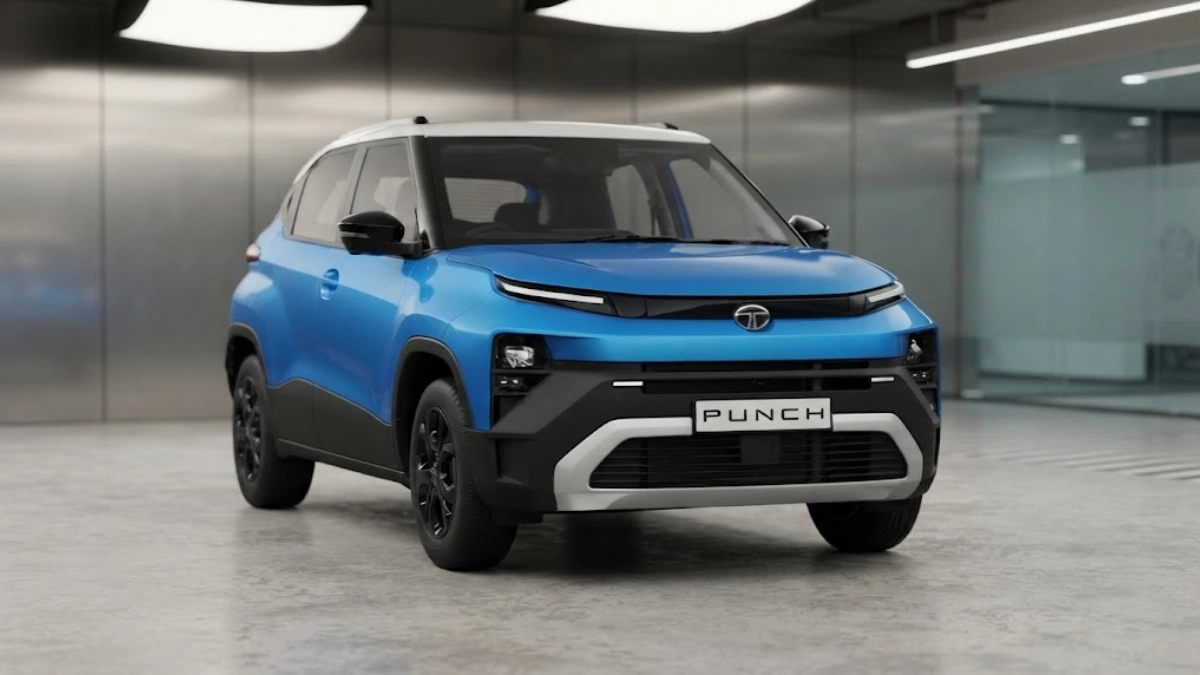
Tata Punch Flex Fuel — Powered by the same 1.2-litre Revotron engine, it can run on E85 to E100 blends. Tata Motors is preparing to introduce its first flex-fuel passenger vehicle in India by late 2026 or early 2027.
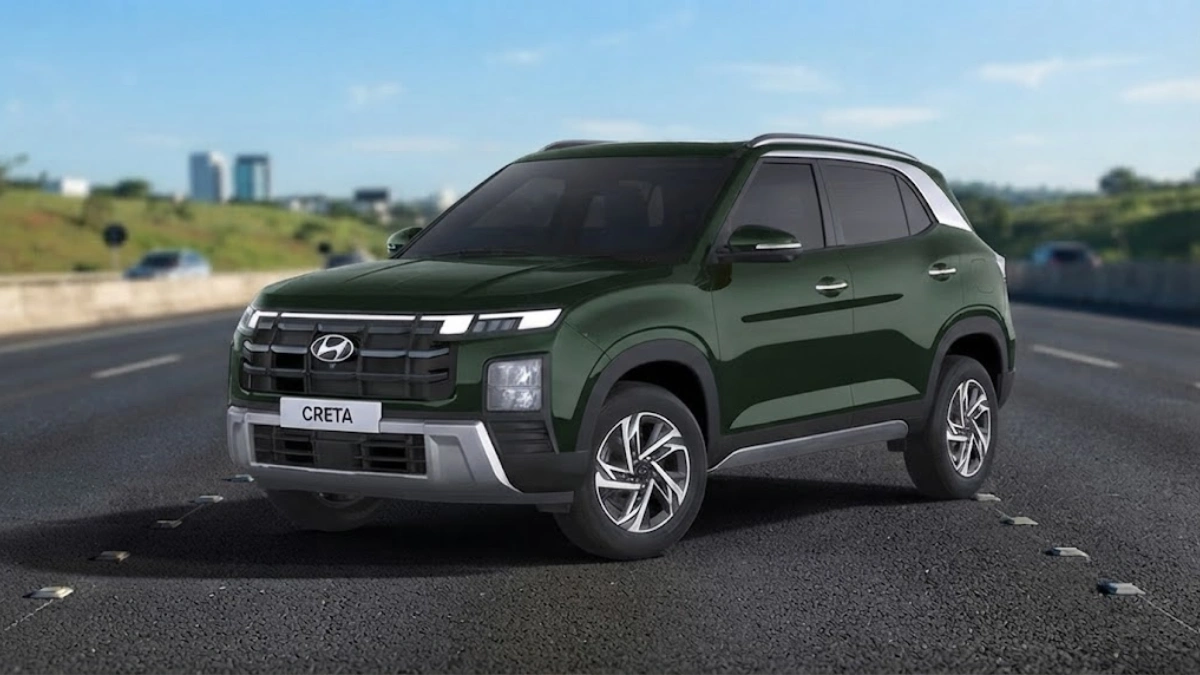
Hyundai Creta Flex Fuel — Hyundai revealed the Creta flex-fuel at the Auto Expo 2025, with the SUV's engine modified to run on E100 ethanol, using a 1.0-litre turbo-petrol engine.
Hero Splendor+ and HF Deluxe Flex Fuel — Already launched in June 2026 for the two-wheeler segment.
E85 fuel is currently priced at ₹82.12 per litre in Delhi, making it significantly cheaper than regular petrol — a strong economic incentive for buyers who purchase a new flex-fuel vehicle.
The Real Elephant in the Room: Where Is the E85 Fuel?
Even if you buy a flex-fuel car today, using E85 depends entirely on infrastructure availability — and here the reality is sobering.
E85 is available at a small number of pilot pumps in sugarcane-producing districts of Maharashtra (Kolhapur, Sangli, Satara, Pune), Uttar Pradesh (Lucknow-Kanpur-Muzaffarnagar belt), Karnataka (Mandya, Shivamogga, Belagavi), and Gujarat (select Ahmedabad and Surat locations). The total national count of E85 pumps in 2026 is in the low hundreds compared to approximately 88,000 conventional petrol pumps.
The availability of flex fuel remains the key challenge for wider adoption. A flex-fuel car can always fall back to regular E20 petrol, which is its great advantage over a pure-ethanol or pure-EV vehicle. But the financial benefit of running on cheaper E85 is only available where the pumps actually exist.
The Brazil Lesson India Must Not Ignore
After the 1973 oil crisis, Brazil launched Proálcool in 1975, a nationwide government programme to replace fossil fuel with ethanol from sugarcane. By 1985, over 95% of new cars ran exclusively on ethanol. Then oil prices fell, ethanol supply wobbled, and consumers walked away. Between 1996 and 2002, ethanol-only car production collapsed to practically zero. The fix came in 2003: Volkswagen launched the first mass-produced car capable of running on petrol, ethanol, or any mixture — the flex-fuel solution.
India is wisely learning from Brazil's stumble by going directly to flex-fuel rather than ethanol-only. The ability to run on any blend protects the consumer if fuel supply or pricing changes. That's the strategic genius of the flex-fuel approach.
So, What Should You Actually Do?
If you own a car made before 2020: Continue on E20 petrol (what's already at the pump). Don't attempt E85. Don't retrofit. Watch the market for 12–18 months.
If you're buying a new car in 2026: Seriously consider a flex-fuel variant if one is available in your segment. The Wagon R Flex Fuel is a landmark product. Even if E85 isn't available near you today, infrastructure will expand, and the price difference of ₹20+ per litre makes the long-term math compelling.
If you own an older pre-BS6 vehicle: Get your rubber fuel hoses and seals inspected if you're concerned about E20 exposure. Most mechanics can check for softening or swelling.
If you're a two-wheeler owner: Watch Hero MotoCorp's retrofit kit programme closely — it could be a genuine, manufacturer-backed upgrade path to E85 compatibility without buying a new bike.
The Bottom Line
Existing cars do not need engine changes to keep running — because E85 is not being mandated for all vehicles. E85 has been introduced only for E85-compatible flex-fuel vehicles. Your current E20-compatible car will continue to run on E20 petrol at every pump in India.
But here's the truth: the flex-fuel transition is real, it is accelerating, and the economic argument is powerful. The coming 24 months will see multiple manufacturers — Maruti, Tata, Hyundai, Toyota, Renault — launch flex-fuel variants across multiple segments. Flex-fuel may act as a bridge between petrol and EVs — lower emissions, better fuel security, and familiar technology.
You don't need to change your engine today. But when you next buy a car, choosing one that can adapt to the fuel of the future is simply the smarter decision.
Book a Test Drive
Free doorstep test drive at your convenience
Popular Brands





Latest Car News
Upcoming Cars in September 2026 in India: New Cars, Launch Dates & Expected Prices
MG Hector Hawk SUV vs Tata Harrier: Expected Price, Features & Key Differences
Skoda Superb Diesel in India: Will the Diesel Engine Make a Comeback?
Tata Punch Becomes India's Best-Selling SUV in July 2026 with 21,313 Units Sold

Car Sales Report July 2026: Maruti Remains No.1, Tata, Mahindra & Hyundai Record Strong Growth
Tata Curvv EV Discount August 2026: Save Big with Limited-Time Offers

Kia Sorento Booking in India: Launch Date, Price & Booking Process

Skoda Slavia Facelift Launch Date in India
Hyundai Creta Next Gen Upgrades: Biggest Changes Expected

Limited Edition Skoda Slavia Monte Carlo Adds New Colours for 200 Buyers Only
Suzuki Loses India Market Share as Buyers Demand More Features
Hybrid Car Sales Decline 8% in June 2026: Complete Analysis
How to Book Maruti Brezza Facelift: Complete Booking Guide
Alto K10 vs Tiago: Which Is Better?
Maruti Brezza Facelift 2026: What's New Compared to the Current Model?
Renault Duster Adventure Edition vs Standard Duster: What's Different?
Skoda Slavia Facelift 2026 vs Volkswagen Virtus: Which Sedan Should You Wait For?

Volkswagen Tayron Life Launched in India at ₹41.99 Lakh
Volkswagen Announces 50% Reduction In Global Car Line-up
Tata Nexon Pure Plus : Know Everything Before Buying in July