Top 5 SUVs Worth the Wait in India
- Cars
- Published: 24 Jun, 2026
- Updated: 24 Jun, 2026
Book a Test Drive
Free doorstep test drive at your convenience
India's SUV market has never been more exciting — or more crowded. But amid the sea of crossovers and facelifts, five upcoming models stand apart. These aren't just new nameplates; they represent genuinely new ideas: electric platforms, plug-in hybrid powertrains, hybrid efficiency, and bold designs arriving in a market that is finally ready to embrace them. If you are in the middle of an upgrade decision right now, hold your fire. Here is a detailed breakdown of the five most compelling SUVs heading to Indian showrooms in 2026, and why each one could be worth the wait.
1. Tata Sierra EV — The Legend Reborn, Electrified
Expected Debut: June 30, 2026 Expected Launch: July 2026 Expected Price: ₹18 lakh – ₹25 lakh (ex-showroom)
Why the Hype is Real
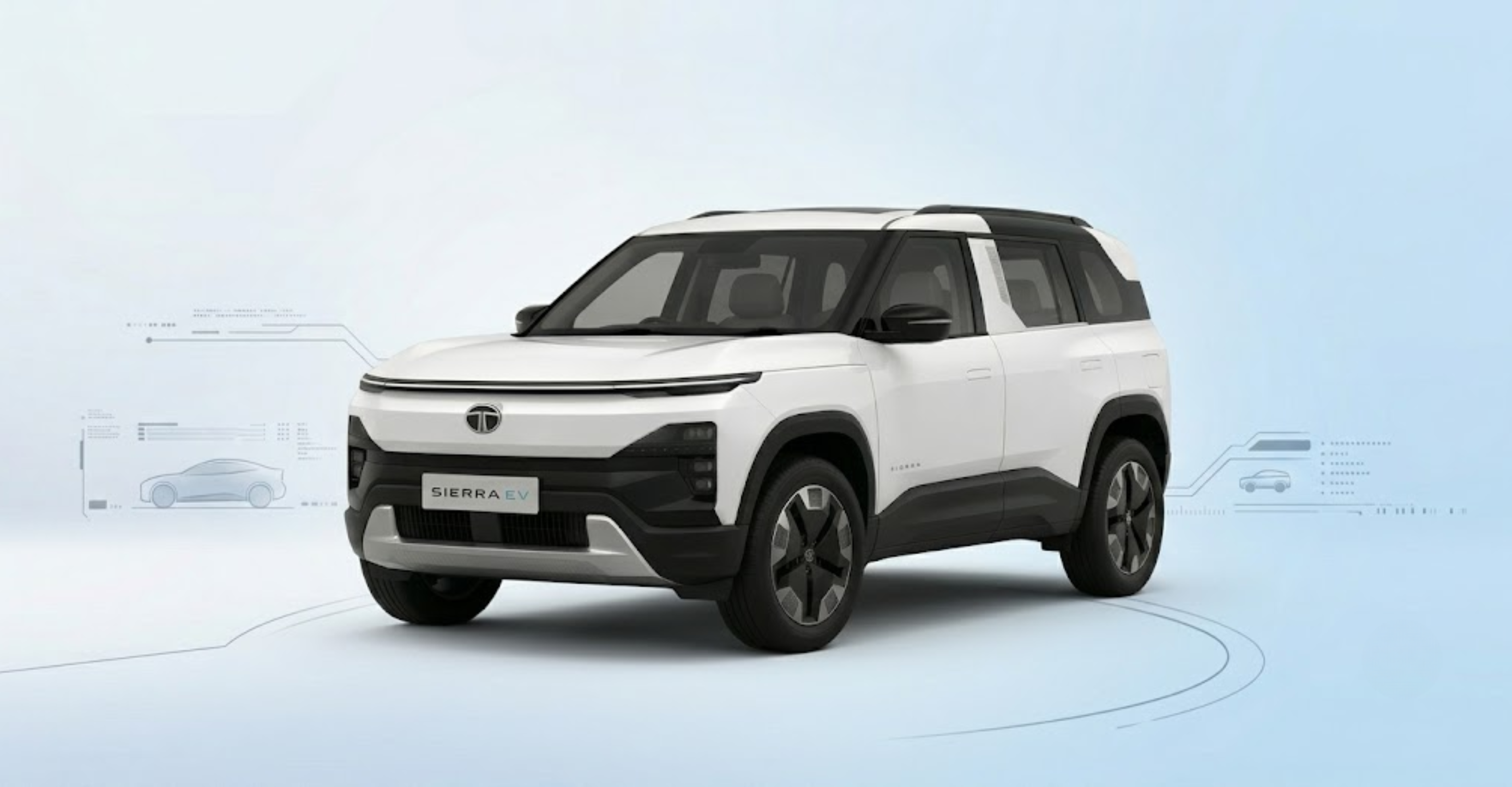
Few nameplates carry as much emotional weight in India as the Sierra. The original Tata Sierra from the 1990s was a cult icon — three-door, boxy, unapologetically bold — and its revival was always going to generate headlines. But this is not just a nostalgia play. Tata is bringing the Sierra back as a fully electric SUV, confirming its formal production debut for June 30, 2026, just days from now.
The Sierra EV sits on Tata's Gen 2 Acti.ev+ architecture, the same advanced platform that underpins the Harrier EV. This places it firmly in the league of serious electric hardware, not a budget adaptation. The platform supports independent rear suspension — a significant mechanical upgrade over the standard beam axle found in its ICE counterpart — delivering better ride quality over India's inconsistent road surfaces and more confident handling in corners.
Design: Nostalgia Meets Now
Tata has remained faithful to the Sierra's original character while pulling it into the EV era. The boxy stance, flat bonnet, upright profile, and distinctive blacked-out C-pillar with its wrap-around rear glass are all present and accounted for. The front, however, is unmistakably modern: a full-width LED light bar, closed-off grille, flush door handles, and '.ev' badging throughout. The EV gets a body-coloured front fascia with a piano black bumper to distinguish it from the petrol version. At the rear, a connected wraparound LED tail lamp and a centrally positioned Tata logo give it a clean, premium finish.
Inside, expect Tata's signature dual or triple-screen setup — the top variants are rumoured to feature a 10.25-inch digital instrument cluster, a 12.3-inch central touchscreen, and a 12.3-inch passenger display. A panoramic sunroof, powered and ventilated front seats, a premium audio system, a head-up display, and the Arcade.ev app suite round out a cabin that punches well above its price bracket. A digital interior rearview mirror, ambient lighting, and four-spoke steering wheel with an illuminated Tata logo complete the tech-forward interior story.
Powertrain
Tata's Chief Commercial Officer Vivek Srivastava has confirmed that the Sierra EV will be offered in both Rear Wheel Drive (RWD) and All-Wheel Drive (AWD) versions, with AWD expected exclusively on the 75 kWh variant. Two battery options are anticipated — a 65 kWh pack and a larger 75 kWh unit — with claimed ranges of 500 to 550 km and realistic real-world figures estimated between 430 and 470 km. Fast charging up to DC speeds and AC compatibility are expected as standard. The AWD setup will make the Sierra EV the only all-wheel-drive EV in its immediate segment, a distinction that includes rivals like the Hyundai Creta Electric and Mahindra BE 6.
Safety
Tata's safety credentials are well established. The Sierra EV is expected to carry Level 2 ADAS, electronic stability control, hill hold assist, TPMS, 360-degree cameras, and up to seven airbags. A strong Bharat NCAP performance is anticipated given the platform and Tata's track record.
Positioned between the Curvv EV (₹16.99–19.19 lakh) and the Harrier EV (₹21.49–28.99 lakh), the Sierra EV fills a genuine gap in Tata's portfolio. For buyers who want a purpose-built electric SUV with iconic design, AWD capability, and a brand name they trust, the Sierra EV is a compelling reason to wait just a few more weeks.
2. MG Starlight 560 — India's First Mass-Market PHEV + EV Combo
Expected Launch: October – November 2026 (Festive Season) Expected Price: ₹20 lakh – ₹30 lakh (ex-showroom)
A New Chapter for JSW MG
JSW MG Motor India has filed a design patent for the Starlight 560 — a rebadged version of the globally sold Wuling Starlight 560 — in India, with the patent lodged in March 2026. Spy shots of the SUV testing on Indian roads have now surfaced, and the launch window is confirmed as the festive season of 2026. This will be MG's most significant product launch of the year and is expected to be a first in Indian motoring: a mass-market SUV offered simultaneously in both plug-in hybrid (PHEV) and fully electric (EV) formats.
Size and Stance
The Starlight 560 is a proper large family SUV. It measures 4,745 mm in length and sits on a 2,810 mm wheelbase, making it around 50 mm longer than both the Tata Safari and the Mahindra XUV 7XO, and with a 60 mm longer wheelbase. This translates directly into genuine rear row space — not the cramped third-row compromise seen in many nominally seven-seat SUVs. The design adopts an upright, boxy silhouette with squared wheel arches, generous body cladding, roof rails, and bold rectangular LED headlamps with U-shaped DRLs. The overall character leans into practical family-SUV territory rather than flashy styling, which will suit its intended audience well.
Powertrain Options
The PHEV variant combines a 1.5-litre petrol engine with an electric motor and a 20.5 kWh battery pack, producing a combined output of around 197 hp and 230 Nm. This setup offers up to 100 km of pure electric range — more than enough to cover most daily commutes without touching the petrol engine — and a staggering combined range of over 1,100 km on a full tank and a full charge. That figure makes range anxiety essentially irrelevant for this vehicle.
The fully electric version is expected to arrive with a battery capacity in the 56–70 kWh range, offering claimed driving range figures of up to 500 km. A front-wheel-drive layout is expected for the EV, using technology shared with MG's existing lineup. Both versions use a modern, practical powertrain approach that suits the Indian urban-and-highway mix very well.
Cabin and Features
Inside, the Starlight 560 features a minimalist dashboard anchored by a 12.8-inch touchscreen infotainment system and an 8.8-inch digital driver's display. Most functions are consolidated into the touchscreen. A panoramic sunroof, automatic climate control, connected car technology, OTA updates, ambient lighting, multiple USB ports, and premium leatherette upholstery are all expected. The long wheelbase ensures that the second-row occupants are generously accommodated, and a third-row option is expected for the seven-seat variant.
Why It Matters
The Starlight 560 could become the first mass-market SUV in India to offer both EV and PHEV options in a single model line. MG's pricing strategy in India has historically been aggressive, and at the expected ₹20–30 lakh bracket, the Starlight 560 would represent outstanding value against the Mahindra XUV 7XO and Tata Safari while bringing electrified powertrain choices to a segment that currently has none. The PHEV's 1,100 km combined range alone makes it worth serious consideration for anyone who travels long distances regularly.
3. BYD Seal U DM-i — 1,200 km of Range, India's First Mainstream PHEV SUV
Expected Launch: End of 2026 (December) Expected Price: ₹45 lakh – ₹50 lakh (ex-showroom)
BYD Enters the Hybrid Era in India
BYD India has so far offered only fully electric vehicles in India. The Seal U DM-i will change that, becoming the brand's first plug-in hybrid model in the country and debuting its proprietary DM-i (Dual Mode — intelligent) Super Plug-in Hybrid technology here. BYD has formally showcased this powertrain in India and confirmed the Seal U's arrival by the end of 2026.
In some international markets, the Seal U is also known as the Sealion 6, and it has previously appeared at Auto Expo 2025. The five-seat SUV shares BYD's ocean-inspired design language with the Sealion 7 EV already on sale in India, but gets a functional grille up front to distinguish it as a PHEV.
The DM-i Powertrain: World-Class Efficiency
The DM-i Super Plug-in Hybrid EV system is where the Seal U earns its place on this list. It combines a 1.5-litre turbo-petrol engine, two electric motors (a traction motor and a starter-generator), and an 18.3 kWh BYD Blade LFP battery. BYD claims a world-beating thermal efficiency of 43.04% for this hybrid system and a fuel consumption figure of just 4.8 litres per 100 km. The electric motors operate at 97.5% efficiency.
In everyday driving, the electric motors do the heavy lifting while the petrol engine primarily acts as a generator to replenish the battery — functioning much like a range-extender in a series hybrid. Only under high power demand does the engine directly drive the wheels. The system switches automatically between pure EV, series hybrid, and parallel hybrid modes without any driver input.
The battery, when fully charged, enables up to 200 km of pure electric driving range. BYD claims a total combined range exceeding 1,200 km. The system also supports Vehicle-to-Load (V2L) functionality, allowing the SUV to power external appliances — a useful feature for campers and remote workers.
The international specification is offered in two configurations: a front-wheel-drive version producing 218 hp and 300 Nm, and an all-wheel-drive Design variant pairing a rear motor for a total of 323 hp and 550 Nm, capable of accelerating from 0 to 100 kmph in 5.9 seconds.
Design and Features
The Seal U shares the Sealion 7's clean, premium exterior character. Inside, it gets BYD's signature 15.6-inch rotatable infotainment touchscreen, 19-inch alloy wheels, vegan leather upholstery, an Infinity premium sound system, a full ADAS suite, 360-degree cameras, and BYD's Blade Battery technology. The interior feels genuinely premium and tech-forward, appropriate for its price positioning.
Positioning and Competition
At ₹45–50 lakh, the Seal U DM-i will face competition from the JSW Jetour T2 PHEV and, to a degree, from premium SUVs like the Toyota Fortuner and Skoda Kodiaq. Given BYD's strong after-sales network expansion in India and the DM-i system's proven reliability in global markets, the Seal U presents a genuinely compelling case for buyers who want near-EV efficiency for daily commutes without the range anxiety of a pure electric vehicle. BYD's India operations are growing rapidly, which also improves confidence in ownership experience.
If you are in the market for a premium, tech-rich SUV and would consider a plug-in hybrid, the BYD Seal U DM-i is perhaps the most technologically advanced vehicle on this entire list. A 1,200 km combined range, world-class hybrid efficiency, and BYD's proven Blade Battery technology make it a landmark product for the Indian market.
4. Renault Duster Hybrid — The Comeback Story Gets Better
Expected Hybrid Launch: Diwali 2026 (October – November) Expected Hybrid Price: Approximately ₹23–24 lakh (on-road)
Already Back, Getting Better
The Renault Duster has already made its triumphant return to India. Launched on March 17, 2026, at a starting price of ₹10.49 lakh, the third-generation Duster arrived to a warm reception. But the most interesting variant is still to come: the 1.8-litre strong hybrid, which Renault has confirmed will arrive by Diwali 2026, shortly before the festive season ends.
For buyers who are drawn to the Duster's considerable appeal — its rugged looks, class-leading ground clearance, spacious boot, and premium feature set — but want the efficiency and low-running-cost advantages of a hybrid powertrain, this variant is the one to hold out for.
The Duster Hybrid Powertrain
Renault's 1.8-litre strong hybrid system combines a 109 hp petrol engine with a 49 hp electric motor and a 20 hp hybrid starter-generator, backed by a 1.4 kWh battery. Total system output is rated at 160 hp and 172 Nm, paired with an eight-speed DCT gearbox. Renault claims that a very large proportion of city driving can be covered in pure electric mode, reducing fuel consumption significantly. Unlike a conventional mild hybrid, this system allows the SUV to pull away from traffic lights, cruise at low speeds, and navigate congested streets entirely on electric power. The petrol engine comes in during harder acceleration or highway cruising. This is meaningfully different from the mild hybrid systems often described as "hybrid" in the Indian market.
For buyers in cities who spend significant time in stop-and-go traffic, this setup has the potential to deliver very strong real-world fuel economy figures.
What the Rest of the Duster Brings
Even without the hybrid, the 2026 Duster is an impressive package. It has been extensively re-engineered for India, with the India-spec model featuring unique exterior styling cues: LED headlights with eyebrow-shaped DRLs doubling as turn indicators, bold 'DUSTER' lettering across the grille instead of the Renault badge, chunky skid plates and body cladding, C-pillar-mounted rear door handles, and a sleek rear LED light bar — a feature absent from the global Dacia version.
Ground clearance is rated at 212 mm, putting it ahead of the Hyundai Creta (190 mm) and Kia Seltos (195 mm). Boot space stands at 518 litres up to the parcel shelf and 700 litres with the rear seats folded. These are genuinely class-competitive numbers.
The feature list is impressive for the price. A 10.1-inch touchscreen with wireless Android Auto and Apple CarPlay, a 10.25-inch digital instrument cluster, dual-zone climate control, a panoramic sunroof, 6-way powered and ventilated front seats, Qi2 wireless charging, a powered tailgate, and Level 2 ADAS with 17 features — including adaptive cruise control with stop-and-go, active emergency braking, lane keep assist, and a 360-degree 3D camera — make this one of the most well-equipped SUVs in its segment. Six airbags are standard across all but the base variant.
Safety credentials are being built rapidly: the Duster is already in the process of being assessed for Bharat NCAP ratings, and its RGMP platform is claimed to be future-ready for BS7 emission norms, flex-fuel, CNG, and EV powertrains.
The Competition
The Duster hybrid will compete directly with the Toyota Hyryder and Maruti Grand Vitara strong hybrids, which have proven the demand for this technology in the ₹20–24 lakh range. Where the Duster differentiates itself is on character — the rugged styling, higher ground clearance, superior boot space, and a more engaging driving personality (the 1.3-litre petrol version has received particular praise for its driving dynamics) set it apart from the more urban-focused Japanese hybrid alternatives.
The hybrid variant has reportedly already been sold out for the year in pre-bookings, a significant indicator of demand even before prices have been officially announced.
The Renault Duster Hybrid is, in many ways, the most immediately practical choice on this list. It is a well-rounded, feature-packed, rugged SUV with a genuinely efficient hybrid drivetrain, arriving in a price bracket with proven demand. If you want the Duster — and many buyers do — waiting a few extra months for the hybrid makes a lot of sense.
5. JSW Jetour T2 (Chery Jetour T2) — The Defender Challenger Arrives
Expected Debut: August 2026 Expected Launch: October 2026 (Before Diwali) Expected Price: ₹30 lakh – ₹40 lakh (ex-showroom)
India's Most Ambitious New Entry
The JSW Jetour T2 represents something genuinely unusual in the Indian market: a Chinese-origin SUV arriving with a Land Rover Defender-inspired boxy aesthetic, a plug-in hybrid powertrain, 139 km of pure electric range, and the backing of one of India's largest industrial conglomerates — the JSW Group. This will be JSW Motors' debut as an independent passenger vehicle brand, distinct from its existing MG Motor joint venture.
The T2 has been patented in India, is actively being tested on Indian roads, and local assembly is expected to commence at JSW's greenfield manufacturing facility in Chhatrapati Sambhajinagar, Maharashtra, ahead of the Diwali launch. JSW Group Chairman Sajjan Jindal has publicly confirmed a price positioning of ₹15–30 lakh, though recent reports and analyst projections suggest the PHEV variant will realistically land between ₹30–40 lakh, given the cost of the plug-in hybrid powertrain.
Design: Rugged Simplicity
The Jetour T2 was designed by Hakan Saracoglu, a former Porsche designer, and the influence shows. The exterior design language is deliberately reminiscent of the Land Rover Defender — a boxy silhouette, squared-off wheel arches, a high bonnet line, a rear-mounted spare wheel, and rugged proportions that signal off-road intent. Dual-pod LED headlamps with pixel-styled DRLs, prominent 'JETOUR' grille lettering, and substantial bumpers complete the look. The SUV measures 4,785 mm in length, 2,006 mm in width, and 1,875 mm in height on a 2,800 mm wheelbase — genuinely large by any standard.
Importantly, despite its hardcore looks, the T2 uses a monocoque chassis based on Chery's Kunlun platform, which means it handles like a car rather than a truck on city roads. Ground clearance is 220 mm, and water-wading depth is 700 mm — figures that back up the adventure-ready positioning.
The PHEV Powertrain
Only the PHEV version — the Jetour T2 i-DM — will be sold in India. It is powered by a 1.5-litre turbo-petrol engine producing 156 hp and 220 Nm, paired with electric motors through a 3-speed Dedicated Hybrid Transmission (DHT). A 26.7 kWh battery enables 139 km of certified pure electric range (NEDC), with claimed total combined range figures of up to 1,200 km. DC fast charging can take the battery from 30% to 80% in approximately 30 minutes. Both front-wheel-drive and all-wheel-drive layouts are expected to be available in India.
The powertrain approach is similar to BYD's DM-i in concept — electric-first for daily driving, with the petrol engine seamlessly taking over for longer runs — and positions the T2 as a highly efficient SUV for buyers who do not want to compromise on performance or range.
Cabin and Technology
Inside, the T2 is surprisingly premium for its price point. The centrepiece is a massive 15.6-inch touchscreen running on a Qualcomm Snapdragon 8155 chip — the same processor used in premium smartphones — ensuring fast, responsive infotainment. A 10.25-inch digital instrument cluster, a 12-speaker Sony audio system, a 64-inch panoramic sunroof, ambient lighting, and electrically adjustable ventilated front seats with massage and memory function all feature. Active Noise Cancellation (ANC) in the cabin is also offered — a segment-first feature at this price level.
Safety equipment includes Level 2 ADAS, adaptive cruise control, traffic jam assist, automatic emergency braking, lane keep assist, blind-spot monitoring, a 360-degree surround-view camera, multiple airbags, and all-wheel disc brakes. The T2 has already achieved a 5-star ASEAN NCAP rating in international testing, which bodes well for Indian crash test performance.
The Caveats
Two real concerns deserve acknowledgment. First, JSW Motors is a brand-new automotive entity with zero existing service infrastructure in India. Building a credible nationwide service network from scratch is a significant challenge, and early buyers outside major metro cities should wait for confirmation of local service availability before committing. Second, the Jetour/Chery origin may be a consideration for some buyers in the current geopolitical environment, although JSW Group's backing and local manufacturing commitment are deliberate strategies to address exactly this concern.
If you are looking for a large, boxy, adventure-styled SUV with a plug-in hybrid powertrain, Defender-rivalling aesthetics, and genuinely premium cabin technology at a price point that could be 30–40% lower than Land Rover alternatives, the JSW Jetour T2 is worth the wait. It represents the most audacious value proposition in Indian motoring this year.
The Big Picture: Why 2026 Is a Turning Point
What makes this list remarkable is not just the individual vehicles — it is what they represent collectively. India's SUV market in 2026 is finally moving beyond petrol-only options in a meaningful way. Strong hybrids, plug-in hybrids, and pure EVs are arriving simultaneously across multiple price brackets, giving Indian buyers choices that were unavailable even two years ago.
The Renault Duster Hybrid democratises strong hybrid technology below ₹25 lakh. The Tata Sierra EV brings a genuine AWD electric SUV to the ₹20–25 lakh bracket. The MG Starlight 560 will offer both PHEV and EV in the same model at around ₹20–30 lakh. The BYD Seal U DM-i pioneers 1,200 km plug-in hybrid range at ₹45–50 lakh. And the JSW Jetour T2 brings 139 km pure electric range with adventure styling to ₹30–40 lakh.
Whether you are driven by efficiency, technology, design, or value, the next six months will be one of the most exciting periods in Indian automotive history.
Book a Test Drive
Free doorstep test drive at your convenience
Popular Brands





Latest Car News
Upcoming Cars in September 2026 in India: New Cars, Launch Dates & Expected Prices
MG Hector Hawk SUV vs Tata Harrier: Expected Price, Features & Key Differences
Skoda Superb Diesel in India: Will the Diesel Engine Make a Comeback?
Tata Punch Becomes India's Best-Selling SUV in July 2026 with 21,313 Units Sold
Car Sales Report July 2026: Maruti Remains No.1, Tata, Mahindra & Hyundai Record Strong Growth
Tata Curvv EV Discount August 2026: Save Big with Limited-Time Offers
Kia Sorento Booking in India: Launch Date, Price & Booking Process
Skoda Slavia Facelift Launch Date in India
Hyundai Creta Next Gen Upgrades: Biggest Changes Expected
Limited Edition Skoda Slavia Monte Carlo Adds New Colours for 200 Buyers Only
Suzuki Loses India Market Share as Buyers Demand More Features
Hybrid Car Sales Decline 8% in June 2026: Complete Analysis
How to Book Maruti Brezza Facelift: Complete Booking Guide
Alto K10 vs Tiago: Which Is Better?
Maruti Brezza Facelift 2026: What's New Compared to the Current Model?
Renault Duster Adventure Edition vs Standard Duster: What's Different?
Skoda Slavia Facelift 2026 vs Volkswagen Virtus: Which Sedan Should You Wait For?
Volkswagen Tayron Life Launched in India at ₹41.99 Lakh
Volkswagen Announces 50% Reduction In Global Car Line-up
Tata Nexon Pure Plus : Know Everything Before Buying in July