
Top 10 Cars with the Most Reliable Engines in India
- Cars
- Published: 25 Jun, 2026
Book a Test Drive
Free doorstep test drive at your convenience
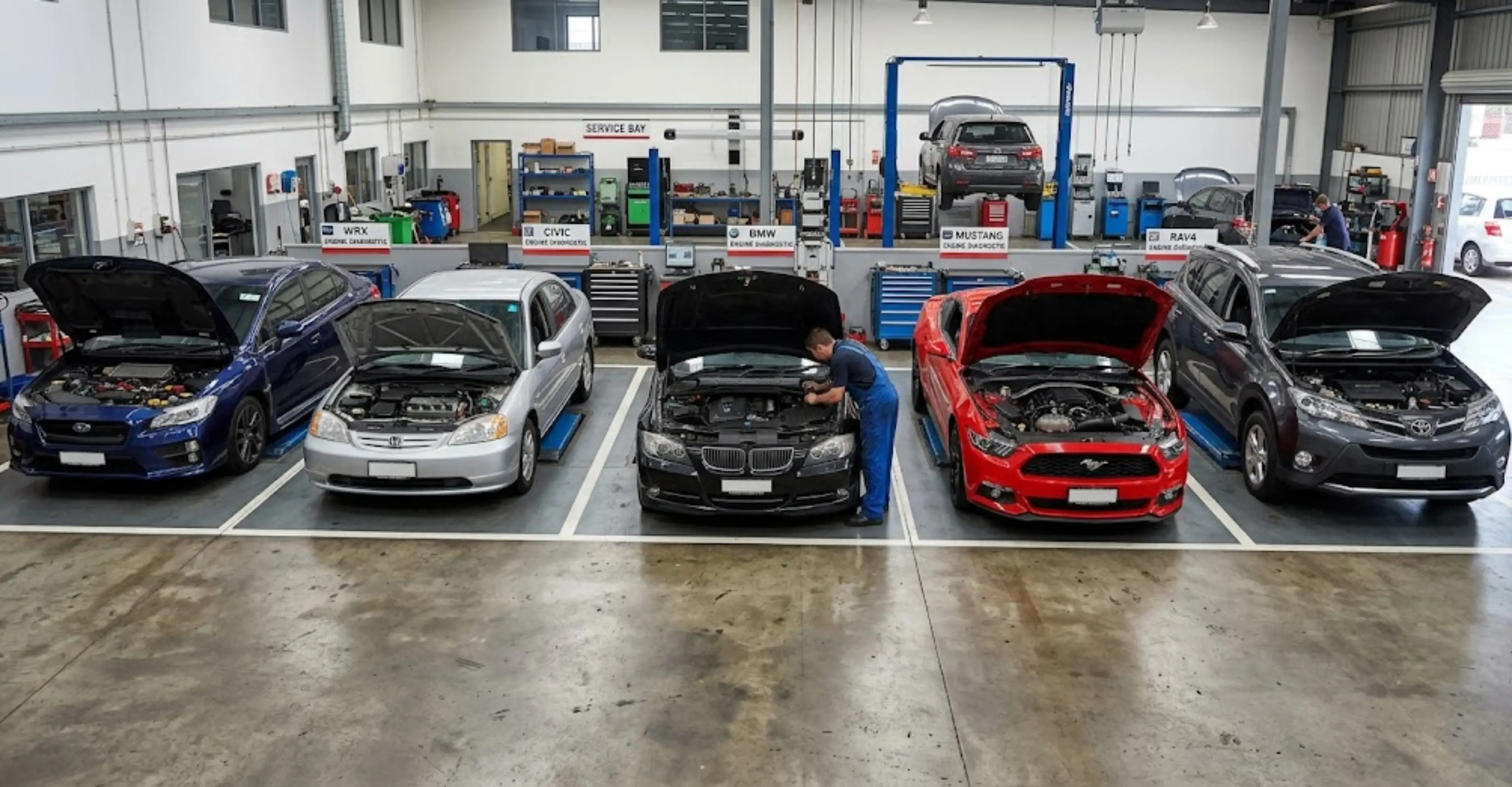
Engine reliability is arguably the single most important factor in a car's long-term ownership experience more than features, more than design, and in many cases more than outright performance. A car with a stunning interior but a troublesome engine is a source of constant stress. A car with a simple, proven, bulletproof engine is something you forget about in the best possible way — you just drive it.
In the Indian context, engine reliability carries extra weight. Indian roads are punishing — potholes, extreme heat, stop-start city traffic, occasional flooding, and long highway stretches all stress a powertrain simultaneously. Fuel quality, while improved with BS6, still varies across regions. Service infrastructure outside major cities can be limited. In this environment, an engine that demands minimal intervention and tolerates imperfect conditions gracefully is not a luxury — it is a necessity.
This blog identifies ten cars sold in India whose engines have earned a genuine reputation for longevity, low maintenance, and consistent performance over years and high mileage. The selection is based on real-world ownership data, long-term reliability patterns, and the kind of reputation that accumulates not from press reviews but from taxi drivers, long-distance travellers, and owners who have crossed 2 lakh kilometres without opening the engine.
1. Maruti Suzuki Swift / Dzire — 1.2-litre K-Series Engine
The K-series engine family from Maruti Suzuki is probably the most thoroughly proven petrol engine architecture in India today. Originally introduced in 2008 and continuously refined through the K10, K12, and now K12N/Z12E iterations, these engines have accumulated hundreds of millions of kilometres of real-world Indian road use across the Swift, Dzire, Baleno, WagonR, and Ertiga lineups.
The current 1.2-litre K12N DualJet engine powering the Swift and Dzire produces 90 bhp — modest by any measure — but that modesty is part of the reliability story. The engine is not stressed. It operates well within its mechanical limits under normal driving conditions, which means components last longer and wear rates are lower. It uses a dual-jet fuel injection system that improves fuel atomisation and combustion efficiency, contributing to cleaner combustion and lower carbon deposit buildup over time.
What makes the K-series genuinely special from a reliability standpoint is its mechanical simplicity. It uses a timing chain rather than a rubber timing belt — chains last the life of the engine under normal maintenance, while belts require scheduled replacement at significant cost and risk catastrophic failure if neglected. The engine is also famously tolerant of irregular service intervals, which matters in a country where not every owner follows the handbook precisely.
Taxi operators running Dzires in cities like Mumbai, Pune, and Hyderabad routinely report 3 to 4 lakh kilometres on the original engine with standard servicing — that is a remarkable real-world testimony to the K-series' durability.
2. Toyota Innova Crysta — 2.7-litre Petrol and 2.4-litre Diesel Engines
The Innova's engine reputation is legendary in India — and not just in enthusiast circles. Ask any long-distance taxi operator, any large family that has owned one, or any fleet manager, and you will hear the same thing: the Innova just does not break down.
The 2.4-litre 2GD-FTV diesel engine powering the Innova Crysta is a direct descendant of Toyota's globally acclaimed GD engine family, and it has earned its reputation through sheer, accumulated evidence. Innova diesels running as intercity taxis in states like Rajasthan, UP, and Tamil Nadu regularly cross 5 lakh kilometres on the original engine with routine maintenance — oil changes, filter replacements, and timing chain service at prescribed intervals. The engine tolerates the heat of Indian summers, the dusty conditions of highway driving, and the variable quality of diesel fuel across different states with equal composure.
The 2.7-litre 2TR-FE petrol engine, available in the Crysta and now the primary option in the Hycross, is similarly bulletproof. Toyota's engine architecture philosophy prioritises longevity over performance — these engines are not tuned to produce maximum power; they are tuned to last. The result is an engine that still pulls cleanly and starts reliably at 2,00,000 kilometres with nothing beyond standard maintenance.
The Innova's engine reliability has a direct financial dimension — its resale value at five years remains extraordinarily high precisely because buyers trust that a well-maintained Innova engine will continue delivering for another five years. That confidence is the market's ultimate endorsement of engineering.
3. Honda City — 1.5-litre i-VTEC Petrol Engine
Honda's i-VTEC engine is one of the most celebrated petrol engine architectures in automotive history, and the 1.5-litre unit that has powered successive generations of the City in India since 1998 has built a reputation for reliability that is almost without peer in the sedan segment.
The engine produces 121 bhp in its current form — genuinely eager performance for a compact sedan — but more importantly, it achieves this while maintaining exceptional mechanical integrity over high mileages. The VTEC variable valve timing mechanism, which Honda has refined over decades, adds very little complexity in terms of failure risk while delivering significant efficiency and performance benefits across the rev range.
Honda City owners who maintain proper service intervals — particularly regular oil changes with the correct specification oil — routinely report engines that remain smooth, oil-tight, and responsive well past 2 lakh kilometres. The engine is also notably resistant to overheating, which is a meaningful attribute in Indian summer conditions where cooling system stress is constant.
The main caveat with the Honda City's engine is that it rewards disciplined maintenance more than it tolerates neglect. Unlike the Maruti K-series, which is forgiving of irregular servicing, the i-VTEC prefers regular attention — particularly fresh engine oil at the right intervals. Given that discipline, it is one of the most rewarding long-term petrol engines in the Indian market.
4. Hyundai Creta — 1.5-litre Petrol and Diesel Engines
The Creta is India's best-selling SUV by a wide margin, and a significant part of its sustained dominance is the reliability of its powertrains. Hyundai has invested heavily in engine development over the past decade, and the current generation Creta's 1.5-litre petrol and 1.5-litre diesel units represent the maturation of that investment.
The 1.5-litre MPi petrol engine, producing 115 bhp, is a naturally aspirated unit that prioritises smoothness and longevity over peak performance. Naturally aspirated engines generally offer a reliability advantage over turbocharged units in the Indian context — there is no turbocharger to service, no intercooler to maintain, and no boost pressure creating additional thermal stress on engine components. The engine runs cool, starts reliably, and has demonstrated strong long-term durability across the large installed base of Creta owners in India.
The 1.5-litre U2 diesel engine is an evolution of Hyundai's long-running diesel architecture and has similarly proven itself across millions of kilometres of Indian road use. The diesel variant is particularly popular with highway-heavy users — the torque delivery suits Indian highway speeds, and the economy in the 17–19 km/l range on highways makes it compelling for owners covering 40,000 kilometres or more annually.
Hyundai's service network in India is the second largest after Maruti, which means that even when maintenance is required, it is accessible and affordable. Genuine spare parts availability is excellent, which is the unsung complement to engine reliability — a reliable engine is only as good as the support infrastructure around it.
5. Toyota Fortuner — 2.8-litre 1GD-FTV Diesel Engine
The Fortuner's 2.8-litre diesel engine is in a different class from the others on this list — not because it is necessarily more reliable in percentage terms, but because it performs its reliability feat under considerably more demanding circumstances. This is a large SUV, weighing over 2,000 kg, frequently used off-road, regularly loaded with seven passengers and luggage, and often driven on the kind of roads that would damage lesser vehicles structurally, let alone mechanically.
The 1GD-FTV engine produces 204 bhp and 500 Nm of torque — serious performance figures — and yet it maintains the characteristic Toyota approach of building significant mechanical headroom into the design. The engine is not operating near its limits under normal driving conditions, which means longevity is built in structurally, not just hoped for.
Fortuner owners using their vehicles as genuine workhorses — in states like Himachal Pradesh, Uttarakhand, and the Northeast where road conditions are extreme — report engines that require nothing beyond scheduled maintenance for hundreds of thousands of kilometres. The timing chain, robust bottom end, and Toyota's characteristic engineering conservatism all contribute to an engine that simply endures.
The Fortuner is not a cheap car to maintain when it does require service — genuine parts carry a premium. But the frequency of required intervention is low enough that total maintenance costs over five years remain reasonable relative to the vehicle's capability and price point.
6. Maruti Suzuki Ertiga — 1.5-litre K15C Mild Hybrid Engine
The K15C engine powering the current Ertiga represents an evolution of Maruti's K-series philosophy — the same fundamental reliability DNA, now combined with mild hybrid assistance and improved thermal efficiency. The engine produces 103 bhp in petrol form and works in conjunction with a 12V integrated starter-generator (ISG) that provides mild torque assistance during acceleration and enables more sophisticated idle start-stop functionality.
What makes the K15C particularly noteworthy from a reliability standpoint is that Maruti has successfully grafted hybrid technology onto the K-series architecture without sacrificing the simplicity and robustness that made the original K-series great. The mild hybrid system is deliberately conservative in its complexity — a 12V architecture rather than the higher-voltage systems used in full hybrids — which means it adds efficiency without adding significant failure risk.
The engine is notably well-suited to the mixed urban and highway use that Ertiga owners typically experience. The mild hybrid assistance reduces engine load during the most thermally stressful moments — pulling away from standstill in heavy traffic — which contributes to long-term engine health. CNG variant owners running the Ertiga as family taxis report consistently high mileages without significant engine intervention, reinforcing the K15C's real-world reliability credentials.
7. Honda Amaze — 1.2-litre i-VTEC Petrol and 1.5-litre i-DTEC Diesel
The Honda Amaze carries forward two of Honda's most proven engine architectures in the Indian market — the 1.2-litre i-VTEC petrol and the 1.5-litre i-DTEC diesel — in a compact sedan package that has built a strong reliability reputation among urban and semi-urban buyers.
The 1.5-litre i-DTEC diesel deserves particular attention. It is one of the smoothest, most refined diesel engines in the sub-₹10 lakh segment, and it has demonstrated exceptional longevity in the hands of high-mileage users. The engine uses a common rail direct injection system with Honda's characteristic engineering precision, and it returns genuine fuel economy of 23–25 km/l under mixed driving conditions. Cab operators running the Amaze diesel in cities like Pune, Ahmedabad, and Chennai report low mechanical intervention rates even past 2 lakh kilometres, which is strong evidence of the engine's fundamental soundness.
The petrol i-VTEC in the Amaze is the same basic architecture as the larger unit in the City — smaller displacement, but the same engineering philosophy. It is smooth, rev-happy, and tolerant of the urban driving conditions that most Amaze owners experience daily. Together, these two engines make the Amaze one of the most reliable compact sedans in India from a powertrain perspective.
8. Tata Nexon — 1.2-litre Turbocharged Revotron Petrol and 1.5-litre Revotorq Diesel
Including a Tata product in a reliability list would have raised eyebrows a decade ago. The narrative around Tata's engine reliability has changed significantly in the past five to six years, and the Nexon is the car most responsible for that shift.
The 1.5-litre Revotorq diesel engine in the Nexon is a genuinely accomplished unit — compact, responsive, and increasingly proven over a large installed base of Indian owners. It produces 115 bhp and 260 Nm, numbers that feel genuinely adequate rather than merely sufficient, and it delivers real-world economy of 17–19 km/l on highways. More importantly for this list, it has demonstrated durability over the years since the Nexon's launch in 2017, with owners reporting low rates of significant mechanical issues when maintained correctly.
The 1.2-litre turbocharged Revotron petrol is a more nuanced story — turbochargers inherently add a maintenance consideration that naturally aspirated engines avoid, and Indian summer heat is harder on intercooler and turbo systems than temperate climates. That said, Tata has progressively addressed the early-generation issues through software updates and component refinements, and the current Nexon petrol has a significantly better reliability record than the original 2017 unit. The Nexon EV's electric powertrain, worth mentioning in this context, has an extremely low mechanical intervention record — electric motors simply have fewer failure points than combustion engines.
9. Kia Seltos — 1.5-litre Naturally Aspirated Petrol Engine
Kia entered India in 2019 and immediately made a significant impact with the Seltos. Among the multiple engine options available, the 1.5-litre naturally aspirated petrol engine has emerged as the reliability standout — and for good reason.
This is a simple, well-proven architecture. No turbocharger, no dual-clutch transmission complications in the IVT (Intelligent Variable Transmission) pairing, no complex hybrid components. Just a clean, smooth 115 bhp naturally aspirated petrol engine that gets on with the job without drama. In the Indian context — where ambient temperatures are high, traffic conditions are stressful, and fuel quality varies — the absence of turbocharging is a genuine reliability asset for everyday use.
Kia has backed the Seltos with a comprehensive warranty and service infrastructure that has expanded rapidly since 2019. Genuine parts availability is now strong across Tier 1 and Tier 2 cities. The 1.5 NA petrol Seltos has accumulated five-plus years of Indian road use without any widespread powertrain concerns emerging — which, for a relatively new entrant in a demanding market, is a meaningful reliability endorsement.
10. Maruti Suzuki Baleno — 1.2-litre Z12E DualJet Engine
The Baleno occupies a fascinating position in the Maruti lineup — it is the premium hatchback that bridges the gap between the Swift and the Ciaz, and its engine reflects a similar positioning. The current 1.2-litre Z12E DualJet engine represents Maruti's most refined small petrol unit, incorporating idle start-stop technology, dual fuel injectors per cylinder, and a compression ratio optimised for BS6 fuel quality.
The Z12E produces 90 bhp — identical to the K12N in the Swift on paper — but delivers it with slightly more refinement and a broader torque spread that suits the Baleno's slightly more premium positioning. More relevantly for this list, it inherits all the K-series reliability DNA that has accumulated over 15-plus years of Indian road use. The timing chain architecture, the robust bottom end, the tolerance of Indian driving conditions — all of it carries forward.
The Baleno also offers a CNG variant with the same engine architecture — another real-world reliability test that the K-series passes comfortably. CNG operation places specific stresses on valves, valve seats, and combustion chamber surfaces, and the K-series engine family has demonstrated that it handles CNG duty cycles without accelerated wear, which is not a given with all petrol engine architectures.
What Makes an Engine Truly Reliable in Indian Conditions?
Looking across these ten engines, several common threads emerge that define genuine Indian-road reliability rather than just global benchmark performance.
Mechanical simplicity is the foundation. Engines with fewer complex components — no turbochargers where not necessary, timing chains instead of belts, proven fuel injection systems rather than cutting-edge direct injection with its carbon deposit challenges — simply have fewer things that can go wrong. This is not an argument against technology; it is an argument for proven technology.
Thermal management matters enormously in a country where underbonnet temperatures regularly exceed 80°C in summer traffic. Engines with robust cooling system designs, adequate thermal headroom between operating temperature and thermal limits, and intelligent temperature management strategies last longer in Indian conditions than engines tuned to European ambient temperatures.
The manufacturer's service network is the invisible component of engine reliability. A theoretically excellent engine becomes unreliable in practice if correct service cannot be performed regularly and affordably. This is why Maruti and Toyota engines dominate real-world Indian reliability discussions — not just because the engineering is sound, but because the support infrastructure ensures that engineering is properly maintained across the vehicle's life.
Finally, fuel tolerance — the ability to perform consistently across the range of petrol and diesel quality encountered across Indian geography — separates engines that are reliable in laboratory conditions from engines that are reliable in the real India. The engines on this list have earned their reputations across that full range of real conditions, not just on highways between Mumbai and Pune.
Conclusion
Reliability is the quiet virtue of the automotive world. It doesn't make headlines the way horsepower figures do, and it doesn't photograph well. But it is what determines whether car ownership is a pleasure or a burden over the five to seven years most Indian buyers keep their vehicles.
The ten engines on this list have earned their reputations the hard way — through millions of kilometres of Indian roads, across every season and every driving condition the subcontinent can produce. Whether you are buying your first car or your fifth, considering engine reliability as a primary criterion — rather than an afterthought — will serve you better in the long run than chasing the latest features or the sharpest design.
The best engine is the one you never have to think about. These ten come closest to that ideal in India today.
Book a Test Drive
Free doorstep test drive at your convenience
Popular Brands





Latest Car News
Upcoming Cars in September 2026 in India: New Cars, Launch Dates & Expected Prices
MG Hector Hawk SUV vs Tata Harrier: Expected Price, Features & Key Differences
Skoda Superb Diesel in India: Will the Diesel Engine Make a Comeback?
Tata Punch Becomes India's Best-Selling SUV in July 2026 with 21,313 Units Sold
Car Sales Report July 2026: Maruti Remains No.1, Tata, Mahindra & Hyundai Record Strong Growth
Tata Curvv EV Discount August 2026: Save Big with Limited-Time Offers
Kia Sorento Booking in India: Launch Date, Price & Booking Process
Skoda Slavia Facelift Launch Date in India
Hyundai Creta Next Gen Upgrades: Biggest Changes Expected

Limited Edition Skoda Slavia Monte Carlo Adds New Colours for 200 Buyers Only
Suzuki Loses India Market Share as Buyers Demand More Features
Hybrid Car Sales Decline 8% in June 2026: Complete Analysis
How to Book Maruti Brezza Facelift: Complete Booking Guide
Alto K10 vs Tiago: Which Is Better?
Maruti Brezza Facelift 2026: What's New Compared to the Current Model?
Renault Duster Adventure Edition vs Standard Duster: What's Different?
Skoda Slavia Facelift 2026 vs Volkswagen Virtus: Which Sedan Should You Wait For?

Volkswagen Tayron Life Launched in India at ₹41.99 Lakh
Volkswagen Announces 50% Reduction In Global Car Line-up
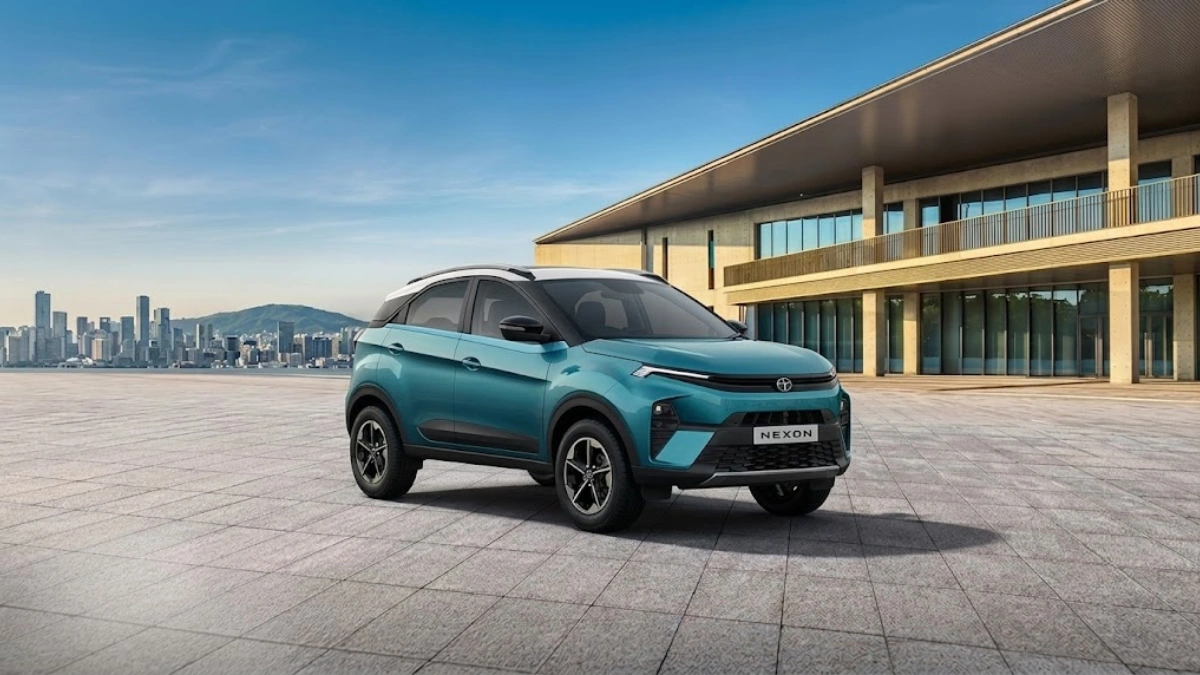
Tata Nexon Pure Plus : Know Everything Before Buying in July