
How to Import a Car in India
- Cars
- Published: 25 Jun, 2026
Book a Test Drive
Free doorstep test drive at your convenience
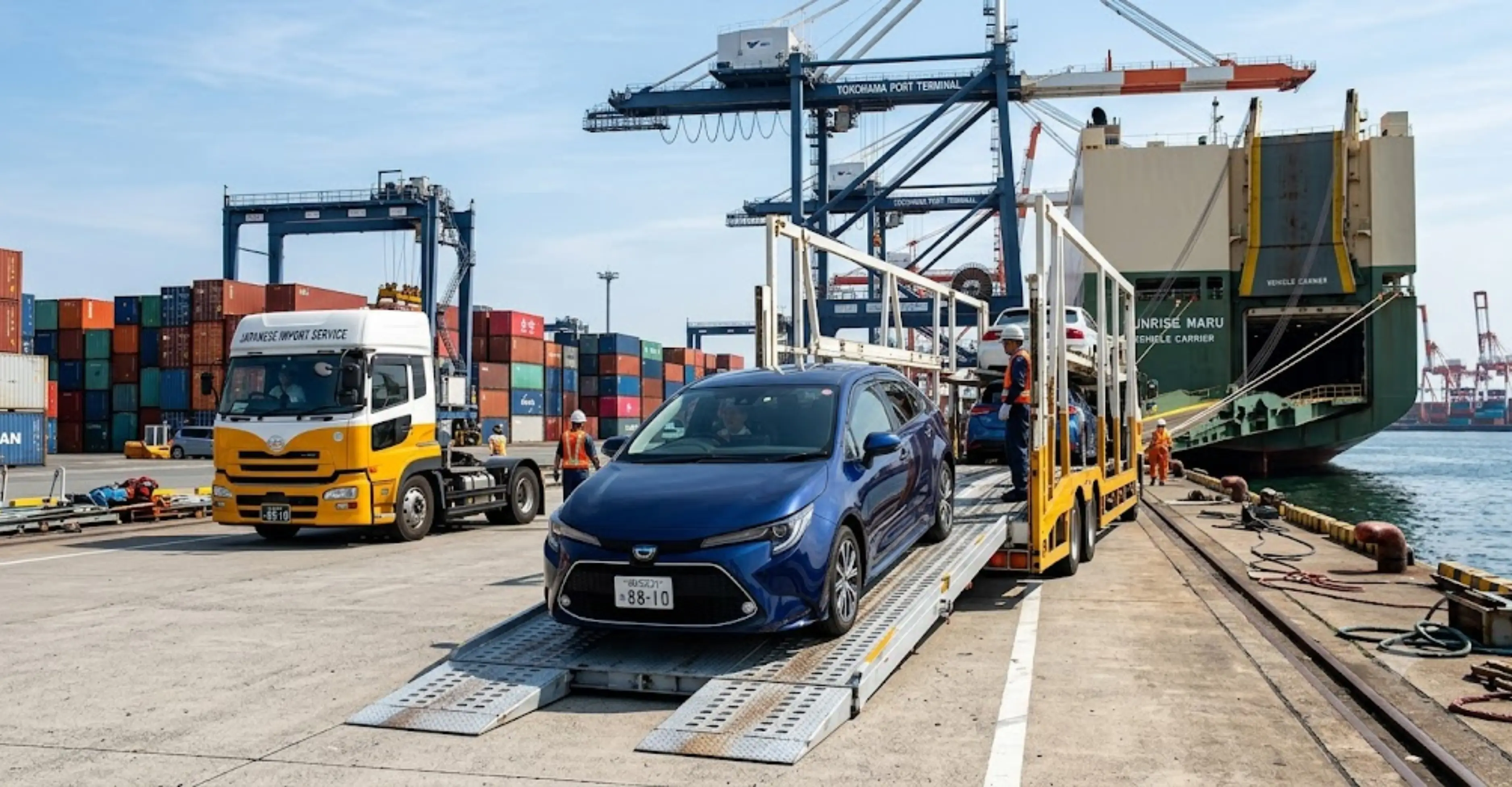
Importing a car into India is a complex, expensive, and heavily regulated process — but it's absolutely doable if you understand the rules. Whether you're an NRI returning home, a car enthusiast chasing a dream machine, or a company importing vehicles, this guide walks you through everything with practical, ground-level clarity.
Why Importing a Car in India Is So Complicated
India deliberately protects its domestic auto industry through very high import duties and strict compliance regulations. The government imposes tariffs that can effectively double or triple the original price of a car. This is by design — not a loophole or bureaucratic accident. So before anything else, mentally prepare for that financial reality.
The rules are governed by three main bodies: the Directorate General of Foreign Trade (DGFT), the Ministry of Road Transport and Highways (MoRTH), and the Central Board of Indirect Taxes and Customs (CBIC). Understanding which authority controls which part of the process saves enormous confusion later.
Two Legal Ways to Import a Car
There are only two legitimate routes to bring a car into India for road use.
1. As a New Vehicle (Commercial Import) — You import a brand-new car directly from a manufacturer or dealer abroad for personal or commercial use. Any Indian resident or registered company can do this, with no citizenship restriction.
2. As a Used Vehicle (Transfer of Residence) — You bring a car you've already owned abroad. This route is primarily designed for NRIs, diplomats, or people returning to India after a long overseas stay. It comes with strict eligibility conditions that are explained in detail below.
Route 1: Importing a New Car — Step by Step
Step 1: Verify Eligibility Before You Buy
This is the step most people skip, and it causes the most expensive problems. Before placing any order or making any payment abroad, confirm two things with the manufacturer in writing:
- The car must comply with Bharat Stage VI (BS6) emission norms — India's equivalent of Euro 6. Non-compliant vehicles will be held at the port with no path to clearance.
- The car must be right-hand drive (RHD). Left-hand drive vehicles are not permitted for road registration in India, and conversion is not legally recognized.
Get a written compliance certificate from the manufacturer. This single document prevents the most common and costly import failures.
Step 2: Obtain an Import Export Code (IEC)
Every individual or entity importing goods into India — including personal vehicles — needs an IEC from the DGFT. You can apply online at dgft.gov.in. The process is straightforward, costs ₹500, and typically takes 2–3 working days. Keep this code handy as it's required at every stage of customs.
Step 3: Understand the Homologation Rule
Cars imported in quantities fewer than 2,500 units per year from a single manufacturer are exempt from full homologation testing at ARAI (Automotive Research Association of India). This is the rule most individual importers rely on, and in practice, almost every personal import falls well under this threshold. Above 2,500 units, full homologation becomes mandatory — an expensive and multi-month process that's really only relevant to commercial importers bringing in large volumes.
Step 4: Hire a Customs House Agent (CHA) — Non-Negotiable
Do not attempt to handle customs clearance without a licensed CHA. The paperwork is dense, time-sensitive, and unforgiving of errors. A good CHA coordinates with the port, files the Bill of Entry, handles duty assessments, and keeps your vehicle from sitting in expensive port storage. CHA fees typically range from ₹30,000 to ₹1,00,000 depending on vehicle value — money very well spent.
Alongside a CHA, hire a freight forwarder with specific automotive experience. General freight companies may not know the vehicle-specific documentation requirements, and a mistake at this stage can delay clearance by weeks.
Step 5: Prepare Your Documentation
Your CHA will guide you on exact requirements, but the core documents are:
- Bill of Lading (from the shipping company)
- Commercial Invoice and Packing List from the seller
- Certificate of Origin
- Marine/Transit Insurance Certificate
- IEC (Import Export Code)
- BS6 compliance certificate from the manufacturer
- Technical specifications / type approval document
Step 6: Pay the Customs Duties
This is where the real cost lands. India's duty structure for imported cars is deliberately steep. Here's the breakdown:
| Engine Size | Basic Customs Duty (BCD) |
| Below 3,000cc / 40 BHP | 60% of CIF value |
| Above 3,000cc or above 40 BHP | 100% of CIF value |
On top of the Basic Customs Duty, you pay a Social Welfare Surcharge of 10% on the BCD, IGST at 28% on the cumulative value, and a Compensation Cess of 15–22% depending on engine size. The total effective duty routinely reaches 100% to 165% or more of the car's CIF (Cost + Insurance + Freight) value.
To put that in real numbers: a car with a CIF value of ₹50 lakh can land in India costing ₹1.25 crore or more after all duties. That's not an exaggeration — it's the standard arithmetic of Indian auto import policy.
Step 7: Choose the Right Port of Entry
Cars must enter through designated ports only. Mumbai (Nhava Sheva / JNPT) is by far the most commonly used and has the most established automotive clearance infrastructure. Chennai and Kolkata are the other main options, and Delhi handles imports through ICDs (Inland Container Depots) at Tughlakabad and Patparganj. Your freight forwarder will recommend the best port based on your final destination city.
Step 8: Register the Vehicle at Your Local RTO
After customs clearance, visit your Regional Transport Office with the Bill of Entry, duty payment receipt, insurance documents, and manufacturer compliance certificate. You'll also need a NOC from MoRTH for certain vehicle categories. Finally, pay your state road tax — this varies by state but typically runs 8–20% of the vehicle's assessed value.
Route 2: Importing a Used Car (Transfer of Residence / NRI Scheme)
This route exists specifically for people returning to India after living abroad, and it comes with firm eligibility conditions that cannot be worked around.
To qualify, you must have lived outside India for at least two continuous years and be returning permanently. The car must have been registered in your name abroad for at least one full year before import. You must initiate the import within six months of arriving in India, and you can only bring one car under this scheme. Critically, the vehicle cannot be sold for two years after import.
The same technical rules apply — the car must be RHD and BS6 compliant. This is where the route hits a practical wall for many NRIs: countries like the USA, Germany, and most of the Middle East primarily sell left-hand drive vehicles that don't meet BS6. Unless you specifically purchased a compliant car abroad with eventual Indian import in mind, the Transfer of Residence route may not be usable.
On duties: used cars under this scheme still attract the same customs duties as new vehicles. There is no significant duty concession for personal-use imports — the main benefit is procedural simplicity, not cost savings.
What Cars Actually Make Financial Sense to Import?
Given the duty structure, self-importing a car makes practical sense only in a narrow set of situations. Hypercars and ultra-luxury vehicles with no official Indian presence — a Bugatti Chiron, a Koenigsegg, a Pagani Huayra — are the clearest cases, where the duty doubles the price but there is simply no alternative. Limited-edition or collector vehicles with no local equivalent are another valid case. For NRIs, the calculus is sometimes emotional rather than financial — bringing a car with personal significance despite the cost.
For any mainstream luxury brand — BMW, Mercedes, Audi, Porsche, Lexus — official Indian CBU imports already exist through the manufacturers' local arms. There is no reason to self-import these and absorb all the hassle personally.
Practical Tips From the Ground
Budget for port storage from day one. Customs processing takes 2–8 weeks on average. Ports charge daily demurrage fees — typically ₹500 to ₹2,000 per day depending on the port and vehicle size. This cost is invisible to most first-time importers and catches them off guard.
Get Indian insurance before clearance, not after. Customs requires valid Indian insurance at the point of clearance, before the vehicle is registered. Arrange a transit insurance policy that automatically converts to a standard motor policy upon registration. Your CHA can usually recommend insurers familiar with this requirement.
Never undervalue the CIF. Customs calculates all duties on the CIF value. If officers suspect undervaluation, the vehicle gets held for reassessment, which can add weeks and significant penalties. Transparency here is not optional — it's strategically smarter.
Verify BS6 compliance in writing, not verbally. Dealerships abroad will often say "yes, it meets Indian norms" without actually knowing. You need the written technical certificate from the manufacturer's export or compliance division. This is your single most important document.
Common Mistakes to Avoid
The most expensive mistake is buying a LHD car hoping to convert it after arrival — conversion is not legally recognized for Indian registration purposes, full stop. Equally damaging is importing without a CHA and assuming you can handle customs personally; errors in the Bill of Entry can result in fines, re-filing costs, and seizure risk. Missing the 6-month Transfer of Residence window is another common error — extensions exist but are not guaranteed, and the extension process is genuinely bureaucratic. Finally, never underestimate the total landed cost. Duties, shipping, CHA fees, port storage, road tax, and registration charges together can add 150–170% on top of the car's original purchase price.
Final Summary Checklist
Before the car ships:
- Confirm RHD configuration and get it in writing
- Obtain BS6 compliance certificate from the manufacturer
- Get your IEC from DGFT
- Hire a licensed CHA and an automotive freight forwarder
During shipping and clearance:
- Ship through an approved port (Mumbai recommended for first-time importers)
- Prepare all documents — Invoice, BoL, CoO, Insurance, technical specs
- Pay customs duties as assessed
- Arrange Indian transit insurance
After clearance:
- Register at your local RTO with all clearance documents
- Pay state road tax
- Receive your Indian registration certificate
Importing a car into India is genuinely one of the more demanding logistics exercises a private individual can take on. But with the right professionals engaged early, a realistic cost budget, and your compliance documents in order before the car ever leaves its home country, it is entirely achievable. The golden rule: do your homework before the car gets on the ship — not after.
Book a Test Drive
Free doorstep test drive at your convenience
Popular Brands





Latest Car News
Upcoming Cars in September 2026 in India: New Cars, Launch Dates & Expected Prices
MG Hector Hawk SUV vs Tata Harrier: Expected Price, Features & Key Differences
Skoda Superb Diesel in India: Will the Diesel Engine Make a Comeback?
Tata Punch Becomes India's Best-Selling SUV in July 2026 with 21,313 Units Sold
Car Sales Report July 2026: Maruti Remains No.1, Tata, Mahindra & Hyundai Record Strong Growth
Tata Curvv EV Discount August 2026: Save Big with Limited-Time Offers
Kia Sorento Booking in India: Launch Date, Price & Booking Process

Skoda Slavia Facelift Launch Date in India
Hyundai Creta Next Gen Upgrades: Biggest Changes Expected

Limited Edition Skoda Slavia Monte Carlo Adds New Colours for 200 Buyers Only
Suzuki Loses India Market Share as Buyers Demand More Features
Hybrid Car Sales Decline 8% in June 2026: Complete Analysis
How to Book Maruti Brezza Facelift: Complete Booking Guide

Alto K10 vs Tiago: Which Is Better?
Maruti Brezza Facelift 2026: What's New Compared to the Current Model?
Renault Duster Adventure Edition vs Standard Duster: What's Different?
Skoda Slavia Facelift 2026 vs Volkswagen Virtus: Which Sedan Should You Wait For?
Volkswagen Tayron Life Launched in India at ₹41.99 Lakh
Volkswagen Announces 50% Reduction In Global Car Line-up
Tata Nexon Pure Plus : Know Everything Before Buying in July