
How to Import a Car from Dubai to India
- Cars
- Published: 25 Jun, 2026
Book a Test Drive
Free doorstep test drive at your convenience
Dubai is one of the world's most popular car markets — competitive pricing, massive variety, zero VAT on vehicles, and easy access to brands and specs not officially sold in India. It's no surprise that Indian buyers frequently look at Dubai as a sourcing destination. But the road from a Dubai showroom to an Indian driveway is longer and more expensive than most people expect.
This guide covers everything specific to the Dubai-to-India route — the rules, the real costs, the process, and the ground-level practicalities that most generic guides leave out.
Why Dubai Attracts Indian Car Buyers
Dubai's car market has genuine advantages that make it worth understanding even if the import duties make the final math difficult.
Prices on many luxury and performance cars in Dubai are significantly lower than Indian CBU prices or even European prices, because the UAE charges no VAT on vehicle purchases and import duties into the UAE are a flat 5%. Brands like Land Rover, Mercedes-Benz, Porsche, Nissan GT-R, and many American muscle cars are available in configurations and specifications not offered through official Indian channels. The used car market in Dubai — particularly at auction houses like Emirates Auction and Al Awir — offers access to well-maintained, relatively young vehicles at attractive prices. And the geographic proximity means shipping costs and transit times are lower than shipping from Europe, the USA, or Japan.
The catch, as always with Indian car imports, is what happens at the Indian end.
The Fundamental Challenge: LHD and Emission Compliance
Before anything else, you need to understand the two structural problems with importing cars from Dubai specifically.
Left-Hand Drive (LHD): The UAE, like most of the Middle East, drives on the right side of the road. So virtually every car sold in Dubai — whether new or used — is left-hand drive. India drives on the left, which means only right-hand drive vehicles can be registered for road use. LHD vehicles are flatly not permitted for Indian road registration, and physical conversion is not legally recognised by the RTO.
This single fact eliminates the vast majority of cars available in Dubai from being legally importable into India for road use.
BS6 Emission Compliance: India requires all imported vehicles to meet Bharat Stage VI emission norms. UAE vehicles typically meet Euro 5 or Euro 6 standards, but the specific certification must be obtained in writing from the manufacturer. A Euro 6 compliant vehicle is generally aligned with BS6, but you need documentation confirming this — Indian customs will not accept verbal assurances or assumed equivalence.
The practical result: The pool of Dubai cars that are both RHD and BS6 compliant is small. It mainly consists of certain Japanese domestic market exports, specific luxury models ordered in RHD configuration, or cars sourced from the GCC market that happen to have been spec'd in RHD. Finding the right car takes research and patience.
Who Can Legally Import a Car from Dubai to India?
Individual Buyers (NRIs and Returning Residents)
If you have lived in the UAE for at least two continuous years and are returning to India permanently, you may import one personally-owned vehicle under the Transfer of Residence (TR) scheme governed by DGFT. The car must have been registered in your name in the UAE for at least one year before import. This is the most common legitimate route for individuals.
Individual Buyers (Non-NRI, New Purchase)
Any Indian resident can import a new car from Dubai commercially. There is no residency requirement. However, you pay full import duties as a commercial import, and the car must still meet RHD and BS6 requirements. This route makes sense only for specific vehicles not available through Indian channels.
Companies and Dealers
Registered Indian companies can import vehicles commercially. This is how most grey-market importers and specialty car dealers operate. The same duty structure and compliance requirements apply.
Step-by-Step Process: Dubai to India
Step 1: Source the Right Car
Finding a legitimately importable car in Dubai requires checking three things simultaneously — not sequentially.
The car must be RHD. Ask the dealer explicitly and confirm it on the vehicle identification plate. Don't rely on what looks like the steering wheel position in photos — confirm the VIN and spec sheet. Next, confirm BS6/Euro 6 compliance with the manufacturer's UAE distributor and request a written technical compliance certificate. Finally, check that the car has a clean title — no finance outstanding, no accident write-offs, no police holds. In Dubai, you can verify this through the RTA (Roads and Transport Authority) vehicle history check and the UAE Central Bank finance clearance certificate.
Popular RHD models occasionally available in Dubai include certain Lexus variants, Land Cruisers in GCC RHD spec, Nissan Patrol, some Range Rover configurations ordered in RHD, and Japanese grey imports that have passed through Dubai free zones.
Step 2: Complete the Purchase and Clear UAE Export
Once you've identified and purchased the car, you need to legally export it from the UAE. The process involves:
- Deregistering the vehicle from the RTA (Dubai's Roads and Transport Authority)
- Obtaining an Export Certificate from the RTA
- Getting a Certificate of Origin — either from the UAE Ministry of Economy or the relevant Chamber of Commerce
- Obtaining a Commercial Invoice (even for personal purchases, this document is required)
- Clearing any outstanding traffic fines (the RTA will not deregister a vehicle with pending fines)
- Getting a customs export declaration processed at the Dubai Customs portal
If the car was purchased from a dealer, they will handle most of this. If purchased privately or at auction, you or your freight agent will need to manage it. Either way, do not ship the car until all UAE export paperwork is fully in order — incomplete documentation creates serious problems at the Indian port.
Step 3: Obtain Your Indian Import Export Code (IEC)
Before the car arrives in India, you must have an IEC from India's DGFT. Apply online at dgft.gov.in — it costs ₹500 and takes 2–3 working days. This code is mandatory for clearing any import through Indian customs.
Step 4: Choose Your Shipping Method
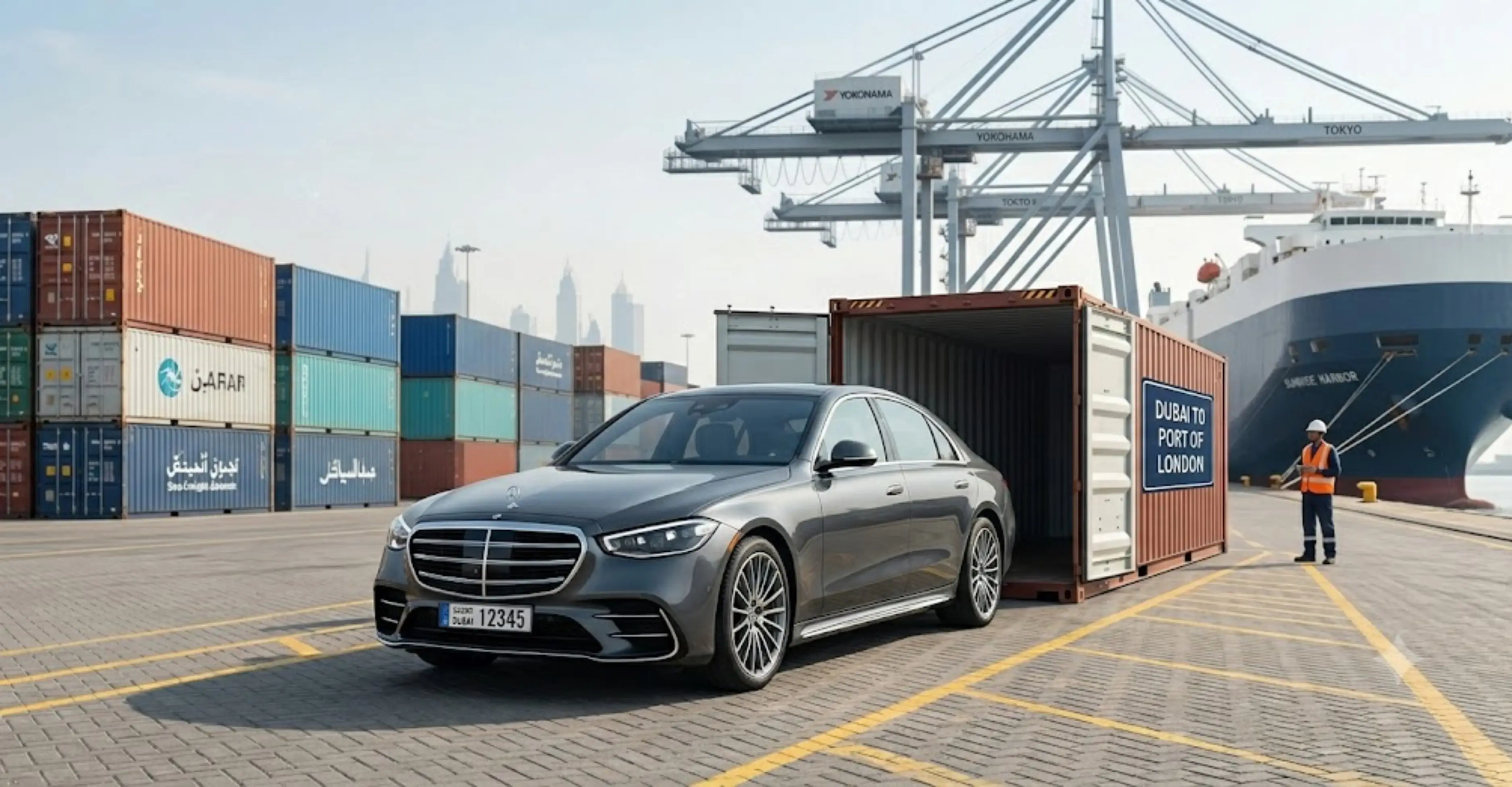
Roll-on Roll-off (RoRo): The car is driven onto a purpose-built car carrier vessel. It's the standard method for vehicle shipping, generally cheaper, and works well for running vehicles. Dubai's Jebel Ali Port (one of the world's busiest container ports) has regular RoRo services to Indian ports.
Container Shipping: The car is loaded into a 20-foot or 40-foot container, either exclusively (sole use) or shared. Container shipping offers better physical protection, is preferred for high-value or rare vehicles, and is often recommended for cars going to Chennai or Kolkata where RoRo frequency may be lower.
Shipping costs from Dubai to India via RoRo typically run $400–$900 USD for a standard car. Container shipping runs $800–$2,000 USD depending on container type and destination port. These are ballpark figures — get quotes from at least three freight forwarders before committing.
Recommended Indian Ports for Dubai Route:
- Mumbai (Nhava Sheva / JNPT) — best infrastructure, most experienced customs officers for vehicle imports, fastest average clearance times
- Chennai — good option for South India-bound vehicles
- Kolkata — viable but slower; less vehicle import traffic
Transit time from Jebel Ali to Nhava Sheva is typically 10–18 days by sea.
Step 5: Hire a Customs House Agent in India
This step deserves its own emphasis. A licensed CHA (Customs House Agent) at the destination port is your most important appointment for the Indian side of the process. They file the Bill of Entry, liaise with customs officers, handle duty assessment queries, and physically coordinate the vehicle's release from port. For a Dubai-origin import, where documentation sometimes comes in Arabic or requires UAE-specific verification, an experienced CHA is even more valuable.
CHA fees for vehicle imports range from ₹30,000 to ₹1,00,000 depending on the vehicle value and complexity. This is not a cost to cut.
Step 6: Assemble the Full Documentation Set
Your CHA will provide a final checklist, but the standard set for a Dubai-origin vehicle import includes:
- Original Bill of Lading or Airway Bill
- Commercial Invoice (showing purchase price in AED or USD)
- Packing List
- UAE Certificate of Origin
- RTA Export Certificate from Dubai
- UAE Customs Export Declaration
- BS6 / Euro 6 Technical Compliance Certificate from manufacturer
- Marine / Transit Insurance Certificate (Indian insurer)
- IEC (Import Export Code)
- In case of Transfer of Residence: proof of UAE residency for 2+ years, proof of vehicle ownership for 1+ year, and your Indian arrival documentation
Every document must be present before the vessel docks. Missing documents mean the cargo sits at port while demurrage charges accumulate daily.
Step 7: Customs Clearance and Duty Payment
When the vessel arrives, your CHA files the Bill of Entry with Indian Customs. The customs officer assesses the CIF (Cost + Insurance + Freight) value — this is the base on which all duties are calculated. The CIF value is not what you paid in Dubai alone; it includes the purchase price, UAE export costs, freight charges, and insurance premium.
Here is the duty structure you're working with:
| Component | Rate |
| Basic Customs Duty (engine above 3,000cc or 40 BHP) | 100% of CIF |
| Basic Customs Duty (engine below 3,000cc / 40 BHP) | 60% of CIF |
| Social Welfare Surcharge | 10% of BCD |
| IGST | 28% on (CIF + BCD + SWS) |
| Compensation Cess | 15–22% depending on engine |
The total effective duty burden lands between 100% and 165%+ of the CIF value. A car purchased in Dubai for AED 150,000 (approximately ₹34 lakh) with freight and insurance bringing CIF to ₹38 lakh could face duties of ₹55–65 lakh on top — resulting in a landed cost of ₹93 lakh to ₹1.03 crore before road tax and registration.
This arithmetic is the reason importing from Dubai only makes financial sense for vehicles in a very specific price bracket — where the Dubai sourcing price is meaningfully lower than the Indian equivalent, and where the car cannot be obtained through official Indian channels at all.
Step 8: Vehicle Inspection
Indian customs has the right to physically inspect the imported vehicle at the port. For cars, this typically involves verifying the VIN (Vehicle Identification Number) against the documentation, checking that the vehicle matches the declared specifications, and confirming RHD configuration. Keep your documentation thorough and consistent — any mismatch between declared specs and the physical vehicle triggers a detailed inquiry that can hold clearance for weeks.
Step 9: Registration at the RTO
After customs clearance, the car must be registered at your local Regional Transport Office. Bring:
- Original Bill of Entry with customs duty payment stamp
- Commercial Invoice
- Insurance certificate (Indian policy)
- BS6 compliance certificate
- RTA Export Certificate from Dubai (as provenance document)
- Your IEC
The RTO will assign a registration number after verifying documents and collecting road tax. Road tax varies by state — in Maharashtra it runs approximately 11–13% of vehicle value, in Karnataka around 13–18%, in Delhi 4–12% depending on engine size.
Real Cost Calculation: A Worked Example
Let's walk through a realistic end-to-end cost for a mid-size luxury SUV purchased in Dubai.
Suppose you buy a RHD-spec Land Cruiser in Dubai for AED 200,000 (approximately ₹45 lakh at current rates). Freight from Jebel Ali to Nhava Sheva runs $700 (approximately ₹58,000). Marine insurance costs approximately ₹25,000. This gives a CIF value of roughly ₹46.3 lakh.
The engine exceeds 3,000cc, so Basic Customs Duty is 100% of CIF = ₹46.3 lakh. Social Welfare Surcharge at 10% of BCD = ₹4.63 lakh. IGST at 28% on (CIF + BCD + SWS) = 28% of ₹97.23 lakh = ₹27.22 lakh. Compensation Cess at 20% on the same base = ₹19.4 lakh. Total duties come to approximately ₹97.6 lakh.
Add CHA fees of ₹75,000, port storage for 3 weeks at ₹1,000/day = ₹21,000, and Maharashtra road tax at 12% of vehicle value = ₹5.6 lakh. Total landed cost in your driveway: approximately ₹1.49 crore for a car that cost ₹45 lakh in Dubai.
The Land Cruiser's official Indian price through Toyota is around ₹2.17 crore for the top variant. So in this specific case, the import saves roughly ₹68 lakh — which is why Land Cruisers are one of the more commonly imported vehicles from Dubai despite the complexity.
The Grey Market Reality
It's worth addressing something directly: a significant volume of Dubai-origin cars that appear in Indian cities are not formally imported. They arrive through various grey channels, often without proper customs documentation, and exist in a legal grey zone that creates serious problems for the owner — no valid registration, no legitimate insurance, no resale through formal channels, and potential seizure.
If you're purchasing what someone claims is a "Dubai-imported" car in India, verify the Bill of Entry and Indian customs clearance certificate. Without these, you're buying a problem, not a car.
Practical Tips Specific to the Dubai Route
Use a UAE-based freight forwarder with an Indian partner office. The two-country coordination is complex. A freight forwarder who has established relationships on both ends — familiar with Dubai Customs export procedures and Indian port clearance — is worth the premium over using two separate agents.
Clear UAE traffic fines before deregistration. This sounds obvious, but many buyers purchasing used cars in Dubai underestimate how quickly fines accumulate on vehicles whose previous owners ignored them. The RTA will not issue an export certificate on a vehicle with outstanding fines, and discovering this after purchase is an expensive surprise.
Time your shipping around Indian port congestion. Nhava Sheva in particular experiences significant congestion during October–December (pre-festive season import surge) and March–April (financial year end). If your timing is flexible, January–February and June–August tend to offer faster clearance.
Don't wire money to UAE sellers without due diligence. Dubai's used car market, particularly for high-value vehicles, has scams targeting foreign buyers. Use escrow services or purchase through established dealer networks with physical presence. Verify the seller's trade license through the Dubai DED (Department of Economy and Tourism) portal before transferring any funds.
Factor AED-INR exchange rate risk. Between the time you agree on a price and the time you complete the transfer, exchange rate movement can materially affect your cost. If the deal timeline is longer than a week, consider whether a forward contract through your bank makes sense for amounts above AED 50,000.
Common Mistakes That Derail Dubai Imports
Purchasing an LHD vehicle with the intention of converting it to RHD is the most expensive mistake importers make on this route — the conversion is not legally recognised, and you end up with an unregisterable car. Skipping the manufacturer compliance certificate and assuming Euro 6 equals BS6 is another frequent error; customs officers are not authorised to make this equivalence determination on your behalf. Shipping before UAE export documentation is complete means the vessel arrives in India with an incomplete document set, triggering holds. Using a general freight forwarder with no automotive experience leads to incorrect Harmonised System (HS) code classification, which affects duty calculation and causes clearance delays. And finally, failing to arrange Indian insurance before the vessel docks means the car cannot clear customs on arrival — you need coverage in place before, not after, clearance.
Final Summary Checklist
Before purchasing in Dubai:
- Confirm RHD configuration on VIN and spec sheet
- Obtain written BS6 / Euro 6 compliance certificate from manufacturer
- Run an RTA vehicle history and finance clearance check
- Clear all outstanding traffic fines
- Obtain your Indian IEC from DGFT
UAE export process:
- Deregister vehicle with Dubai RTA
- Obtain RTA Export Certificate
- Get Certificate of Origin from UAE Chamber of Commerce
- Get UAE Customs Export Declaration processed
- Arrange marine transit insurance with Indian insurer
Shipping:
- Choose RoRo or container based on vehicle value and destination port
- Book through a freight forwarder with India-UAE automotive experience
- Target Mumbai (Nhava Sheva) for fastest clearance
Indian customs clearance:
- Engage a licensed CHA at the destination port
- File Bill of Entry with complete documentation
- Pay assessed customs duties
- Clear vehicle inspection
Post-clearance:
- Register at local RTO with all documents
- Pay state road tax
- Receive Indian registration certificate
Importing a car from Dubai to India is one of the more viable international car import routes available to Indian buyers — the proximity, pricing, and port infrastructure make it more practical than sourcing from Europe or North America. But it demands rigorous attention to the LHD and BS6 compliance requirements upfront, honest cost arithmetic before you commit, and the right professionals on both ends of the journey. Get those three things right, and the process — while genuinely demanding — is entirely navigable.
Book a Test Drive
Free doorstep test drive at your convenience
Popular Brands





Latest Car News
Upcoming Cars in September 2026 in India: New Cars, Launch Dates & Expected Prices
MG Hector Hawk SUV vs Tata Harrier: Expected Price, Features & Key Differences
Skoda Superb Diesel in India: Will the Diesel Engine Make a Comeback?
Tata Punch Becomes India's Best-Selling SUV in July 2026 with 21,313 Units Sold
Car Sales Report July 2026: Maruti Remains No.1, Tata, Mahindra & Hyundai Record Strong Growth
Tata Curvv EV Discount August 2026: Save Big with Limited-Time Offers
Kia Sorento Booking in India: Launch Date, Price & Booking Process

Skoda Slavia Facelift Launch Date in India
Hyundai Creta Next Gen Upgrades: Biggest Changes Expected
Limited Edition Skoda Slavia Monte Carlo Adds New Colours for 200 Buyers Only
Suzuki Loses India Market Share as Buyers Demand More Features
Hybrid Car Sales Decline 8% in June 2026: Complete Analysis
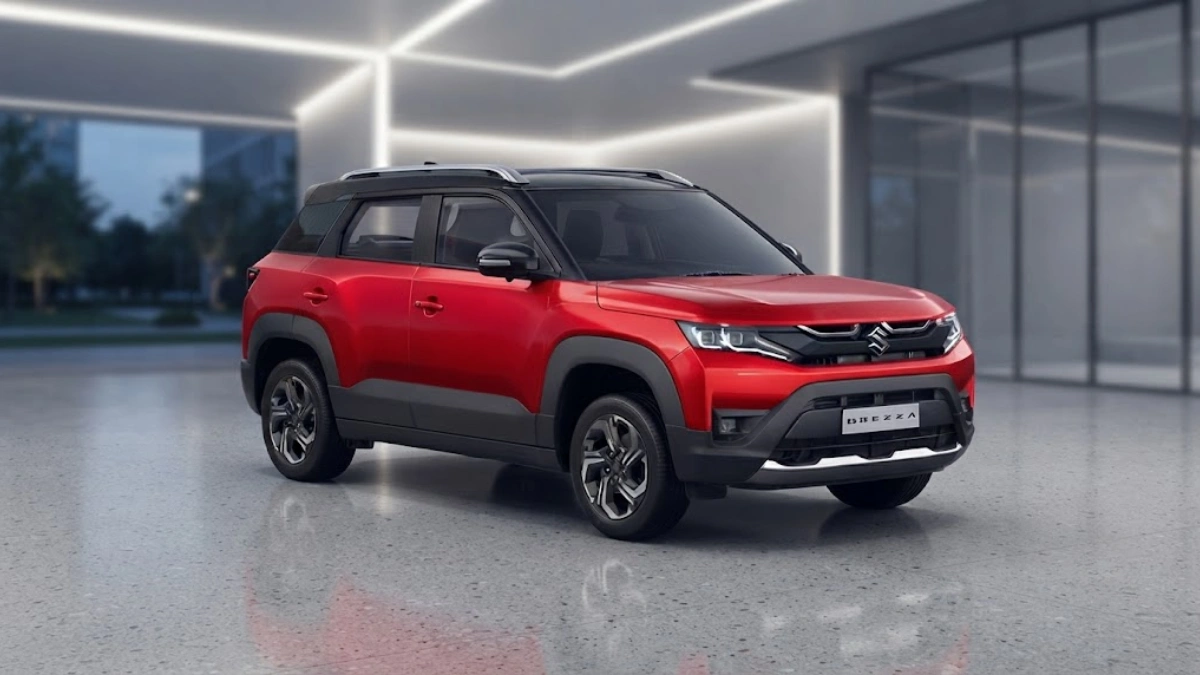
How to Book Maruti Brezza Facelift: Complete Booking Guide

Alto K10 vs Tiago: Which Is Better?
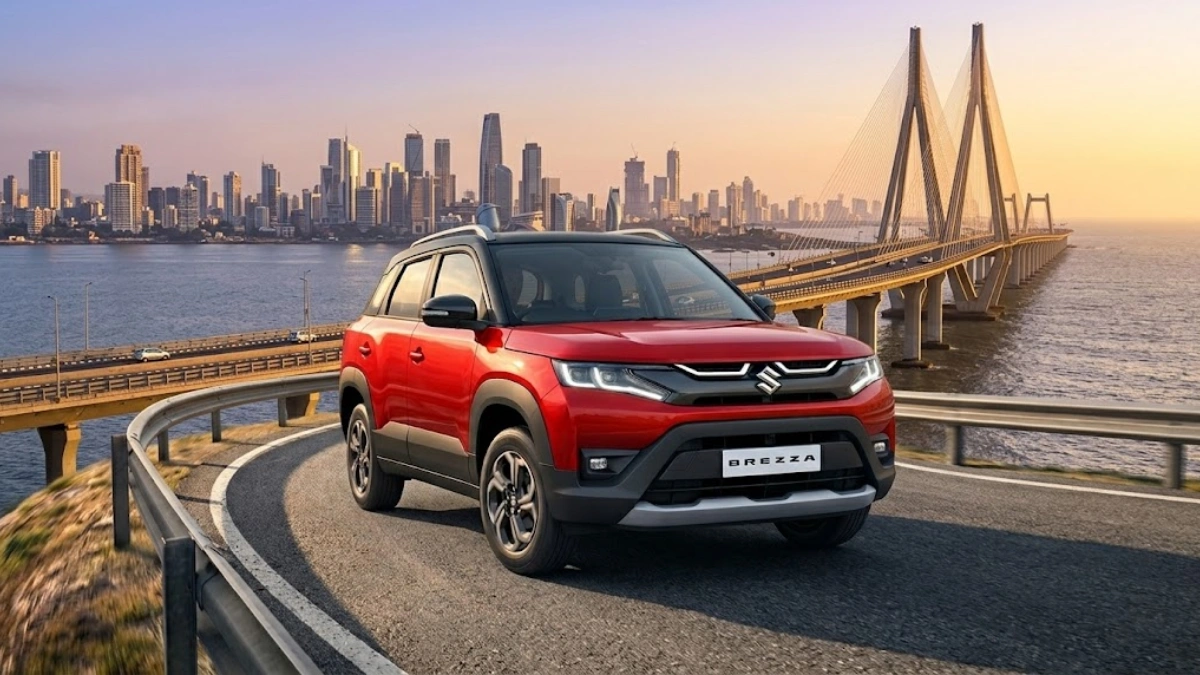
Maruti Brezza Facelift 2026: What's New Compared to the Current Model?
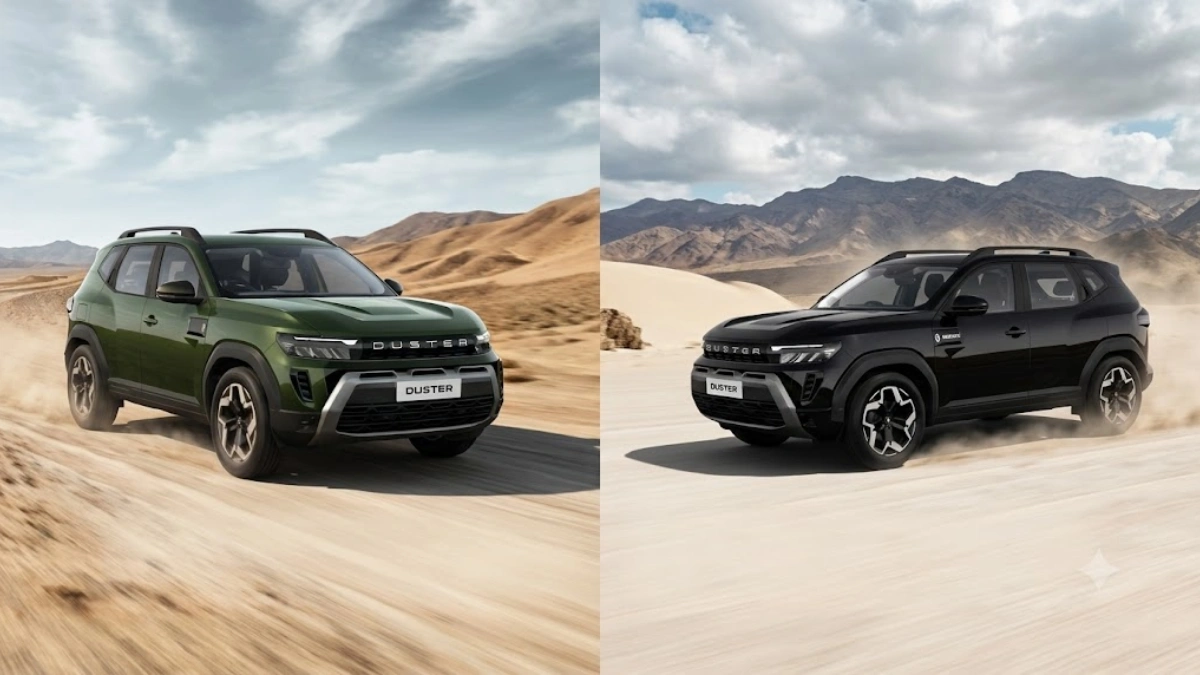
Renault Duster Adventure Edition vs Standard Duster: What's Different?
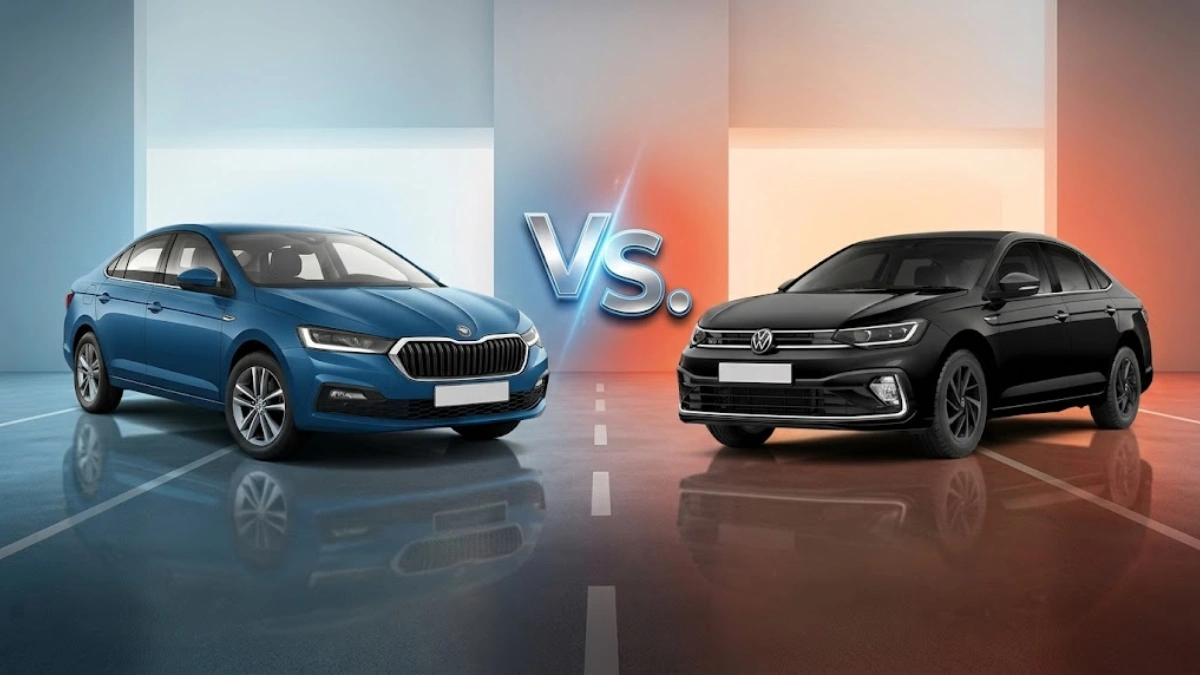
Skoda Slavia Facelift 2026 vs Volkswagen Virtus: Which Sedan Should You Wait For?
Volkswagen Tayron Life Launched in India at ₹41.99 Lakh
Volkswagen Announces 50% Reduction In Global Car Line-up
Tata Nexon Pure Plus : Know Everything Before Buying in July