5 Best Selling Maruti Suzuki Cars in India
- Cars
- Published: 25 Jun, 2026
Book a Test Drive
Free doorstep test drive at your convenience
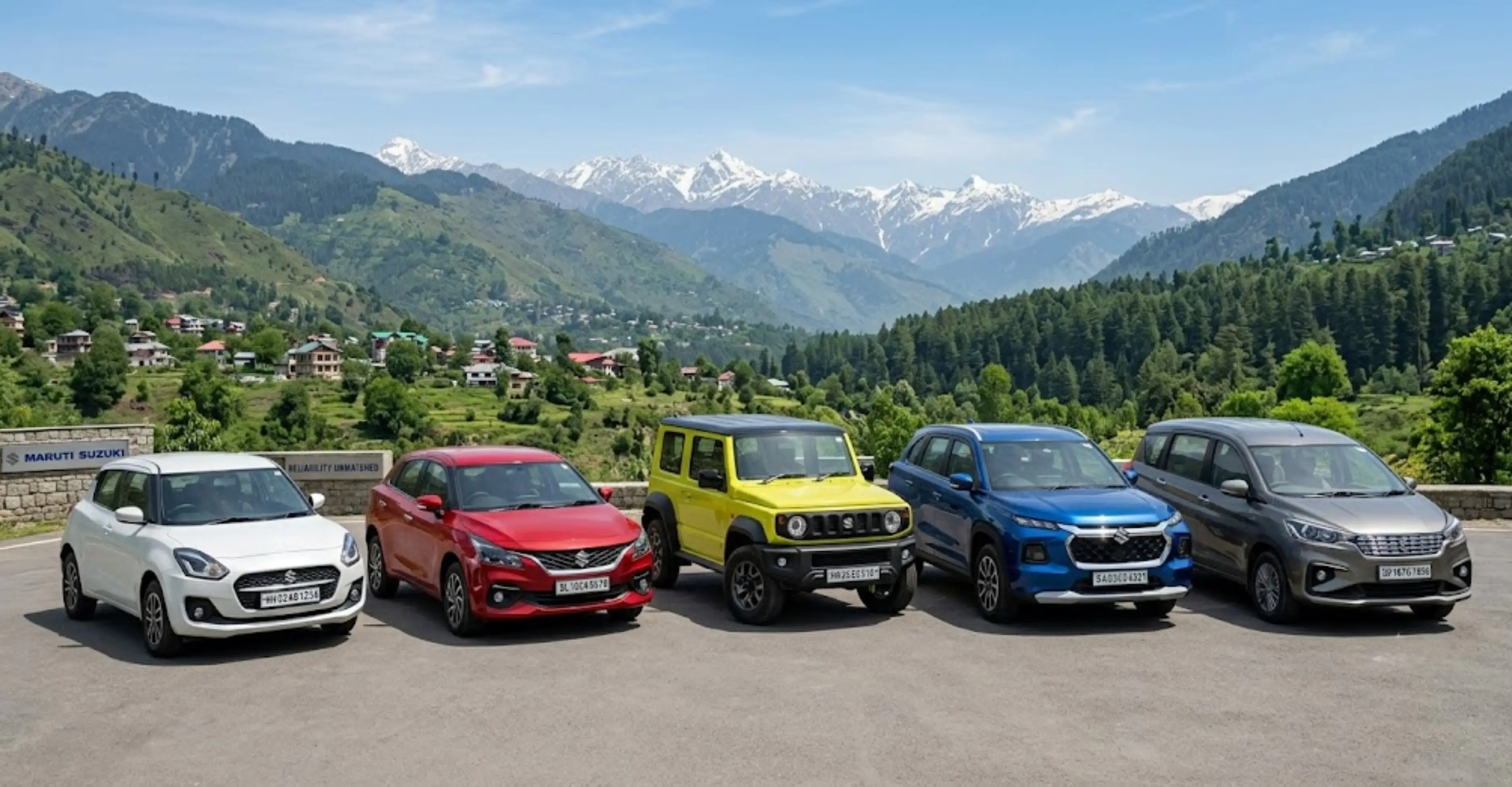
Maruti Suzuki is not just a car brand in India — it is practically a part of the national fabric. Since its first car rolled off the Gurgaon assembly line in 1983, Maruti has dominated Indian roads with a consistency that no other manufacturer has come close to matching. Today, the company holds roughly 40–45% of the total passenger vehicle market share in India — meaning nearly one in every two cars sold in the country wears a Maruti badge.
But within Maruti's vast lineup, certain models stand apart. Not just as good cars, but as genuine cultural institutions — vehicles that have sold in enormous volumes year after year, decade after decade, and that continue to find new buyers even as the market around them evolves. These are not flash-in-the-pan hits. They are evergreen.
This blog looks at the five best-selling Maruti Suzuki cars in India — what makes each one enduringly popular, what they offer, and why they continue to resonate with Indian buyers across generations.
1. Maruti Suzuki Alto — The People's Car of Modern India
If the original Maruti 800 was India's first mass car, the Alto is its natural successor — the vehicle that has carried forward the mission of affordable, accessible, personal mobility for the broadest possible cross-section of Indian society.
The Alto has been India's best-selling car for the majority of years since its launch in 2000. That is not a typo — for most of the past two decades, no car in India has sold more units annually than the Alto. It has crossed cumulative sales of over 40 lakh units in India, making it one of the highest-selling single nameplates in the country's automotive history.
Why It Keeps Selling
The Alto's formula is straightforward but executed with remarkable discipline. It is affordable — with prices starting around ₹3.54 lakh (ex-showroom), it remains the lowest entry point into new car ownership for millions of Indian families. It is frugal — the 796cc and 1.0-litre petrol engines return anywhere from 22 to 24 km/l under standard conditions, making running costs genuinely low. It is compact — at under 3.5 metres in length, it navigates the chaos of Indian city traffic, fits in tight parking spots, and squeezes through gaps that larger cars cannot. And it is reliable — Maruti's service network of over 4,000 outlets across India means that an Alto owner in a Tier 3 town is never far from a trained mechanic or a spare part.
The 2022 Alto K10 refresh brought a more contemporary design, a larger 1.0-litre K-series engine, a CNG option, and a modern infotainment system — while keeping the price firmly in entry-level territory. It proved that the Alto formula, far from being exhausted, still has relevance in a market where buyers are moving upmarket.
Who Buys It
The Alto's buyer profile is genuinely diverse. First-time car buyers stepping up from two-wheelers in smaller cities and towns form the core. Young urban professionals buying a second household car for short commutes. Driving schools, which purchase Altos in fleet quantities for training. Small business owners needing an economical runabout. The Alto does not try to be aspirational — it tries to be useful, and it succeeds at that with exceptional consistency.
2. Maruti Suzuki Swift — The Car That Made Driving Fun for India
The Swift occupies a unique position in the Maruti lineup and in Indian automotive history. It was the car that proved Indian buyers would pay a premium for style and driving dynamics — not just economy. When it launched in 2005, it was unlike anything Maruti had sold before: genuinely sporty-looking, with a tight, responsive chassis and a design that felt European rather than utilitarian.
Nearly two decades later, the Swift is still one of Maruti's top three sellers consistently, and the fourth-generation model launched in 2024 has reinforced its position as the definitive hot hatchback for the Indian mass market.
Why It Keeps Selling
The Swift's sustained popularity rests on a combination of emotional and rational appeal that few cars in this segment have managed to balance as well. Emotionally, it looks good — the design has always been sharper and more cohesive than most competitors at its price point, and the 2024 generation takes this further with a more aggressive stance and cleaner lines. Driving it feels different from a typical budget hatchback — the steering is responsive, body roll is well-controlled, and the car genuinely rewards an enthusiastic driver.
Rationally, it delivers on the practical metrics too. The 1.2-litre Z-series petrol engine in the current generation produces 82 bhp and returns over 21 km/l. A CNG variant extends the economy case for high-mileage urban users. The AMT automatic option brought the Swift to buyers who want the look and feel without a manual gearbox. Boot space at 268 litres is reasonable for the segment, and the back seat, while not generous, is adequate for a small family.
Resale value is another unspoken part of the Swift's appeal — it consistently commands one of the highest resale percentages in its segment, which experienced buyers factor into the true cost of ownership.
Who Buys It
The Swift draws a fascinatingly broad buyer base. Young professionals in metros buying their first car who want something that doesn't look boring. Existing Swift owners returning for their second or third Swift — brand loyalty in this model is notably high. Families upgrading from an Alto or WagonR who want more style without moving into a significantly higher price bracket. The Swift sits at approximately ₹6.49 lakh to ₹9.64 lakh (ex-showroom), which places it squarely in the aspirational-but-accessible zone.
3. Maruti Suzuki WagonR — The Practical Giant in a Small Package
The WagonR is proof that form follows function is not a compromise — it can be a selling strategy. Since its Indian launch in 1999, the WagonR has maintained consistent sales volumes that would be remarkable for any car, and it has done so while being almost defiantly un-glamorous. It is tall, boxy, upright, and completely focused on interior space and everyday usability.
The WagonR has, in multiple years, challenged the Alto for the title of India's best-selling car — and has occasionally taken that crown. In the current generation, it frequently sells upwards of 15,000–18,000 units per month, making it one of the most reliable volume contributors in Maruti's entire portfolio.
Why It Keeps Selling
The WagonR's tall-boy architecture is its defining characteristic — and its biggest practical advantage. The upright roofline creates genuinely generous headroom for all passengers including the rear, the high seating position gives an excellent view of the road, and ingress and egress is easy for older passengers and those with mobility considerations. In a country where families often share a single car across three generations — grandparents, parents, and children all riding together — these are not trivial advantages.
The interior space-to-footprint ratio is exceptional. Despite sitting in the same overall size class as the Alto and Swift, the WagonR feels dramatically more spacious inside. The flat floor, upright packaging, and wide cabin make it genuinely comfortable for four adults.
Maruti has also been smart about keeping the WagonR mechanically current. The current generation offers a 1.0-litre and 1.2-litre petrol engine option, one of the best-executed CNG setups in the Indian market (the factory-fitted CNG variant sells in enormous volumes to commercial and high-mileage users), and both manual and AMT transmission choices.
Who Buys It
The WagonR buyer tends to be a practical, unsentimental decision-maker. Families with elderly members who prioritise easy entry and exit. Cab aggregator drivers and fleet operators for whom the CNG economy case is compelling. Urban families who need a second car that genuinely carries four adults comfortably. Office-goers who drive long daily commutes and want fuel economy without driving a car that feels too small. The WagonR asks you to ignore its looks and focus on what it does — and a very large number of Indian buyers happily take that deal.
4. Maruti Suzuki Dzire — The Compact Sedan That Refuses to Die
In a market that has been relentlessly moving towards hatchbacks and SUVs, the Dzire is an anomaly — a compact sedan that continues to sell in massive volumes year after year, apparently immune to the broader segment decline. It is consistently one of India's top five best-selling cars, and in many months it is the single best-selling sedan in the country by a distance.
The Dzire launched in 2008 as the Swift Dzire — effectively a Swift with a boot added — and has since evolved through four generations into a genuinely well-proportioned, purpose-built compact sedan.
Why It Keeps Selling
The Dzire's enduring appeal is rooted in a deeply Indian set of priorities. The three-box sedan silhouette — a distinct boot separate from the passenger compartment — carries social and aspirational significance in India that the rest of the world has largely moved past. For buyers in Tier 2 and Tier 3 cities, and for older buyers across all geographies, a sedan signals a level of arrival that a hatchback does not. The Dzire delivers this at a price that starts around ₹6.84 lakh (ex-showroom), making it the most accessible path to genuine sedan ownership in India.
Beyond the badge value, the Dzire is a genuinely well-executed car. The boot space at 382 litres is generous and practical. The rear seat is notably more comfortable than the Swift it shares its underpinnings with, offering better knee room and a more upright backrest angle. The 1.2-litre Z-series engine delivers 90 bhp, and the AGS (Auto Gear Shift) automatic option has made the Dzire a popular choice in urban stop-start conditions.
The cab and fleet market is a significant but often overlooked part of the Dzire story. Ola and Uber drivers across India prefer the Dzire overwhelmingly for its combination of passenger comfort, economy, reliable service network, and the perception of quality that a sedan provides to passengers. Fleet registrations form a substantial share of monthly Dzire sales.
Who Buys It
The Dzire sells to first-generation car buyers in smaller cities for whom the sedan form carries clear meaning. To professionals and business owners who use the car as a client-facing vehicle and want something more formal than a hatchback. To cab drivers and fleet operators running high daily mileages. And to families who genuinely value the practical benefits of a larger, separate boot for luggage, groceries, or long road trips. The 2024 generation Dzire, with a significantly refreshed interior and more premium feel, has made a compelling case that the compact sedan still has decades of relevance in the Indian market.
5. Maruti Suzuki Ertiga — The Family MPV That Owns Its Segment
The Ertiga is a different kind of entry on this list. It is not a budget car, not an entry-level model, and not competing on price alone. It is a genuine seven-seater MPV that has defined and dominated the sub-₹15 lakh people-carrier segment in India since its launch in 2012 — and has done so by being thoughtfully designed for the specific needs of the Indian family.
In a market where alternatives from Kia (Carens) and Toyota (Innova) exist at various price points, the Ertiga has consistently held its ground through a combination of space efficiency, economy, Maruti's service network advantage, and competitive pricing.
Why It Keeps Selling
The Ertiga's core proposition is seven proper seats at a price no other manufacturer has been able to undercut while maintaining comparable quality. The second-row captain seats in higher variants fold and slide to give third-row passengers genuinely usable legroom — something that distinguishes the Ertiga from MPVs where the third row is essentially a punishment seat. The flat-folding third row creates a large, flat load space when not carrying passengers, giving the Ertiga genuine versatility as both a family hauler and a cargo carrier.
The 1.5-litre K15C petrol engine with mild hybrid technology is a genuine highlight of the current generation — the smart hybrid system provides meaningful fuel economy benefits in city driving, where the mild hybrid assistance is most active. Real-world economy in CNG variant runs between 26 and 28 km/kg, which for a seven-seater is exceptional. The 6-speed automatic transmission option has made the Ertiga accessible to urban buyers who previously defaulted to smaller automatics.
Interior quality and feature content have improved substantially with each generation. The current Ertiga offers a 7-inch SmartPlay Pro+ infotainment system, rear AC vents, a flat-bottom steering wheel, and a generally pleasant cabin ambience that doesn't feel like a budget compromise.
Who Buys It
The Ertiga finds its buyers in a specific and clearly defined situation: the nuclear family that has genuinely outgrown a five-seater. A couple with two or three children and parents who visit regularly — the Ertiga solves the "someone always has to sit in the middle back seat" problem cleanly. Joint families in smaller cities who operate on the principle of one vehicle for the whole family. Small tour operators, airport transfer services, and school transport operators who need reliable, economical seven-passenger capacity. The Ertiga sits at approximately ₹8.69 lakh to ₹13.09 lakh (ex-showroom) — a price range that makes genuine seven-seat family transport accessible in a way that the Innova Crysta, at nearly double the price, simply cannot.
What Makes a Maruti Car Evergreen? The Common Thread
Looking across these five models, a clear pattern emerges. Each of them solves a specific, real problem for a specific, large group of Indian buyers — and solves it better than the competition at its price point. None of them are the most exciting cars on paper. None have the most powerful engines, the most luxurious interiors, or the most advanced technology. What they have is precise product-market fit, extraordinary reliability, a service network that reaches into the smallest Indian town, low running costs, and strong resale value.
Maruti understands, better than any other manufacturer in India, that the true cost of a car is not the sticker price — it's the sum of purchase price, fuel, insurance, maintenance, repairs, and resale value over five to seven years. On that total cost of ownership calculation, Maruti cars win consistently. That is the real secret behind the evergreen status of these five models, and it is why — regardless of what new entrants and new technologies arrive in the Indian market — Maruti Suzuki's bestsellers will likely remain on Indian roads and in Indian hearts for generations to come.
Book a Test Drive
Free doorstep test drive at your convenience
Popular Brands





Latest Car News
MG Hector Hawk SUV vs Tata Harrier: Expected Price, Features & Key Differences
Skoda Superb Diesel in India: Will the Diesel Engine Make a Comeback?
Tata Punch Becomes India's Best-Selling SUV in July 2026 with 21,313 Units Sold
Car Sales Report July 2026: Maruti Remains No.1, Tata, Mahindra & Hyundai Record Strong Growth
Tata Curvv EV Discount August 2026: Save Big with Limited-Time Offers
Kia Sorento Booking in India: Launch Date, Price & Booking Process
Skoda Slavia Facelift Launch Date in India
Hyundai Creta Next Gen Upgrades: Biggest Changes Expected
Limited Edition Skoda Slavia Monte Carlo Adds New Colours for 200 Buyers Only
Suzuki Loses India Market Share as Buyers Demand More Features
Hybrid Car Sales Decline 8% in June 2026: Complete Analysis
How to Book Maruti Brezza Facelift: Complete Booking Guide
Alto K10 vs Tiago: Which Is Better?
Maruti Brezza Facelift 2026: What's New Compared to the Current Model?
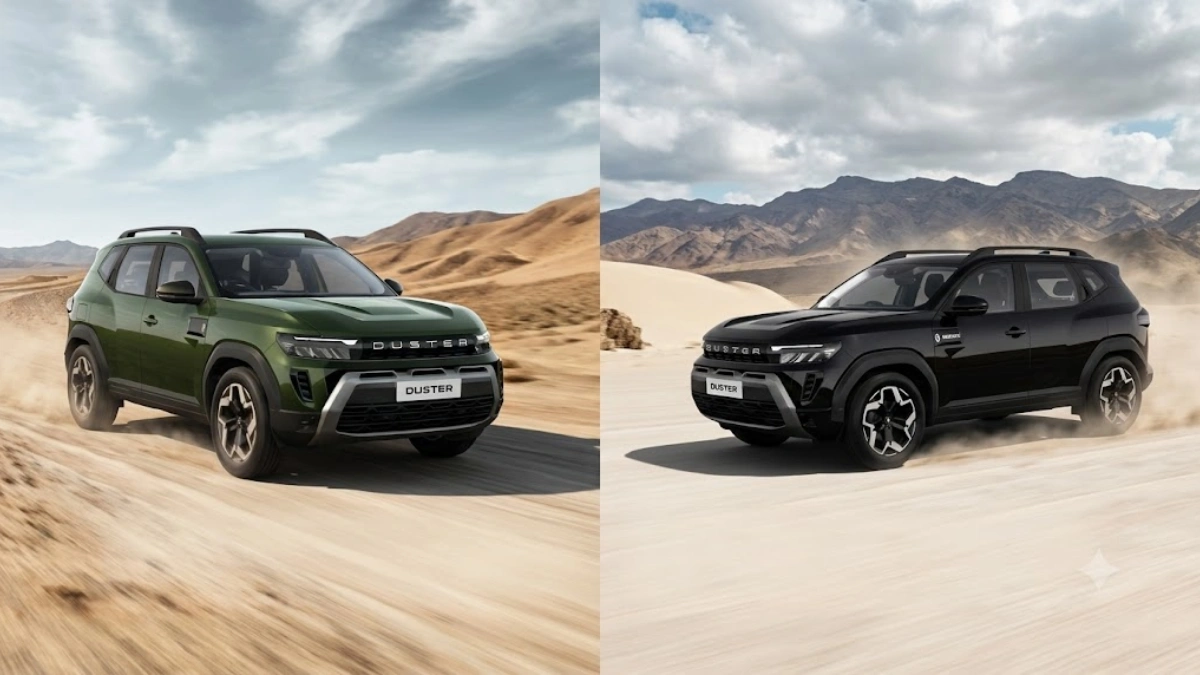
Renault Duster Adventure Edition vs Standard Duster: What's Different?
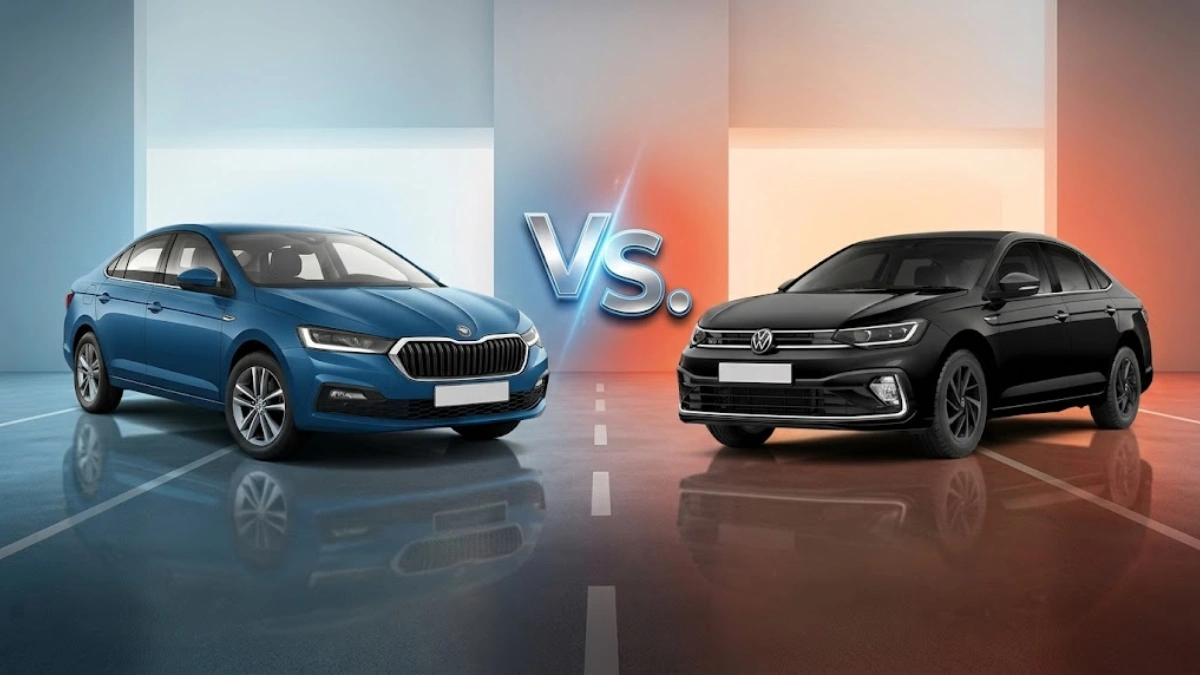
Skoda Slavia Facelift 2026 vs Volkswagen Virtus: Which Sedan Should You Wait For?
Volkswagen Tayron Life Launched in India at ₹41.99 Lakh
Volkswagen Announces 50% Reduction In Global Car Line-up
Tata Nexon Pure Plus : Know Everything Before Buying in July
Best Selling Cars of June 2026 in India