5 Reasons Why the Nissan Tekton Could Be Worth Waiting For
- Cars
- Published: 15 Jun, 2026
Book a Test Drive
Free doorstep test drive at your convenience
The Indian mid-size SUV segment has been a brutal, punishing arena for the past five years. Hyundai Creta and Kia Seltos between them have dominated buyer decisions so thoroughly that rivals with lesser service networks and brand recall have quietly retreated. Nissan knows this better than most — its Kicks was discontinued in India in 2023 after years of struggling to make a dent in the segment. For a brand that was once synonymous with the original Terrano and a genuine SUV heritage, that exit stung.
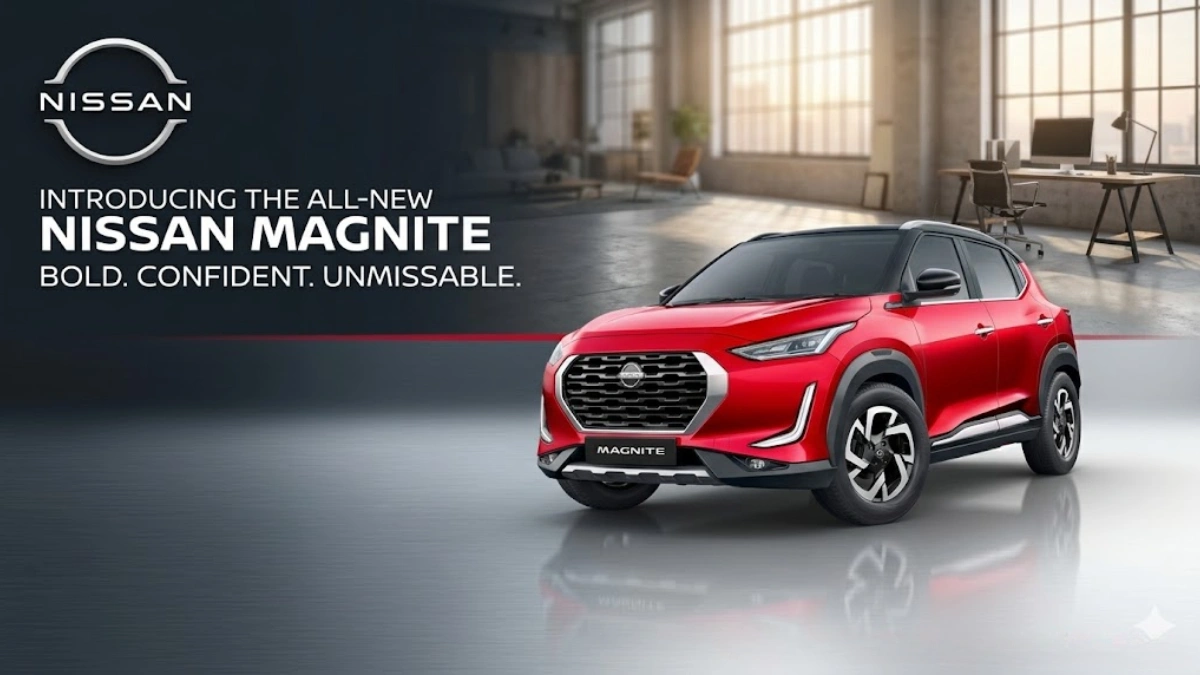
Now Nissan is back with something genuinely new, genuinely ambitious, and — for the first time in a long while — genuinely exciting. The official debut of the Tekton is locked in for July 9, 2026, with the launch placing Nissan squarely back in one of the most competitive segments in the country.
The name "Tekton" is derived from the Greek word meaning "craftsman" or "architect," and that choice of name tells you something about Nissan's intent — this is not a rushed cash-in on the C-SUV boom. It is, by every indication, a carefully engineered, clearly positioned product that Nissan sees as the centrepiece of its India revival.
This launch is a pivotal moment for the Japanese automaker, signifying its return to the fiercely contested C-SUV segment. The Tekton is expected to play a crucial role in Nissan's renewed India strategy, which includes a substantial $700 million investment in new platforms and products.
Reason 1: A Design That Actually Stands Out — The "Baby Patrol" Identity
The Nissan Tekton does not have this problem. Nissan's senior design director, Ken Lee, has stated that the Tekton is intended to be a "baby Patrol" in terms of visual appeal. The Patrol is one of the most iconic and recognisable SUVs on the planet — a vehicle that has crossed deserts, climbed mountains, and served as the reference point for serious off-road hardware for decades. Designing a compact SUV around that visual DNA is a bold creative statement.
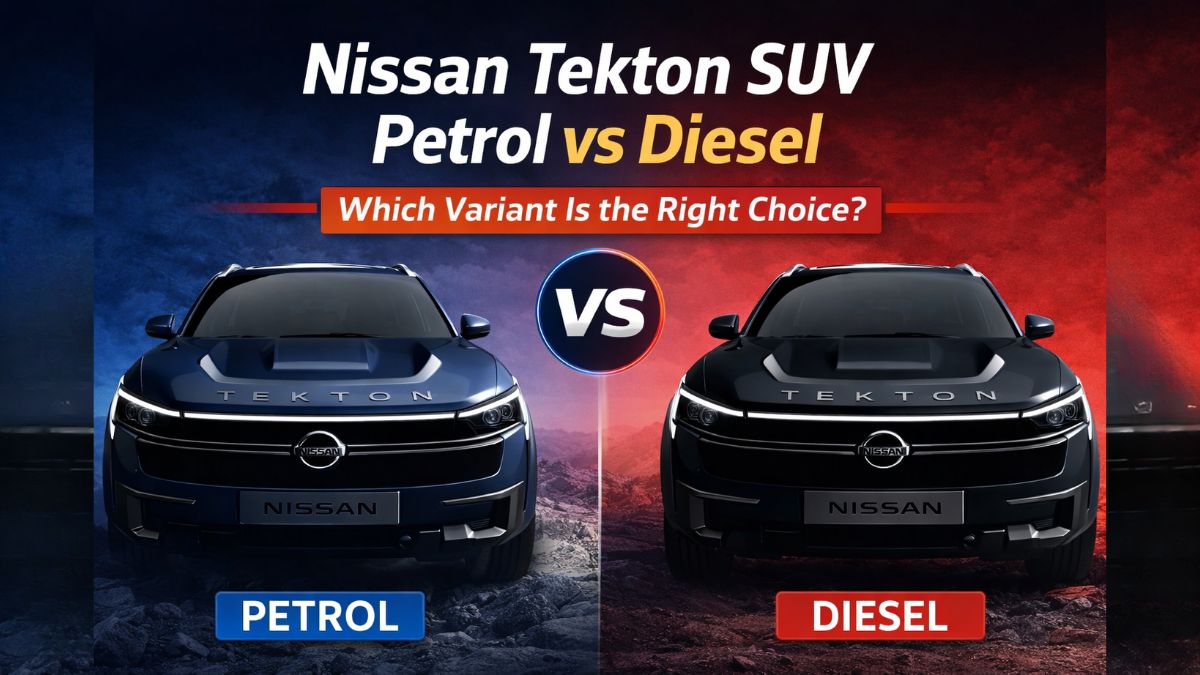
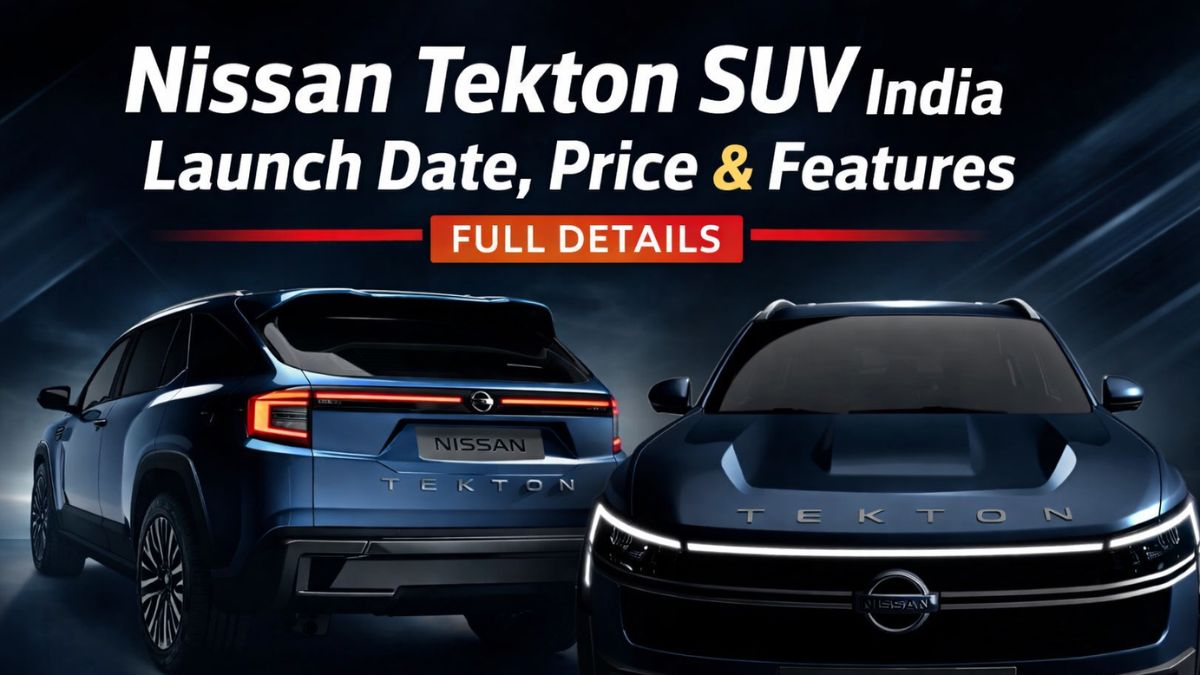
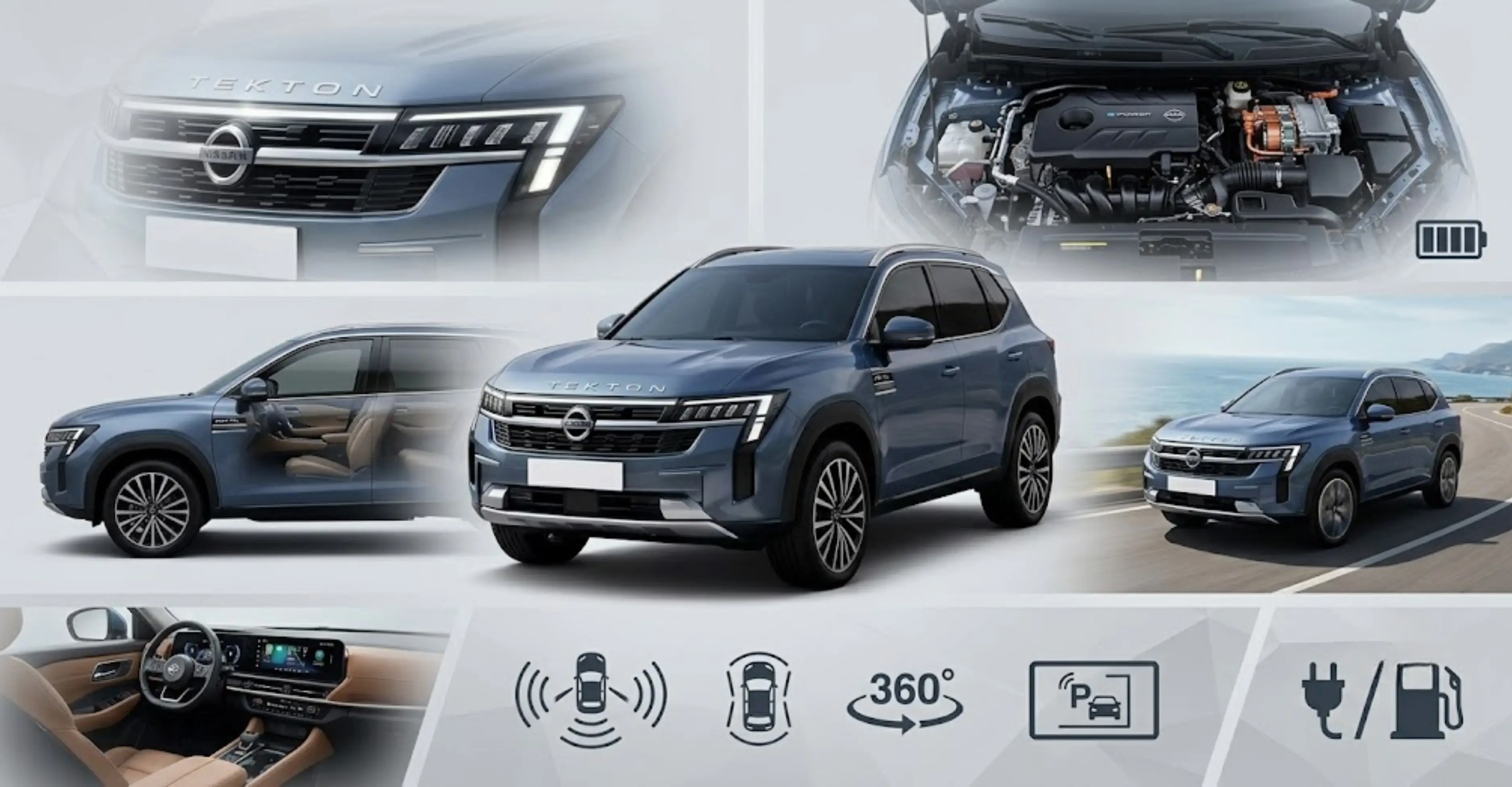
The execution is striking. At first sight, it looks like a baby Nissan Patrol thanks to its imposing front grille along with connected LED DRLs and C-shaped LED headlights. It also gets a chunky bumper with a massive skid plate and lots of creases for a rugged look. There is also a "TEKTON" badging on the hood for added presence.
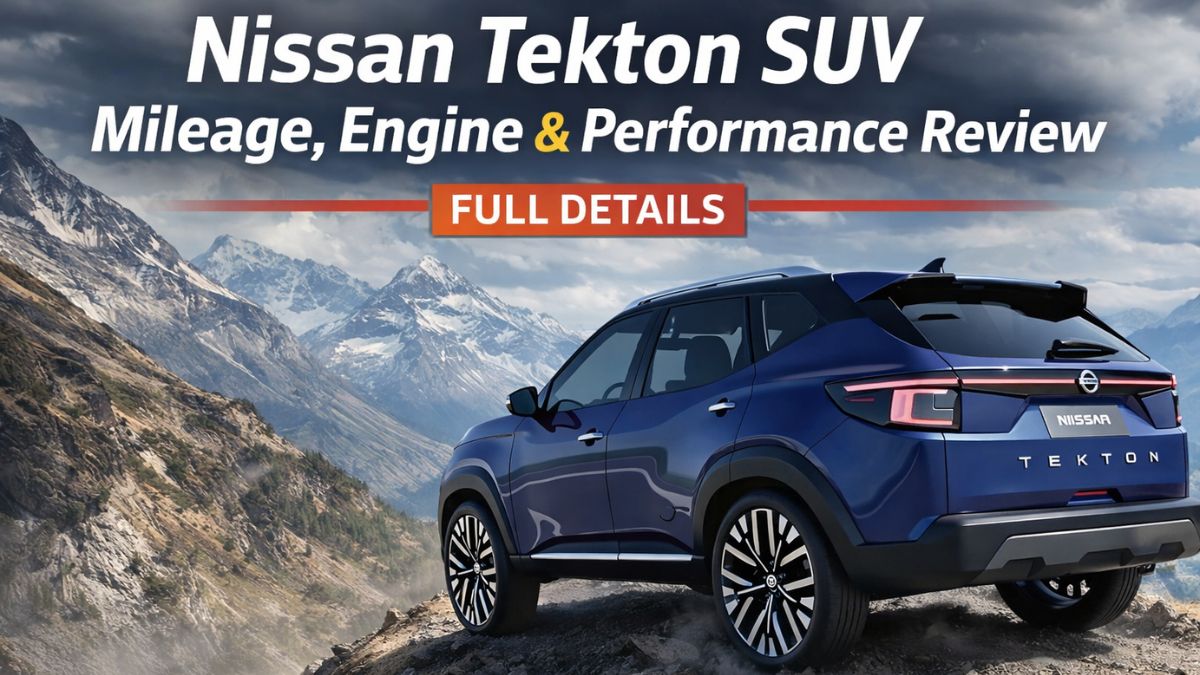
Up front, the Nissan Tekton features an upright fascia, L-shaped LED DRLs, a multi-slat grille, a wide air dam, and a faux skid plate. On either side, it has a sleeker look than its Renault counterpart, with less-pronounced wheel arches, roof rails, 18-inch alloy wheels, and C-pillar-mounted rear door handles. At the rear, it has an integrated spoiler featuring a high-mounted stop lamp, contrast-coloured elements for the bumpers, connected LED tail lights, rear wiper and washer, a shark-fin antenna, and a tailgate-mounted number plate recess.
The C-pillar-mounted rear door handles deserve specific mention. This design choice — hiding the rear door handles in the C-pillar rather than placing them on the door itself — creates the visual illusion of a sleek two-door coupe profile on a practical five-door SUV. It is a styling trick borrowed from premium European hatches, and it gives the Tekton a depth of design sophistication that most Indian compact SUVs at its price point simply don't attempt.
Unique details include a "Himalayas-inspired" trim on the front door, and the hidden rear door handles that give it a sleek, 3-door aesthetic.
In a segment where buyers are tired of playing "spot the difference" between SUVs, the Tekton arrives with a genuinely distinct point of view. Whether you find it aggressive and purposeful or too muscular for your taste, you will not confuse it with anything else on the road. For a brand trying to rebuild its identity in India, that visual differentiation is not just aesthetics — it is strategy.
Reason 2: A Proven, Robust Platform — CMF-B With Extensive Localisation
It's built on the Renault-Nissan Alliance's CMF-B platform, and this is one of the most important things to know about it. The Tekton is underpinned by the Renault-Nissan Alliance's CMF-B modular platform, shared with the latest-generation Renault Duster, with extensive localisation planned for the Indian market.
Why does this matter? Because the CMF-B platform is not an untested experiment. It underpins the third-generation Dacia Duster — a vehicle praised across European markets for its structural rigidity, ride quality, and durability in tough road conditions. Thanks to this shared foundation, the Tekton benefits from proven structural rigidity, enhanced safety, and the flexibility to accommodate multiple powertrain options including petrol, turbo-petrol, and hybrid engines.
The localisation angle is equally significant. Production will take place at Nissan's Chennai facility — Renault Nissan Automotive India — catering to both domestic demand and select export markets. Chennai is one of India's most mature automotive manufacturing hubs, and production at this facility means the Tekton benefits from a supply chain and component ecosystem that is deeply embedded in the Indian market. Localisation reduces cost, improves parts availability, and shortens service turnaround times — all things that directly affect the ownership experience.
The platform has a wheelbase of 2,657 mm, which for a C-segment SUV translates to a genuinely spacious rear passenger experience. For Indian buyers who frequently carry three adults in the back — a reality that many European market-focused SUV platforms underserve — this is a practical advantage.
The Renault Duster has already launched in India earlier in 2026 on this same platform and has been received positively for its improved structural safety and premium cabin feel compared to its predecessor. The Tekton's foundation relies on the legacy of the Renault Duster, a vehicle that largely pioneered the monocoque mid-size SUV segment in India. The new-generation Duster made a highly successful comeback in 2026, offering vastly improved structural safety, a premium cabin, and modern digital screens. Nissan buyers can therefore make a reasonably informed judgment about the Tekton's underlying character before it even reaches dealerships.
Reason 3: A Powertrain Lineup That Has Something For Everyone — Including a Hybrid
Powertrain choice is increasingly a deciding factor in the C-SUV segment. Buyers are no longer content with a single engine option served across all variants. They want the flexibility to choose the powertrain that fits their use case: a frugal naturally aspirated engine for simple city commuting, a turbo for performance and highway confidence, or a hybrid for those who want meaningful fuel economy without going fully electric.
The Tekton's powertrain strategy addresses all three of these buyers, and the lineup is more comprehensive than most rivals at its likely price point.
The base variants of the Tekton are likely to be powered by a 1.0-litre turbo-petrol engine producing around 100 hp and 160 Nm, paired to a 6-speed manual gearbox. Higher trims will get the more powerful 1.3-litre turbo-petrol engine with 163 hp and 280 Nm of torque, offered with both a 6-speed manual and a 6-speed dual-clutch automatic transmission.
The 1.3-litre turbo-petrol figures are worth dwelling on. 163 hp and 280 Nm from a 1.3-litre engine represents a meaningful performance step up from the naturally aspirated 1.5-litre units that underpin most mainstream C-SUV competitors. Torque — the measure of pulling power that determines how confidently a vehicle responds in overtaking manoeuvres, on inclines, and at highway speeds — is particularly significant here. At 280 Nm, the Tekton's top turbo variant produces more torque than the Hyundai Creta's naturally aspirated 1.5-litre petrol, the Honda Elevate's naturally aspirated 1.5-litre, and several other key rivals.
The hybrid is where the story gets particularly interesting for long-term buyers and the efficiency-conscious. A 1.8-litre strong hybrid powertrain with a combined output of 160 hp is expected, with a projected fuel economy of around 23–25 kmpl. This hybrid variant may be introduced in early 2027 following the initial petrol launch.
23–25 kmpl from a full-size C-SUV is a remarkable efficiency figure — one that would place the Tekton's hybrid variant among the most fuel-efficient SUVs in its segment. The Toyota Urban Cruiser Hyryder and Maruti Grand Vitara currently lead the C-SUV segment on hybrid efficiency, and those vehicles have built substantial buyer communities around exactly this proposition. The Tekton entering this space — with a bold design and Nissan's engineering credibility — would give buyers a genuinely new option in the hybrid C-SUV conversation.
For buyers in cities with long commutes, spiralling fuel prices, and increasing awareness of running costs over the ownership period, the hybrid option alone could be a compelling reason to wait for the Tekton rather than buying into the segment today.
Reason 4: A Feature List That Directly Challenges Segment Leaders
In 2026, the feature war in the C-SUV segment has escalated to the point where even mid-trim variants of mainstream models offer technology that was reserved for premium cars five years ago. Buyers comparing SUVs in the ₹12–₹18 lakh range today expect panoramic sunroofs, multiple airbags, connected infotainment, driver assistance systems, and 360-degree cameras as baseline demands, not wish-list items.
The Tekton's expected feature set is built specifically to compete at this elevated standard. The cabin is expected to feature a three-tone dashboard with a glossy black finish and a bronze-coloured strip running from the central touchscreen to the side AC vents. The Tekton is expected to be equipped with a 10.1-inch touchscreen with Google built-in support, a 10.25-inch digital instrument cluster, wireless Apple CarPlay and Android Auto, ventilated and powered front seats, a panoramic sunroof, a 360-degree camera, a wireless charger, and dual-zone climate control.
Ventilated seats — actively cooled through perforated leather with a fan that draws hot air away from the occupant — are one of the most genuinely appreciated features in the Indian climate. Temperatures in most Indian cities regularly exceed 38–42°C in summer, and a ventilated seat transforms the experience of getting into a sun-parked car from endurance into comfort within seconds of driving. Their presence at this price segment is significant.
On the safety front, the Tekton is expected to offer six airbags, electronic stability control, and a Level 2 ADAS suite with features like lane keep assist and adaptive cruise control. For safety and security, the SUV will also get ABS with EBD, brake assist, ESC, hill launch and descent control, 360-degree surround view, and 3-point seat belt reminders across all rows.
Level 2 ADAS in the Indian context is not merely a specification talking point — it has become a meaningful safety differentiator on Indian highways. Lane keep assist can intervene during momentary driver inattention on long highway stretches. Adaptive cruise control reduces fatigue on the expressway. And blind-spot monitoring addresses one of the most common causes of lane-change collisions on Indian multi-lane highways. The inclusion of this technology at an expected entry price of around ₹11 lakh signals that Nissan is not reserving safety tech for top-spec trims alone.
The SUV is also expected to get multiple drive and terrain modes and a blind spot monitor. Drive modes — typically Eco, Normal, and Sport — allow the driver to adjust the powertrain's character based on conditions. Terrain modes, if confirmed for production, would give the Tekton a meaningful real-world capability advantage over urban-focused rivals that tune their suspension and drivetrain purely for smooth tarmac.
With a ground clearance expected to exceed 200mm, the Tekton is built to handle diverse Indian terrains with ease. In a country where a single rain shower can turn a perfectly paved road into an obstacle course, ground clearance is not just a spec-sheet number — it is practical relevance.
Reason 5: Competitive Pricing That Could Shake the Segment
Current estimates place the Tekton's ex-showroom price in India between ₹10 lakh and ₹18 lakh. Autocar India expects the Tekton to be priced between ₹11 lakh and ₹19 lakh (ex-showroom).
To understand why this pricing has the potential to be a segment disruptor, consider what the buyer's alternatives currently cost. The Hyundai Creta starts at approximately ₹10.79 lakh and the Kia Seltos at approximately ₹10.99 lakh, both ex-showroom. These are opening prices for base variants with modest feature sets. Fully loaded top variants of both cars push well past ₹19–₹21 lakh. The Volkswagen Taigun and Skoda Kushaq, which offer a more premium European character, start around ₹12 lakh and extend similarly.
If the Tekton launches at ₹11–₹11.5 lakh for its base 1.0-litre turbo variant — backed by a feature set that includes items not offered by rivals at equivalent prices — it enters the segment with genuine value-for-money credentials that the Creta and Seltos, in their current pricing cycles, may struggle to match without adjustment.
The hybrid version could be priced around ₹16–₹22 lakh, which, if confirmed, would undercut the Toyota Urban Cruiser Hyryder's hybrid variant pricing while offering a more distinctive design and comparable efficiency. For buyers who have been seriously eyeing the hybrid C-SUV segment but found the Toyota-Maruti duopoly's pricing a stretch, the Tekton hybrid would represent the first genuinely fresh alternative.
Following the Tekton, Nissan is also set to launch a premium three-row D-segment SUV in India in early 2027, which means the Tekton is the first rung of a reinvigorated Nissan product ladder in India, not a standalone attempt. Buyers who enter the Nissan ecosystem with a Tekton can reasonably expect their dealership network and service infrastructure to grow and improve as the brand's India commitment deepens — a practical ownership consideration that matters over a 5–7 year ownership cycle.
The Honest Counterpoint: What to Watch For
No pre-launch coverage of any car would be complete without an honest look at the risks.
Nissan's service network in India has historically been a vulnerability. The Creta wins on resale value and a service network that covers practically every city, town, and highway exit in India — a real-world advantage that should not be underestimated. For a buyer in a Tier-2 city where the nearest authorised Nissan service centre is 80–100 kilometres away, the Tekton's compelling feature set and pricing may not outweigh the ownership anxiety that comes with a thin after-sales network.
Resale value is another consideration. New entrants to a segment typically hold less residual value than established bestsellers in the first 3–4 years of their lifecycle, purely because the used car market is less familiar with them. For buyers who plan to change cars every 3–5 years, the Tekton's resale trajectory in its first few years will be an unknown that the Creta and Seltos — both of which hold their value reliably — do not present.
The Verdict: Should You Wait?
The Nissan Tekton represents something genuinely interesting in India's most competitive car segment: a car with a distinct visual identity inspired by one of the world's great SUVs, a proven modular platform already validated in the market through the new Duster, a powertrain lineup that includes a seriously potent turbo and a fuel-efficient strong hybrid, a feature set calibrated to challenge segment leaders on every meaningful dimension, and a pricing strategy that — if it lands where expected — could genuinely redefine what ₹12–₹16 lakh buys in the C-SUV category.
If you are currently in the market for a C-SUV and your shortlist includes the Hyundai Creta, Kia Seltos, Renault Duster, or Skoda Kushaq, waiting until after July 9, 2026, costs you nothing except a few more weeks of driving your current vehicle. What you gain is the full picture on Nissan's most important India launch in a decade — confirmed pricing, official specifications, and the first real-world impressions from the automotive press.
The Tekton may not be the right car for everyone. But the reasons to take it seriously before the launch are real, data-backed, and multiple. That, at minimum, makes it worth waiting to see.
Book a Test Drive
Free doorstep test drive at your convenience
Popular Brands





Latest Car News
Tata Altroz vs Maruti Suzuki Brezza: Which One Should You Buy in 2026?
Wagon R vs Swift: Which Is Cheaper to Maintain?
BMW 7 Series Facelift Interior Updates: Know Everything

How to Check Oil Level in Car: Step-by-Step Guide
Latest Cars Under ₹5 Lakh in India in September 2026
Maruti Alto K10 September Offers: Get Up to ₹62,500 Savings on Purchase
Tata Tigor Facelift Under ₹6 Lakh: A New Budget Sedan Is Coming
Hyundai Creta August 2026 Sales: With 16,288 Units Becomes India's Best-Selling Mid-Size SUV
Maruti Baleno Facelift Booking Price: Expected Booking Amount, EMI & Loan Calculation
Kia Sorento 6 Seater vs 7 Seater: Which One Should You Choose?

Kia Sorento AI Assistant Explained: Features, Commands, and Indian Language Support
What Is the Difference Between Tata Curvv and New Curvv Series X?
Tata Car Sales August 2026: Model-Wise Sales & Growth Report
Car Sales Report of August 2026: Tata Motors, Maruti, Mahindra Lead Growth
Pajero 2026 vs Fortuner: Which SUV Could Be Better?
Volvo EX90 Booking Price: Expected Booking Amount, EMI & Loan Calculation
Next Generation Tata Nexon 2027: Expected Launch, Price, Design & Features
MG Hector Tomahawk EV Variant-Wise Price & Features Comparison
Maruti Baleno Facelift vs Toyota Glanza: Complete Comparision
Upcoming Cars in September 2026 in India: New Cars, Launch Dates & Expected Prices