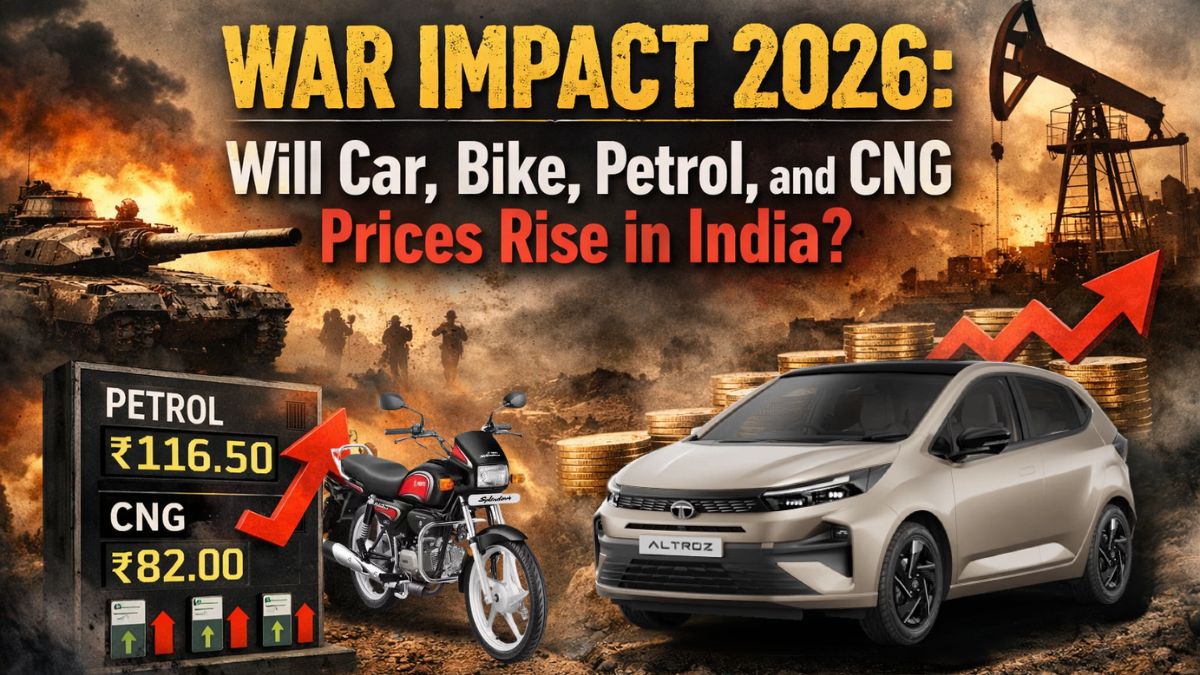
War Impact 2026: Will Car, Bike, Petrol, and CNG Prices Rise in India?
- Other
- Published: 25 Mar, 2026
Book a Test Drive
Free doorstep test drive at your convenience
Introduction
As global tensions continue to rise in 2026, concerns are growing about how a potential war scenario could impact everyday life in India—especially when it comes to fuel prices and vehicle costs. From petrol and CNG to cars and bikes, the ripple effects of a global crisis can quickly reach Indian consumers.
But the big question remains: Are prices really going to increase, and if yes, how much?
How War Impacts Fuel Prices Globally
Whenever a war-like situation develops, especially in oil-producing regions, the first and most immediate impact is seen on crude oil prices. Countries in the Middle East play a major role in global oil supply, and any disruption there leads to uncertainty in the market.
India imports over 80% of its crude oil needs. This means even a small increase in global oil prices directly affects domestic fuel rates.
- Crude oil prices rise due to supply disruptions
- Transportation and insurance costs increase
- Currency fluctuations (weaker rupee) add extra pressure
As a result, petrol and diesel prices in India can rise within weeks.
Petrol and CNG Prices: What to Expect
If global tensions escalate in 2026, petrol prices in India could see a noticeable jump. For example:
- Petrol prices may increase by ₹5–₹15 per litre in the short term
- CNG prices could also rise due to higher natural gas costs
- Metro cities may feel the impact faster due to higher demand
CNG, often considered a cheaper alternative, is also linked to global gas markets. So, it’s not completely immune to international crises.
Impact on Car and Bike Prices
Fuel is not the only concern. War situations can also disrupt global supply chains, affecting the automobile industry.
1. Increase in Manufacturing Costs
Car and bike manufacturers depend on imported components such as semiconductors, batteries, and metals. A war can:
- Delay shipments
- Increase raw material prices
- Raise production costs
2. Price Hike by Automakers
To manage rising costs, companies may pass the burden to consumers:
- Cars could become ₹20,000–₹1 lakh more expensive
- Bikes may see a price hike of ₹2,000–₹10,000
3. Impact on EV Segment
Even electric vehicles may get costlier due to rising lithium and battery prices.
Auto Market Trends During Crisis
Historically, during global crises:
- Consumers delay big purchases like cars
- Demand shifts toward fuel-efficient or budget vehicles
- EV interest increases due to high fuel prices
In India, SUVs and budget hatchbacks may still perform well, but overall growth can slow down.
Will This Be a Long-Term Impact?
The duration of the price rise depends on how long the crisis lasts.
- Short-term conflict: Temporary price hike, market stabilizes in a few months
- Long-term war: Sustained inflation in fuel and vehicle prices
Government intervention, such as reducing taxes or releasing fuel reserves, can also help control the situation.
Expert Opinion
Industry experts believe that while a sudden spike is possible, India has become more resilient in recent years. Diversified oil sourcing and growing EV adoption may reduce the long-term impact.
However, short-term volatility is almost certain if global tensions escalate.
Conclusion
The possibility of rising car, bike, petrol, and CNG prices in India during a global war crisis in 2026 cannot be ignored. While the exact impact depends on the scale and duration of the conflict, early signs usually point toward higher fuel costs and increased vehicle prices.
For consumers, this means one thing: stay informed and plan purchases wisely.
FAQs
Q1. Will petrol prices increase immediately during war?
Yes, petrol prices can rise quickly as global crude oil rates increase.
Q2. Is CNG safer from price hikes?
Not completely. CNG prices also depend on global gas markets.
Q3. Should I buy a car now or wait?
If prices are expected to rise, buying earlier may save money.
Q4. Will EVs become cheaper or expensive?
EVs may also get slightly expensive due to battery cost increases.
Book a Test Drive
Free doorstep test drive at your convenience