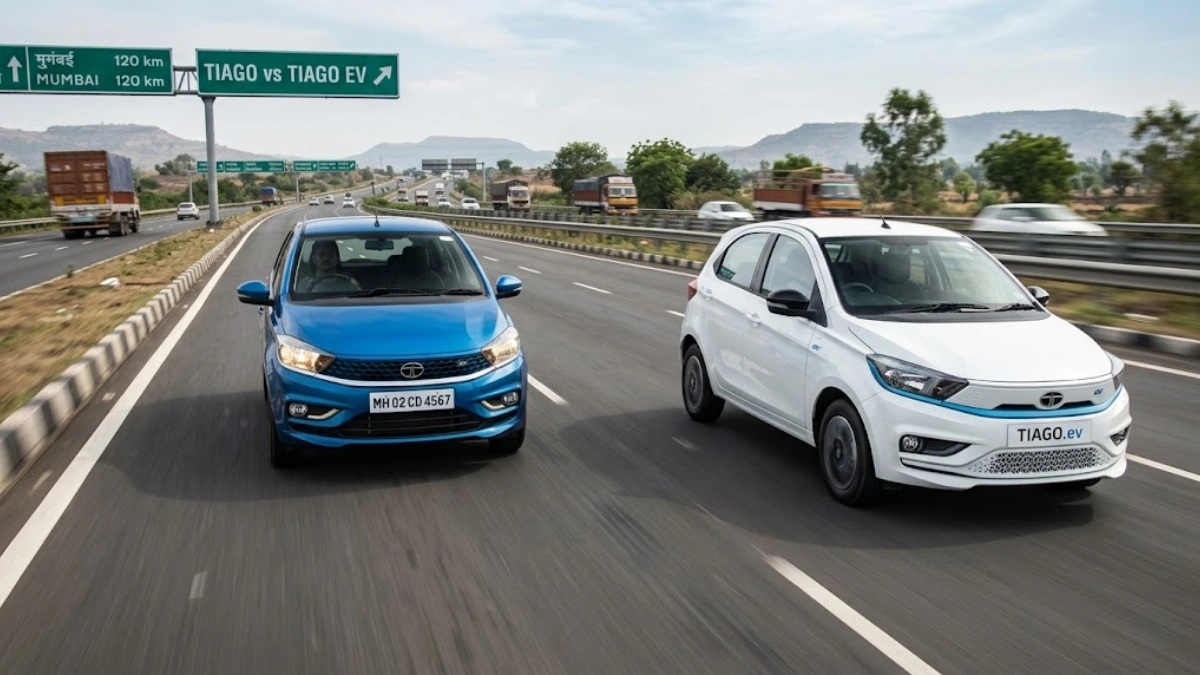
Tata Tiago 2026 Mileage Comparison: Petrol, CNG & Electric
- Cars
- Published: 28 May, 2026
Book a Test Drive
Free doorstep test drive at your convenience
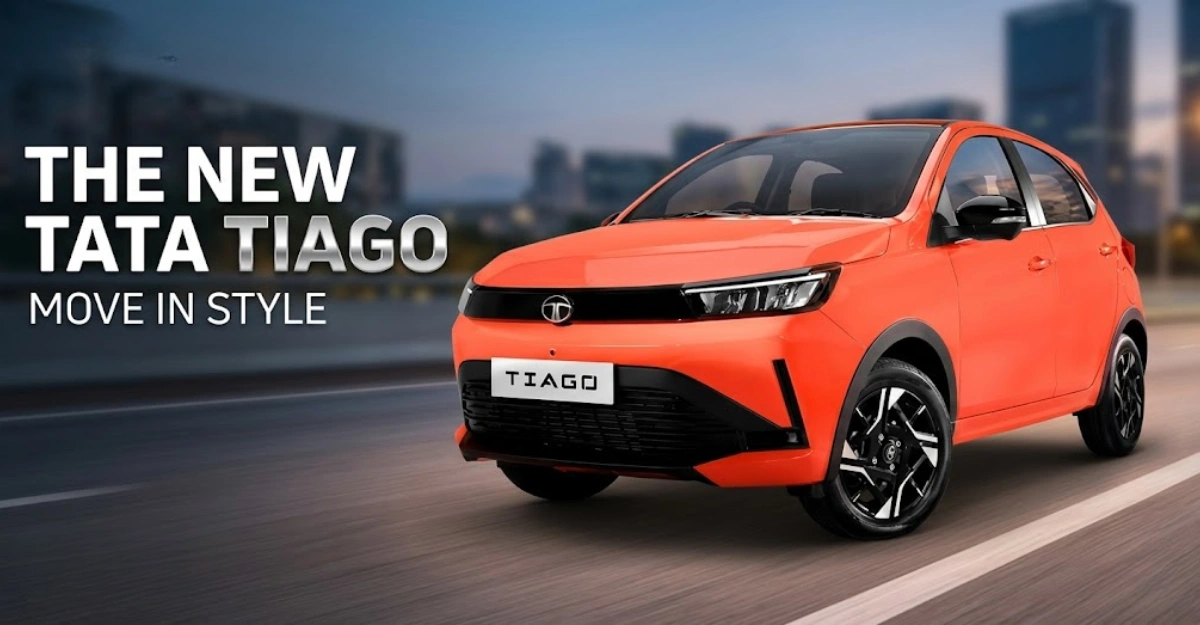
The Tata Tiago has always punched above its weight for India's budget-conscious buyer. On 28 May 2026, Tata Motors officially launched the new-generation Tiago — not merely a facelift, but a thorough generational update with a redesigned body, revamped interiors, and the same three powertrain lineup that has made it unique in the hatchback segment: petrol, CNG, and electric. Prices start as low as ₹4.69 lakh for the petrol variant, making it still one of the most affordable cars on Indian roads.
But for most buyers, one question towers above everything else: how far will it take me, and at what cost? This blog does a deep-dive mileage comparison across all three powertrains — so you can make the decision that actually fits your life.
What's New in the 2026 Tiago First
Before getting to the numbers, it is worth noting what has changed, since the 2026 model is being called a proper generation update rather than a refresh.
Under the bonnet, the 2026 Tiago retains the outgoing model's powertrains — a 1.2-litre 3-cylinder naturally aspirated engine in 86hp petrol and 75.5hp CNG guises, with gearbox options comprising a 5-speed manual and a 5-speed AMT for both versions. In a first for its segment, the 2026 Tiago CNG AMT gets paddle shifters.
The 2026 Tiago is built on the X-ALFA architecture and gets a sharper front face, chunky front cladding, new DRLs, a 360-degree camera, 15-inch tyres, new alloy designs, and blacked-out B-pillars. Inside, new features include a floating touchscreen infotainment system, a free-standing digital instrument cluster, rotary drive selector, dual wireless charging pads, rear AC vents, USB Type-C charging ports, a two-spoke steering wheel with an illuminated Tata logo, cruise control, auto headlamps, and rain-sensing wipers.
Safety is taken care of via 6 airbags, ESC, parking sensors, a 360-degree camera, ISOFIX child-seat anchor points, and ABS with EBD. Tata has also strengthened the 2026 Tiago's bodyshell for added safety credentials.
Now, to the mileage numbers.
Tata Tiago 2026 Petrol: The Everyday Workhorse
The petrol variant is the entry point of the Tiago range and remains the most popular choice among first-time buyers and those in cities without a well-developed CNG network.
The ARAI-claimed mileage for the Tiago petrol manual variant is 19.01 kmpl, while the petrol AMT variant is rated at 19 kmpl.
As per ARAI figures, the petrol version of the Tata Tiago offers a mileage of 20 kmpl. In real-world conditions, the Tiago typically delivers around 15–17 kmpl in city driving depending on traffic and driving habits, with highway efficiency improving to 17–18 kmpl during steady cruising.
In combined city-highway driving, typical real-world mileage falls between 17.5 and 19.5 km/l. Highway cruising at steady speeds of around 80–90 km/h can push efficiency to 21–22 km/l, approaching ARAI estimates.
The petrol variant is best suited for buyers who drive primarily in cities with good fuel station access and cover moderate distances daily. With petrol hovering above ₹100 per litre in most Indian cities, the per-kilometre running cost comes to roughly ₹5–6 in real-world city driving. The 35-litre fuel tank gives a practical range of around 600 km on a full tank on mixed roads, making weekend highway trips comfortable without frequent stops.
The manual gearbox remains the better mileage option of the two transmissions. The AMT is convenient but comes with the characteristic gear-shift hesitation at low speeds — something to factor in for pure city commuters.
Tata Tiago 2026 CNG (iCNG): The Cost-Efficient Choice
For buyers who commute daily over 50–80 km and have access to a CNG station, the Tiago iCNG is arguably the most financially sound hatchback you can buy in India right now.
The CNG manual variant delivers an ARAI-claimed mileage of 26.49 km/kg, while the CNG AMT tops the entire Tiago range with an ARAI-certified efficiency figure of 28.06 km/kg.
The Tiago offers an average mileage of around 20 kmpl for petrol variants and approximately 28 km/kg for CNG variants, making it one of the most economical hatchbacks on Indian roads.
In real-world conditions, CNG models achieve around 17–22 km/kg depending on city or highway mix. With CNG priced at approximately ₹83–90 per kg in Delhi-NCR as of May 2026, the running cost drops to around ₹3.5–4 per km — roughly a 35–40% saving over petrol.
Tata's innovative twin-cylinder technology places two miniature CNG cylinders beneath the boot floor, which addresses one of CNG cars' biggest disadvantages — boot space reduction — by freeing up most of the trunk. The iCNG variant is a dual-fuel car, meaning it can operate on both CNG and petrol, providing excellent range and flexibility.
The CNG AMT with paddle shifters is a genuine segment-first and makes city driving with CNG significantly more convenient than before. The direct CNG start feature — where the car starts on CNG without needing to first ignite on petrol — is another practical addition that reduces fuel switching costs. The Tiago CNG starts at ₹5.79 lakh for the Smart variant and goes up to ₹7.99 lakh for the top Creative trim.
For buyers in cities like Delhi, Lucknow, Ahmedabad, Mumbai, or Patna — where the CNG network is mature — the iCNG Tiago offers perhaps the most favourable total cost of ownership of any car in its segment.
Tata Tiago EV: The Future in a Budget Package
The Tiago EV occupies a genuinely rare position globally: an electric car priced so affordably that it competes directly with petrol hatchbacks in the same family. It is the only mainstream EV in India priced close to ₹7 lakh, and the 2026 generation has improved substantially.
The Tiago EV is offered in two battery configurations. The Medium Range (MR) variant uses a 19.2 kWh battery, while the Long Range (LR) variant carries a 24 kWh battery producing 73.75 bhp and 114 Nm of torque, with a claimed MIDC range of 315 km. Charging options include a 3.3 kW AC home charger (approximately 8.7 hours from 10 to 100%), a 7.2 kW AC charger (approximately 6.9 hours), and a 25 kW DC fast charger that tops up from 10 to 80% in around 58 minutes.
The 2026 Tata Tiago EV features a completely new dashboard with two free-standing display units and a 360-degree camera system with blind spot monitoring for added safety. The Tiago EV is priced from ₹6.99 lakh to ₹9.99 lakh.
Tata is also offering the Tiago EV with Battery-as-a-Service (BaaS), bringing the starting price down to ₹4.69 lakh plus battery rental charges of ₹2.6 per km — a structure that aligns monthly costs with actual usage rather than demanding a large upfront battery investment.
Assuming you cover an average distance of approximately 60 km per day and electricity costs ₹10 per unit, the running cost of the Tiago EV on the 19.2 kWh battery works out to approximately ₹0.85 per km when charged at home. That is a dramatic reduction compared to petrol (₹5–6/km) and even CNG (₹3.5–4/km).
Real-world range for the Tiago EV sits closer to 180–210 km on a full charge, less than the claimed 250 km, affected by city driving patterns. For the Long Range 24 kWh variant, real-world range is typically around 240–260 km in mixed conditions. For daily commuters covering under 100 km per day who can charge overnight at home, this is entirely sufficient. The car is less suited to long highway journeys where charging infrastructure remains uneven across India.
Side-by-Side Mileage Summary
Petrol Manual: ARAI 19.01 kmpl | Real-world city 15–17 kmpl | Highway up to 21–22 kmpl | Running cost approx. ₹5–6/km
Petrol AMT: ARAI 19 kmpl | Real-world city 14–16 kmpl | Running cost approx. ₹5.5–6/km
CNG Manual (iCNG): ARAI 26.49 km/kg | Real-world 17–22 km/kg | Running cost approx. ₹3.5–4/km
CNG AMT (iCNG): ARAI 28.06 km/kg | Real-world 18–23 km/kg | Running cost approx. ₹3.2–4/km
EV Medium Range (19.2 kWh): Claimed 250 km | Real-world 180–210 km | Running cost approx. ₹0.85–1.2/km (home charging)
EV Long Range (24 kWh): Claimed 315 km | Real-world 240–260 km | Running cost approx. ₹0.85–1.2/km (home charging)
Which Powertrain Should You Pick?
If you live in a city with reliable CNG infrastructure and cover 40–80 km per day, the CNG AMT is the clear winner on efficiency and running costs. The 28.06 km/kg ARAI figure is exceptional for a hatchback, and the new paddle-shift AMT solves the biggest complaint about older CNG automatics. For moderate users, the payback period over petrol is typically 12–18 months.
If you have a home charging point and your daily commute is under 80 km, the Tiago EV is arguably the best value proposition in Indian motoring today. At under ₹1 per km in running costs and a starting price of ₹6.99 lakh, no other car offers this combination. The BaaS option also lowers the barrier to entry significantly for first-time EV buyers.
The petrol variant remains the most flexible choice — no dependency on CNG station proximity or charging points, easy to refuel anywhere in the country. It is the right pick for buyers in smaller towns, those who take frequent highway trips, or those who are simply not yet ready to commit to a mono-fuel car.
The 2026 Tata Tiago, by offering all three powertrains under one roof with competitive mileage numbers across each, remains one of the most thoughtfully engineered value cars in India. Whatever your fuel preference, there is a Tiago built for it.
Book a Test Drive
Free doorstep test drive at your convenience
Popular Brands





Latest Car News

Tata Altroz vs Maruti Suzuki Brezza: Which One Should You Buy in 2026?
Wagon R vs Swift: Which Is Cheaper to Maintain?
BMW 7 Series Facelift Interior Updates: Know Everything

How to Check Oil Level in Car: Step-by-Step Guide

Latest Cars Under ₹5 Lakh in India in September 2026

Maruti Alto K10 September Offers: Get Up to ₹62,500 Savings on Purchase

Tata Tigor Facelift Under ₹6 Lakh: A New Budget Sedan Is Coming

Hyundai Creta August 2026 Sales: With 16,288 Units Becomes India's Best-Selling Mid-Size SUV

Maruti Baleno Facelift Booking Price: Expected Booking Amount, EMI & Loan Calculation

Kia Sorento 6 Seater vs 7 Seater: Which One Should You Choose?

Kia Sorento AI Assistant Explained: Features, Commands, and Indian Language Support

What Is the Difference Between Tata Curvv and New Curvv Series X?
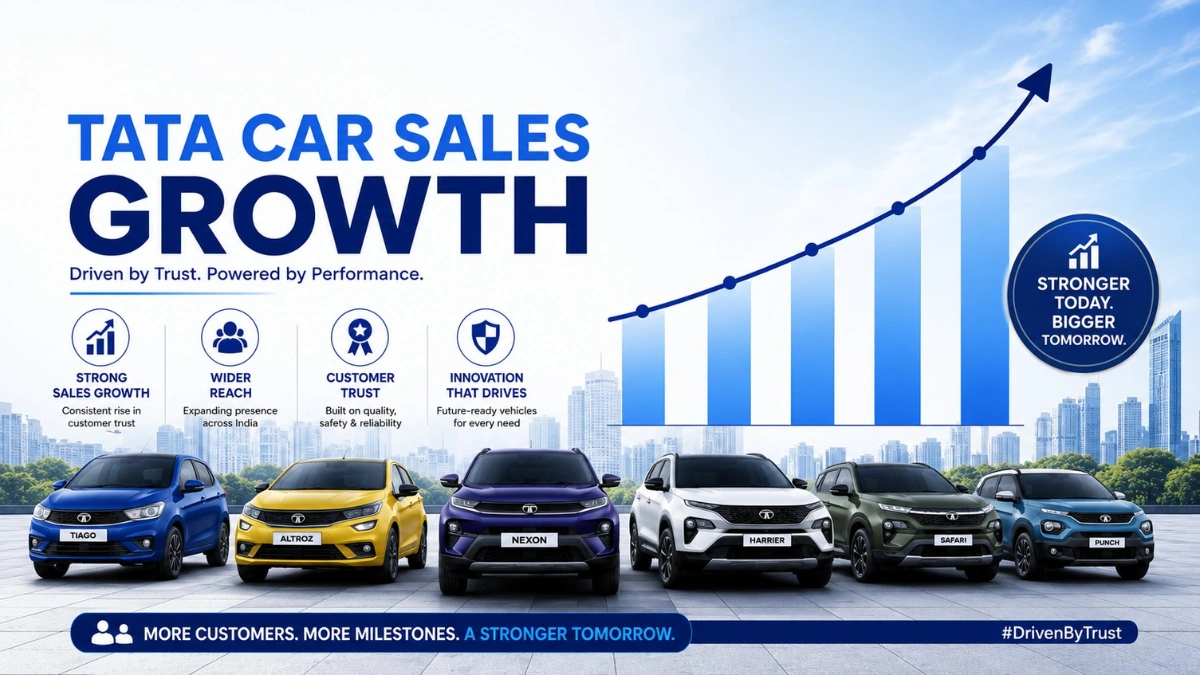
Tata Car Sales August 2026: Model-Wise Sales & Growth Report

Car Sales Report of August 2026: Tata Motors, Maruti, Mahindra Lead Growth

Pajero 2026 vs Fortuner: Which SUV Could Be Better?
Volvo EX90 Booking Price: Expected Booking Amount, EMI & Loan Calculation

Next Generation Tata Nexon 2027: Expected Launch, Price, Design & Features
MG Hector Tomahawk EV Variant-Wise Price & Features Comparison

Maruti Baleno Facelift vs Toyota Glanza: Complete Comparision

Upcoming Cars in September 2026 in India: New Cars, Launch Dates & Expected Prices