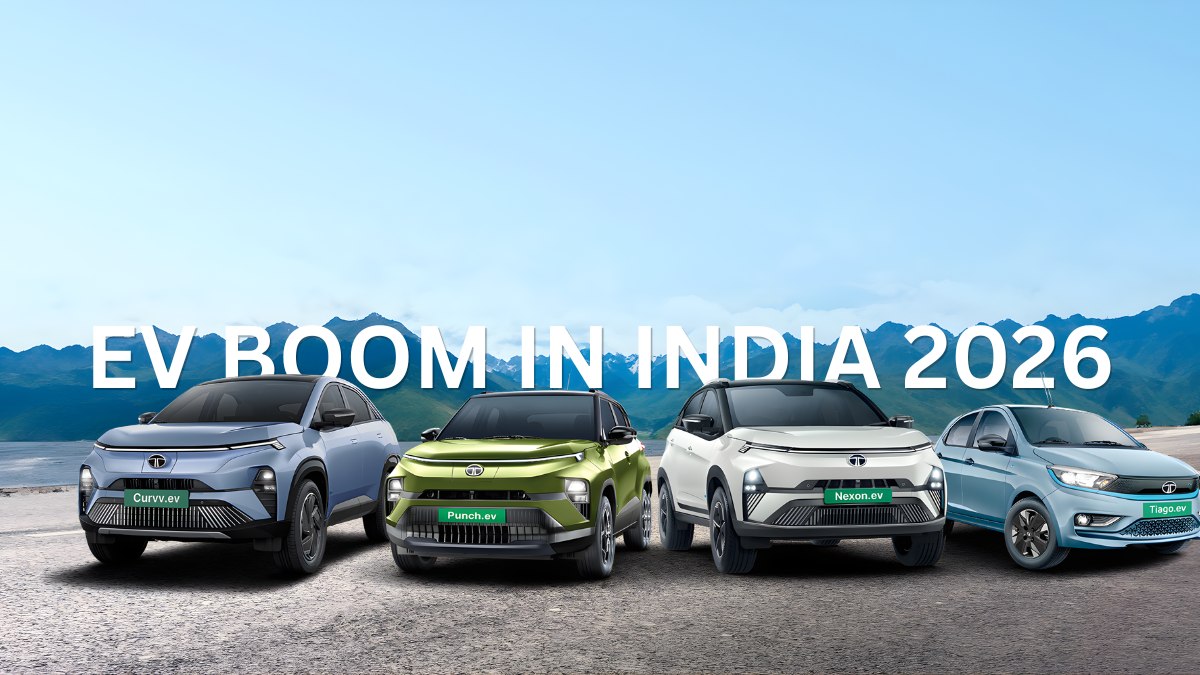
EV Boom in India: Why Buyers Are Shifting from Petrol Cars in 2026
- Other
- Published: 09 Apr, 2026
Book a Test Drive
Free doorstep test drive at your convenience
April 2026 | Auto Industry News
India’s automobile market is witnessing a massive transformation in 2026. What was once considered a niche segment is now becoming mainstream—electric vehicles (EVs) are rapidly gaining popularity.
From rising fuel prices to government incentives, multiple factors are pushing buyers to move away from traditional petrol cars.
So, what’s really driving this EV boom in India? Let’s break it down.
A Major Shift in Buyer Mindset
Just a few years ago, petrol cars dominated Indian roads. But today, things are changing fast.
Car buyers are no longer just looking at mileage—they are thinking about:
- Long-term savings
- Environmental impact
- Future-ready technology
This shift in mindset is one of the biggest reasons behind the EV boom.
Rising Petrol Prices: A Key Trigger
One of the biggest reasons behind the shift is the continuous rise in fuel prices.
Impact on Buyers:
- Higher monthly fuel expenses
- Unpredictable price fluctuations
- Increased cost of ownership
👉 EVs offer a solution with significantly lower running costs.
Lower Running Cost of EVs
Electric cars are much cheaper to run compared to petrol vehicles.
Cost Comparison:
- EV: ₹1–₹2 per km (approx.)
- Petrol Car: ₹6–₹10 per km (approx.)
👉 Over time, EV owners save a significant amount on fuel.
Government Support & Policies
The Indian government is strongly promoting electric mobility.
Key Initiatives:
- Subsidies under FAME scheme
- State-level incentives
- Tax benefits on EV purchases
- Investment in charging infrastructure
These policies are making EVs more affordable and attractive.
Charging Infrastructure Improving
Earlier, lack of charging stations was a major concern.
But in 2026:
- Charging stations are increasing in cities
- Fast-charging technology is improving
- Home charging solutions are widely available
👉 This is reducing “range anxiety” among buyers.
More EV Options in the Market
Car manufacturers are launching new electric models rapidly.
Brands like Tata Motors, Mahindra & Mahindra, and MG Motor are expanding their EV portfolios.
Popular Trends:
- Budget EV cars
- Premium electric SUVs
- Long-range models
👉 More options = more buyers entering the EV market.
Environmental Awareness Rising
Consumers today are more conscious about the environment.
Why EVs Matter:
- Zero tailpipe emissions
- Reduced air pollution
- Lower carbon footprint
👉 EV adoption supports a cleaner and greener future.
Performance & Technology Advantage
EVs are not just about savings—they also offer a modern driving experience.
Key Advantages:
- Instant acceleration (no gear lag)
- Smooth and silent driving
- Advanced tech features
👉 For many buyers, EVs feel more futuristic than petrol cars.
Market Growth in 2026
The EV market in India is growing at a rapid pace.
Key Insights:
- EV share increasing every year
- Urban demand rising quickly
- Fleet operators shifting to EVs
👉 India is moving steadily toward electric mobility.
EV vs Petrol Cars: The Reality Check
| Factor | EV Cars ⚡ | Petrol Cars ⛽ |
|---|---|---|
| Running Cost | Low | High |
| Maintenance | Low | Medium |
| Fuel Availability | Charging needed | Easily available |
| Environment | Eco-friendly | Polluting |
| Initial Cost | Higher | Lower |
👉 EVs win in long-term value, while petrol cars still offer convenience.
Who Should Buy EV Cars in 2026?
✅ Ideal for:
- Daily city commuters
- People with fixed travel routes
- Buyers looking for long-term savings
❌ Not Ideal for:
- Frequent long-distance travelers
- Areas with limited charging infrastructure
Future Outlook: Is Petrol Losing Its Dominance?
Short-Term (2026–2028)
👉 Petrol cars will still dominate
Long-Term (2030+)
👉 EVs are expected to lead the market
The shift is gradual—but clearly happening.
Final Verdict
The EV boom in India is not just a trend—it’s a transformation.
With rising fuel prices, government support, and technological advancements, more buyers are shifting towards electric cars.
👉 While petrol cars still have their place, the future of mobility is clearly electric.
FAQs
Q1. Why are people shifting to EV cars in 2026?
Due to high fuel prices, lower running cost, and government support.
Q2. Are EV cars cheaper than petrol cars?
Initial cost is higher, but running cost is much lower.
Q3. Is charging infrastructure improving?
Yes, especially in metro cities and urban areas.
Q4. Should I buy an EV car in 2026?
Yes, if your usage is mainly city driving.
Book a Test Drive
Free doorstep test drive at your convenience