Tata’s New Solid-State Battery EV: One Charge = Delhi to Goa Drive!
- Electric-Cars
- Published: 10 Dec, 2025
Book a Test Drive
Free doorstep test drive at your convenience
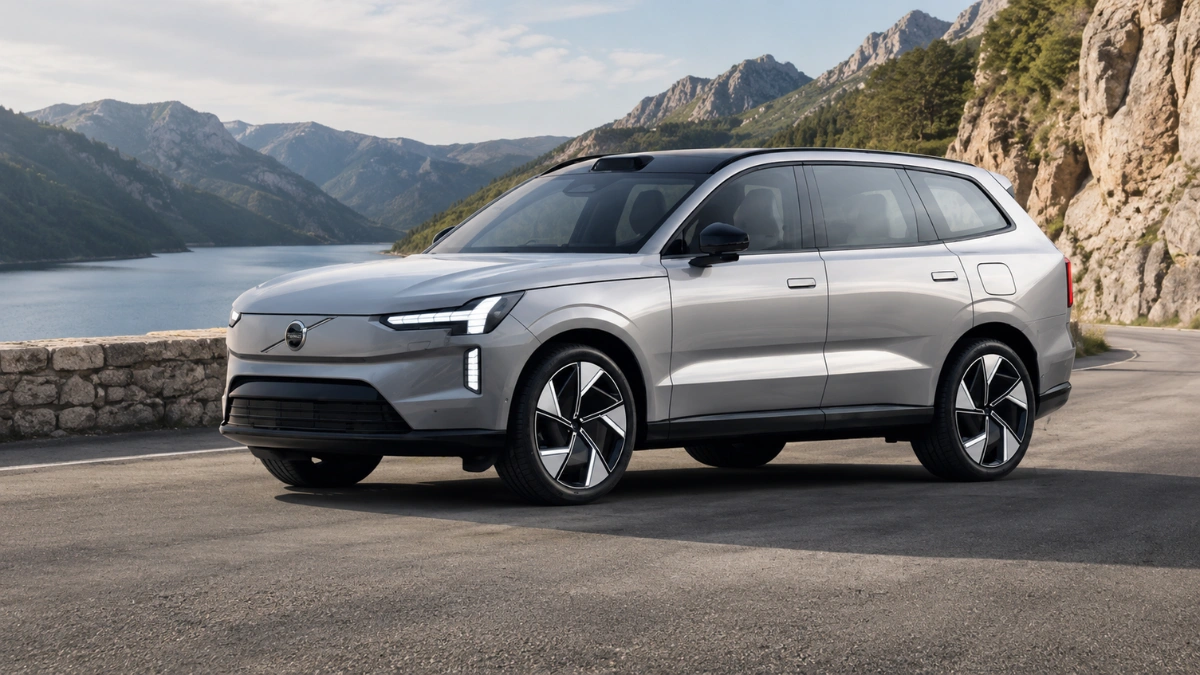
Electric mobility in India is evolving fast, and the biggest breakthrough expected in the coming years is solid-state battery technology. Unlike traditional lithium-ion batteries, solid-state batteries promise longer range, faster charging, improved safety, and higher energy density. Now imagine this technology in a Tata EV that can travel from Delhi to Goa on a single charge—a journey of nearly 1,900 km. While this sounds futuristic, it’s a realistic possibility with the rapid advancement of battery innovation.
Let’s explore what Tata’s potential solid-state EV could mean for Indian buyers, how this technology works, and why it could be a game-changing moment for the country’s EV landscape.
Understanding Solid-State Battery Technology
Solid-state batteries replace the liquid electrolyte of lithium-ion batteries with a solid electrolyte, making them more stable, more efficient, and more energy-dense. Here’s why they’re revolutionary:
1. Higher Energy Density
Solid-state batteries store nearly 2–3 times more energy in the same physical space. This means the same-sized battery pack could take you from Delhi to Goa without charging.
2. Ultra-Fast Charging
They can charge from 0 to 80% within minutes, dramatically improving convenience for EV users.
3. Longer Lifespan
These batteries degrade slower, offering thousands of charging cycles and better long-term performance.
4. Enhanced Safety
Because there’s no liquid electrolyte, the risk of fires, overheating, and thermal runaway is significantly lower.
How Tata’s Solid-State EV Could Change the Market
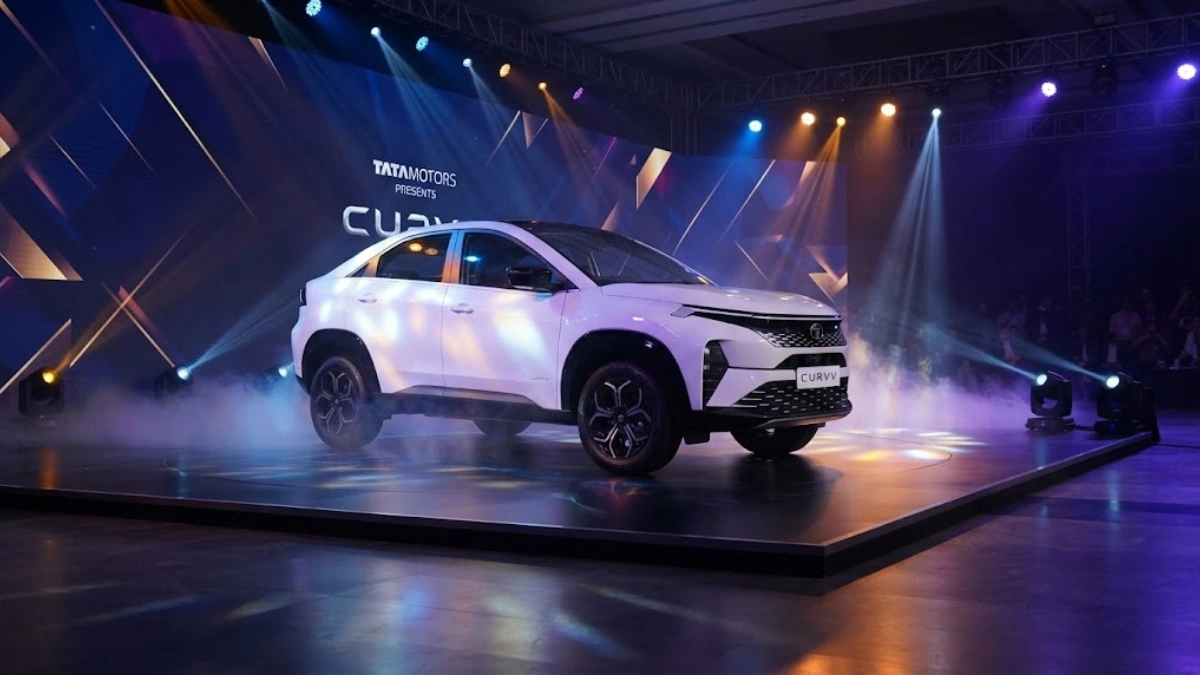
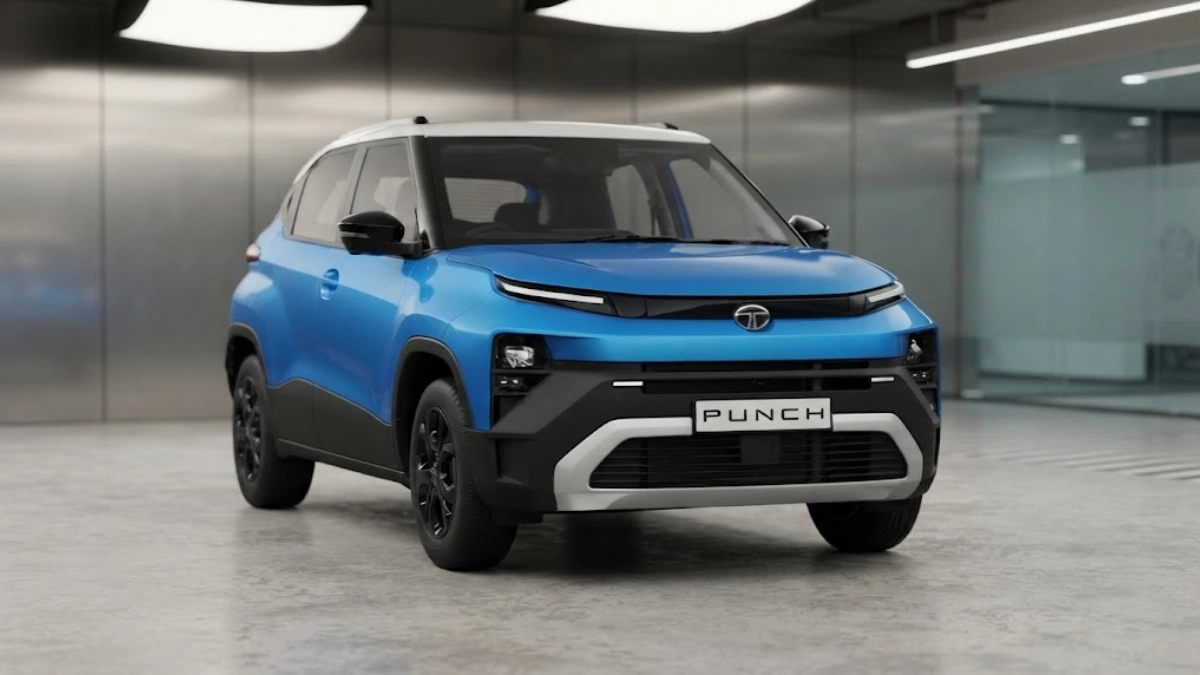
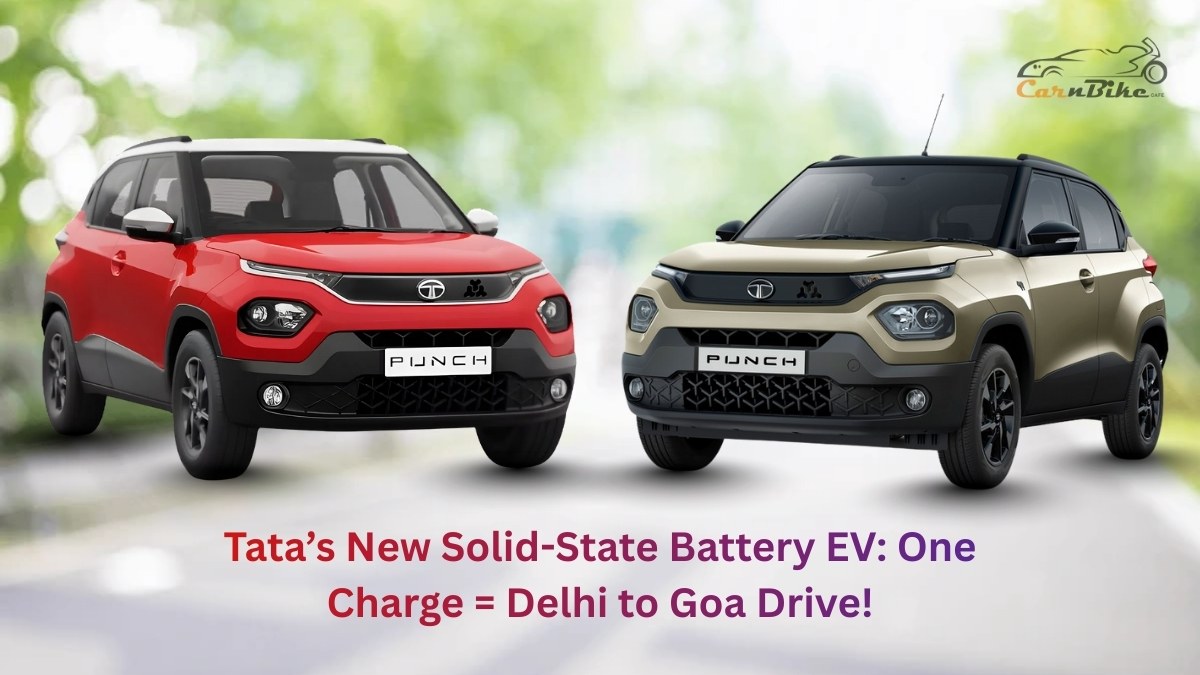
Tata Motors already leads the Indian EV market with popular models like the Nexon EV and Punch EV. The company is also deeply invested in cell development through Tata Agratas and partnerships in battery R&D.
If Tata launches an EV with solid-state batteries, it could offer:
• 1,500–2,000 km Range
A full Delhi-to-Goa journey on one charge becomes possible due to higher energy density.
• New-age EV Platforms
Tata’s future platform (like the upcoming Gen 3 architecture) could support larger packs and faster charging capabilities.
• Long-Term Durability
Solid-state batteries could last over 10 years with minimal degradation.
• Lower Running Costs
With fewer charging stops and higher efficiency, long trips become cheaper and more convenient.
Why This Tech Is a Big Deal for India
India’s EV adoption faces three main challenges: range anxiety, charging infrastructure gaps, and battery degradation. Solid-state batteries address all three.
- A Delhi-to-Goa capability eliminates range anxiety completely.
- Ultra-long range reduces dependency on public charging stations.
- Slow degradation means your EV remains efficient for years.
For a country where long highway travel is common, this tech could modernize the entire transport ecosystem.
Why Choose a Solid-State Battery Tata EV?
1. Unmatched Driving Range
Drive across states like Delhi–Goa, Mumbai–Kolkata, or Chennai–Shimla on a single full charge.
2. Lower Total Cost of Ownership
Even if the car costs more upfront, savings on fuel, charging cycles, and maintenance make it cheaper in the long run.
3. Safer Battery Technology
Solid-state batteries operate at cooler temperatures, drastically cutting the risk of fire or overheating—ideal for Indian weather.
4. Faster Charging = More Convenience
Imagine charging your EV in the time it takes to grab a quick snack at a café. Long queues and wait times become a thing of the past.
5. Future-Proof Technology
Investing in solid-state technology means buying a vehicle built for the next 15–20 years of innovation.
Conclusion
The idea of a Tata EV that drives from Delhi to Goa on one charge might sound like a futuristic dream today, but the rapid development of solid-state battery technology makes it a realistic milestone for India’s automotive future. With higher energy density, faster charging, longer lifespan, and improved safety, solid-state batteries are set to transform electric mobility worldwide.
Tata Motors’ strong EV ecosystem, battery investments, and leadership position put it in the perfect place to introduce this breakthrough to the Indian market. When this happens, range anxiety will disappear—and India may witness the true mass adoption of electric cars.
FAQ
Q1. What is a solid-state battery?
A: It’s a next-generation battery that uses a solid electrolyte instead of liquid, making it safer, more energy-dense, and longer lasting.
Q2. Can an EV really travel from Delhi to Goa on one charge?
A: With solid-state technology achieving 2–3x energy density, long-distance travel like Delhi to Goa (around 1,900 km) becomes possible.
Q3. When will Tata launch its solid-state battery EV?
A: Tata has not announced an official launch date yet, but industry expectations point toward the end of this decade as the technology matures.
Q4. Are solid-state batteries expensive?
A: Currently, they are costly to produce, but prices are expected to fall as mass manufacturing ramps up globally.
Q5. Are solid-state EVs safer than lithium-ion EVs?
A: Yes, they significantly reduce the risk of fires and overheating, making them safer for Indian climates.
Book a Test Drive
Free doorstep test drive at your convenience
Popular Brands


Latest Electric Car News
Hyundai EV Compact SUV India Launch: Expected Price, Range & Key Details
Hybrids vs. EVs: Which Is Better for You?
Delhi EV Policy 2026 in Effect from July 1
Upcoming Electric Cars in August 2026 in India
What to Do If Your Car Battery Is Dead
Mercedes-Benz VLE Unveiled: 8-Seater EV with 700+ KM Range
Tata Sierra EV First Look: 600+ KM Range, Triple Screens & More
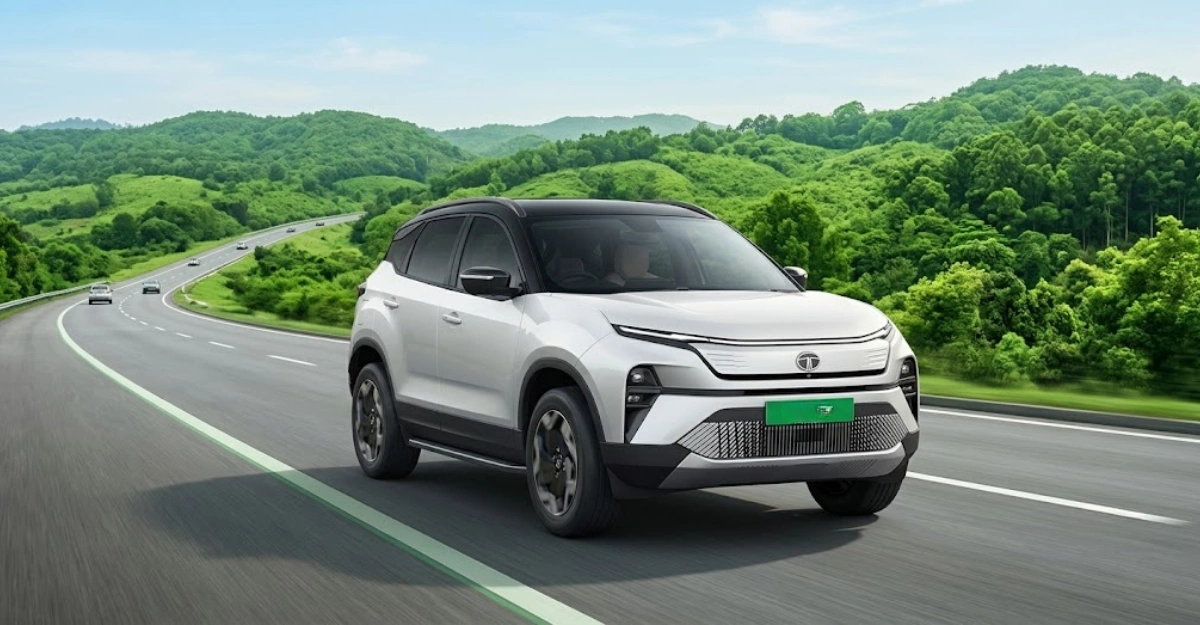
Top Accessories You Should Buy for Your Tata Harrier EV
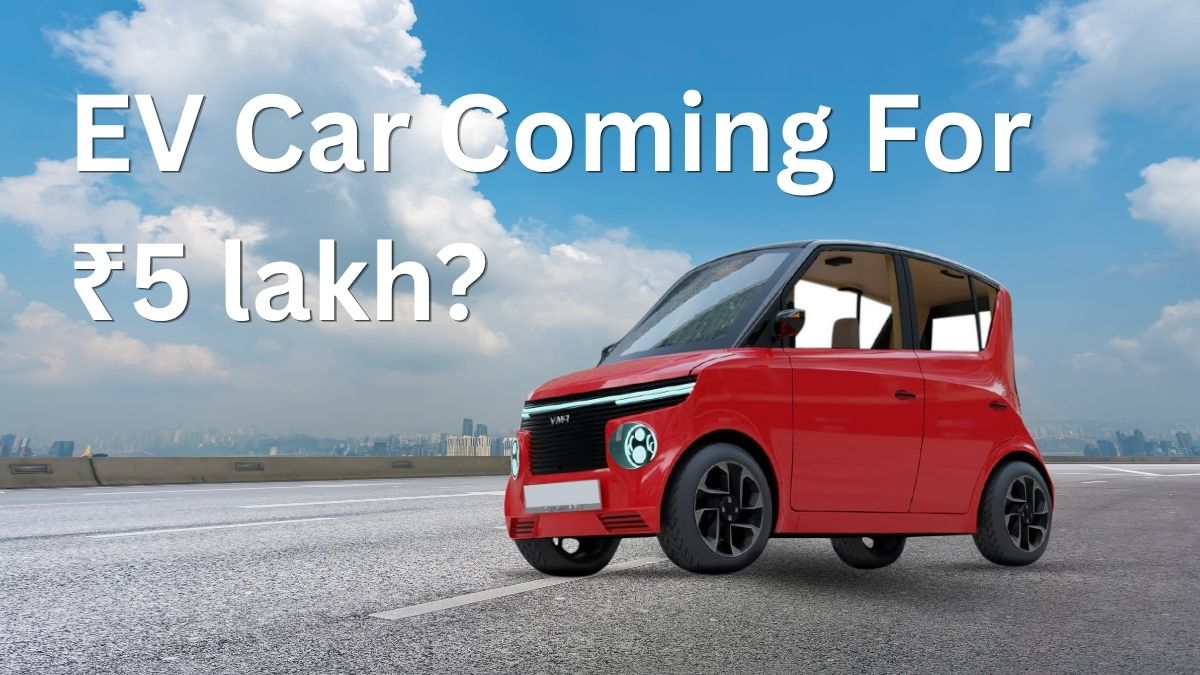
Is an EV Car Coming for ₹5 Lakh? A Major Shift in the Indian Auto Market
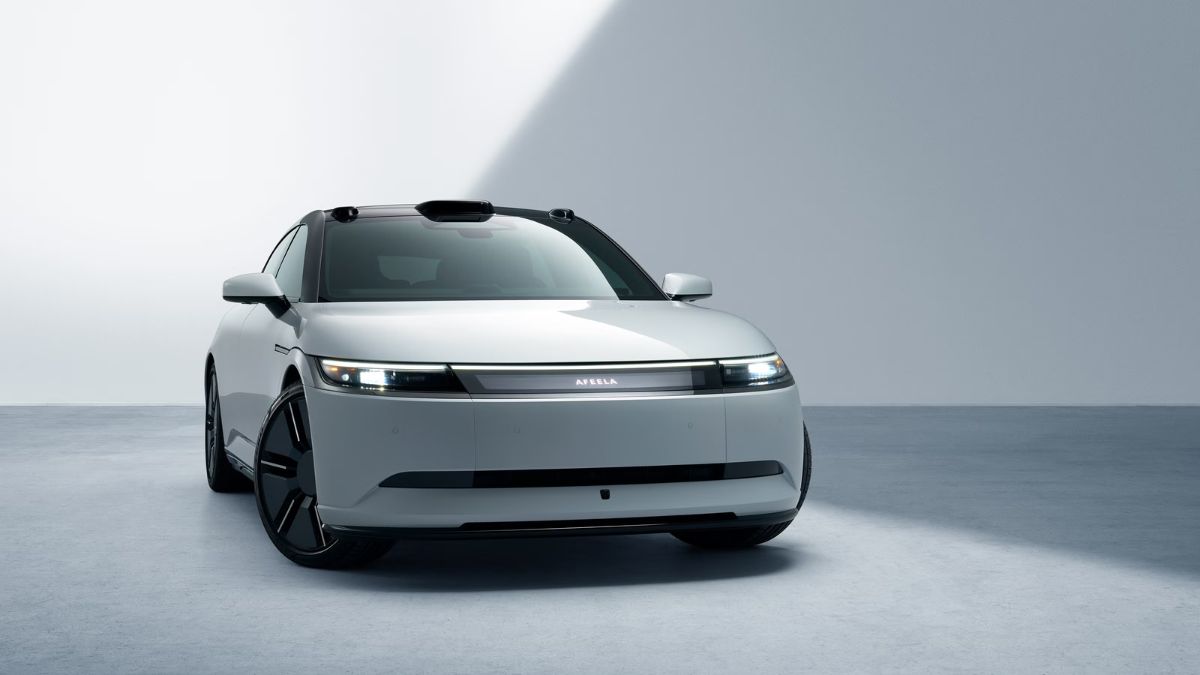
Top Upcoming SUVs and Electric Cars in April 2026 That Could Change the Market
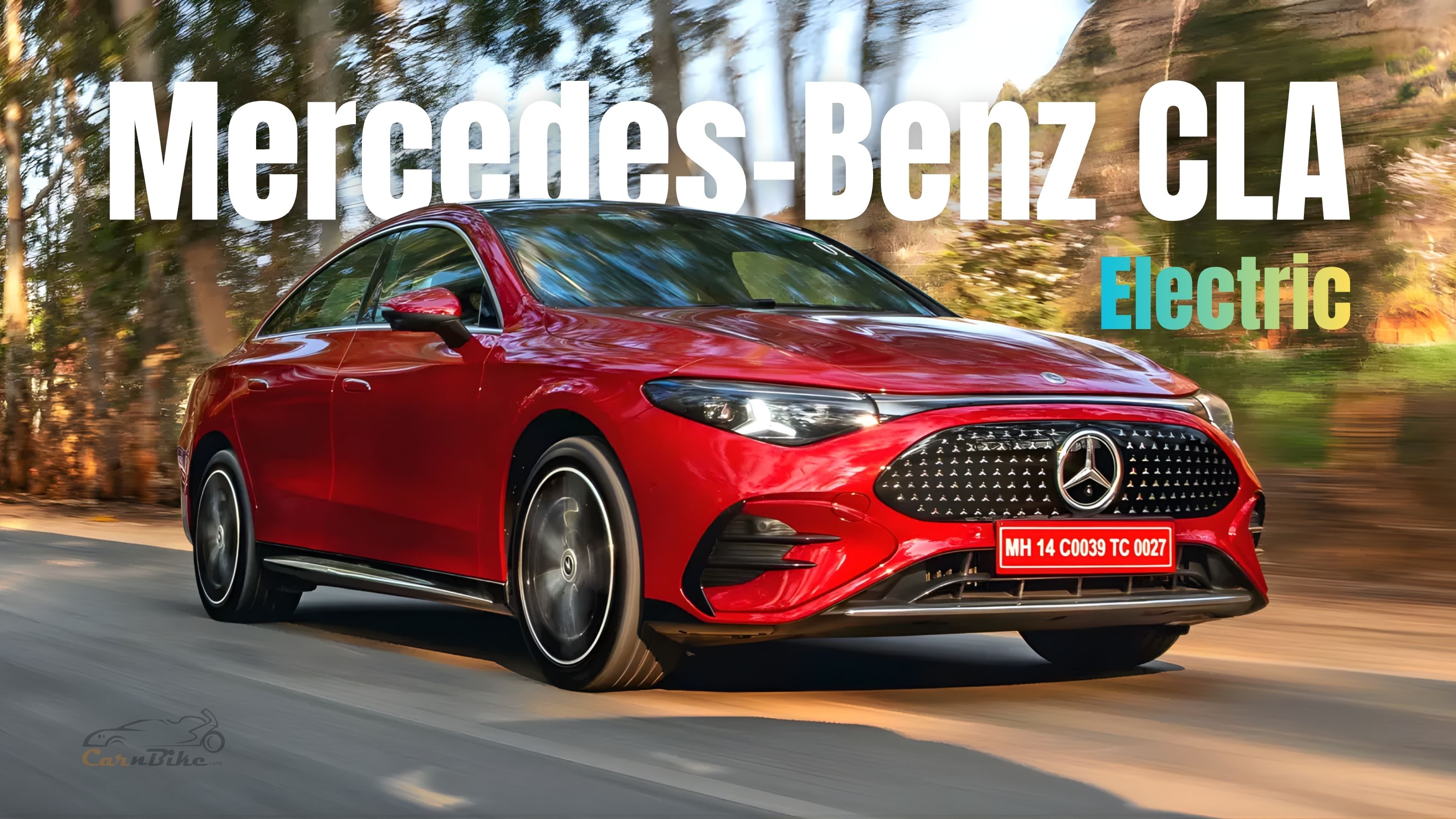
Bookings Open for the Mercedes-Benz CLA Electric – A New Competitor Enters India’s EV Market
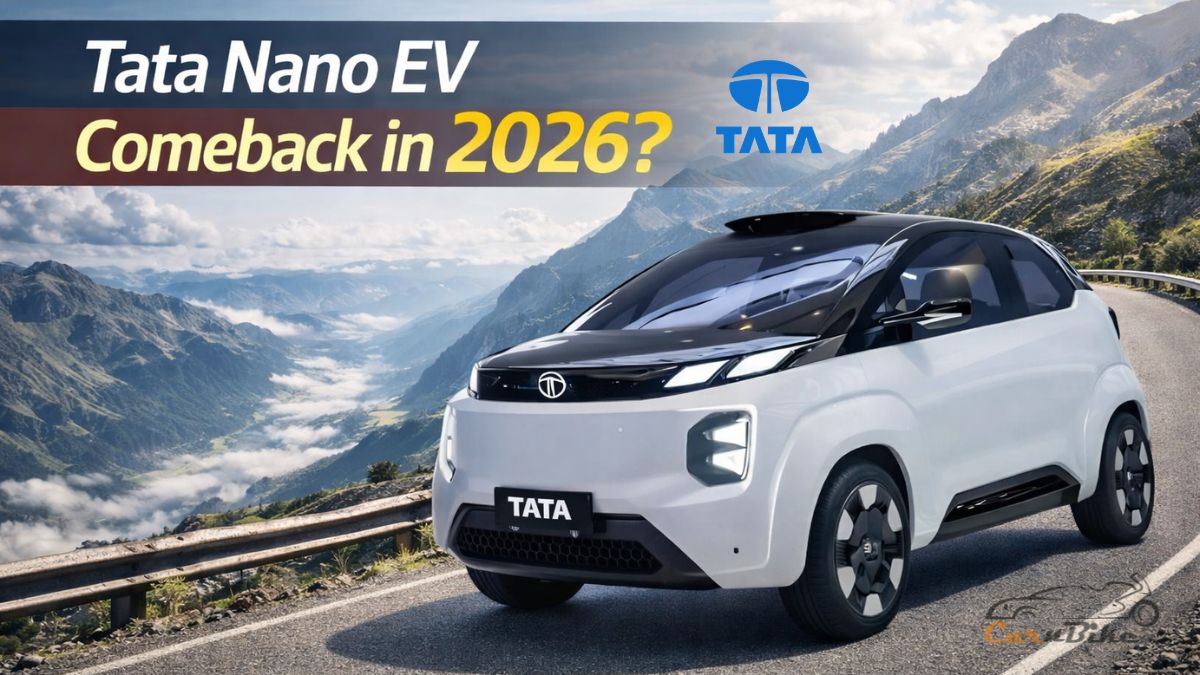
Tata’s New Budget Electric Car Coming in 2026 – Is the Nano EV Making a Comeback?
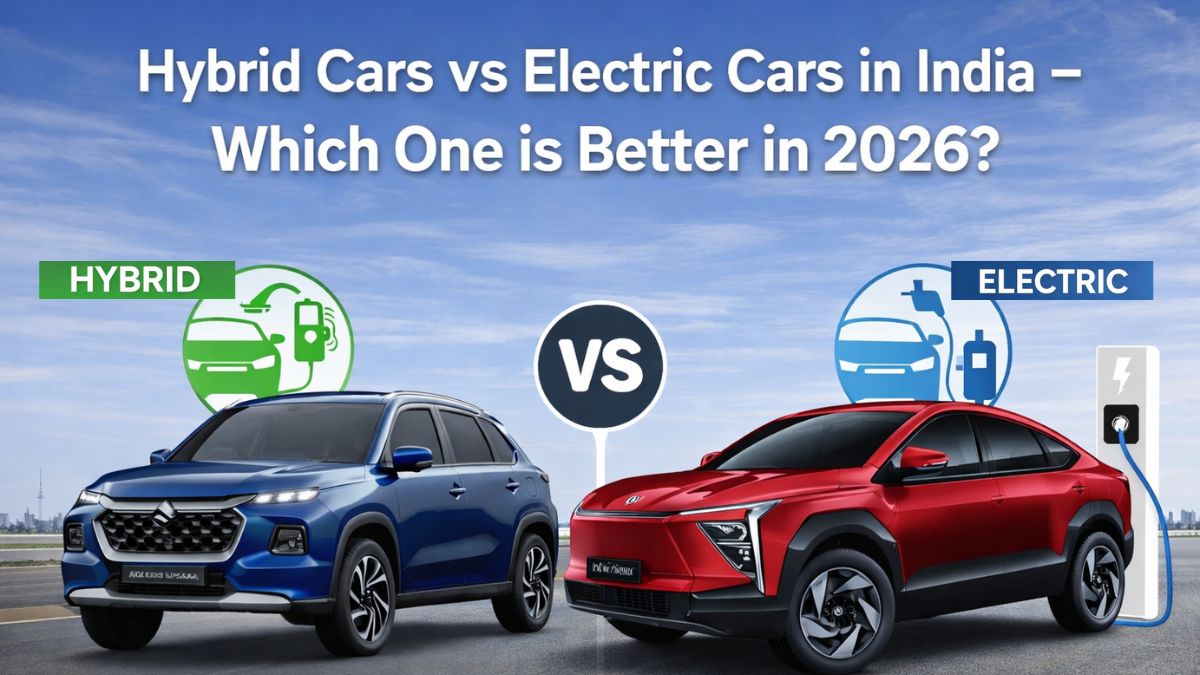
Hybrid Cars vs Electric Cars in India 2026: Which Is Better?
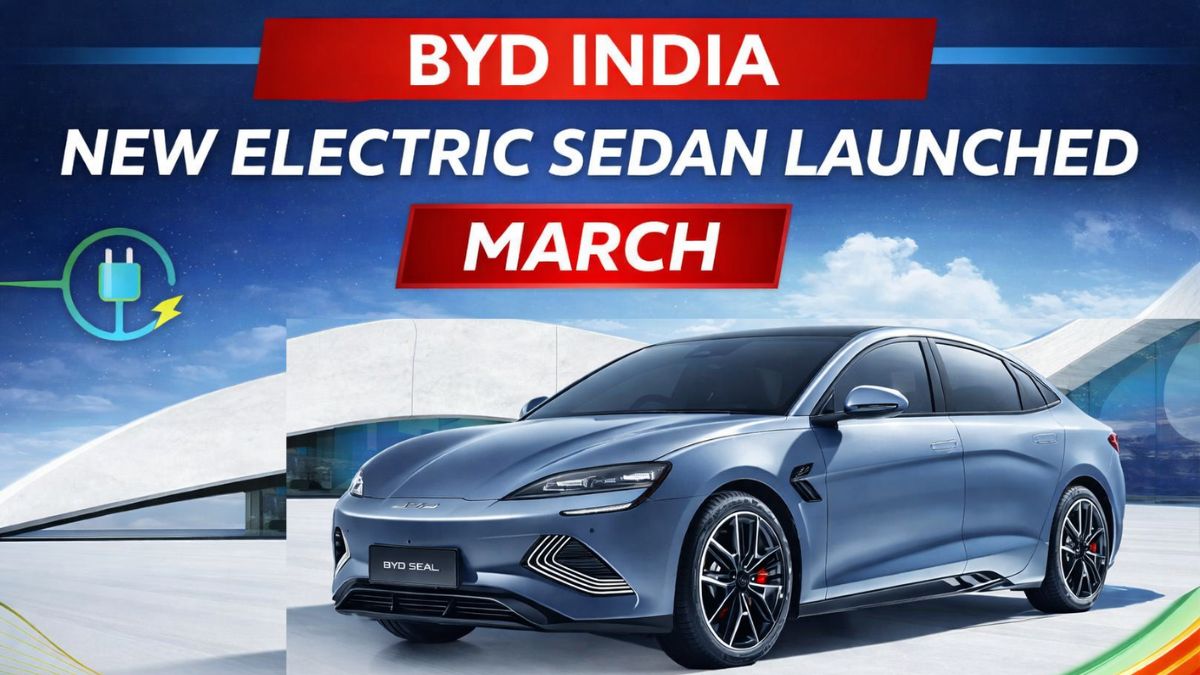
BYD India New Electric Sedan Launched – Price & Range Revealed
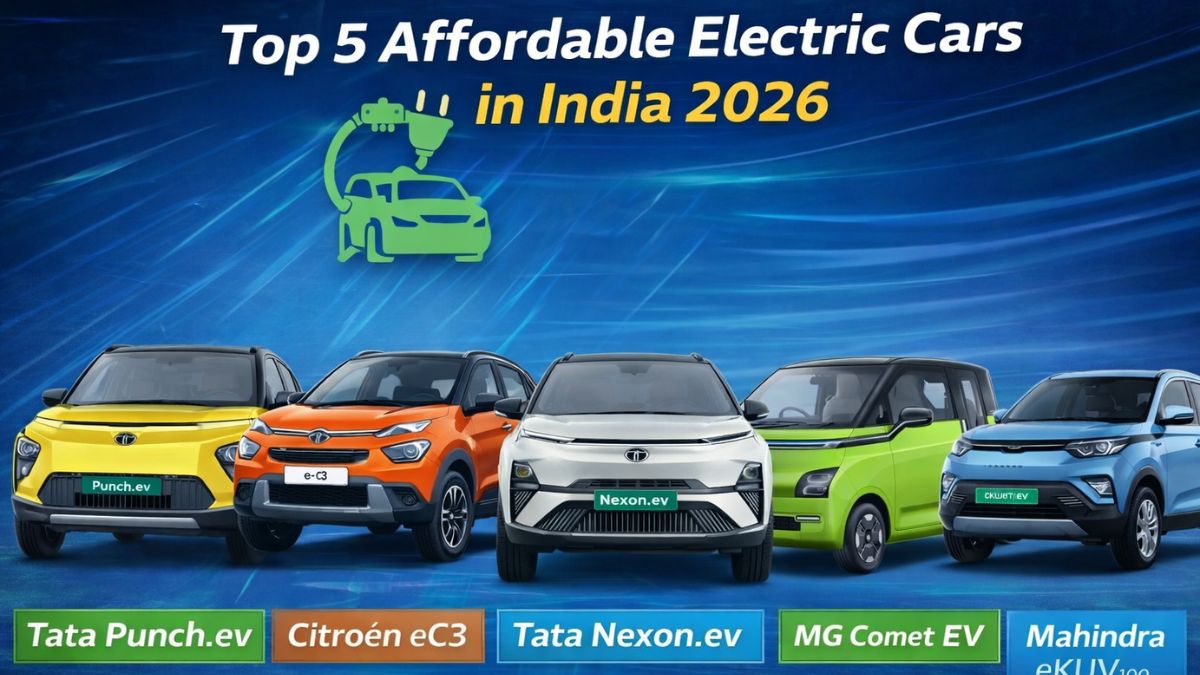
Top 5 Affordable Electric Cars in India 2026 (Best Budget EVs with Long Range)
Tata vs MG EV Comparison – Which One Is Better in 2026?
Tata EV Lineup 2026 REVEALED – Full Price Breakdown
Tesla India Booking Date LEAK – Big Update!
Hyundai Creta EV Launch Leak: Price Shock Incoming?
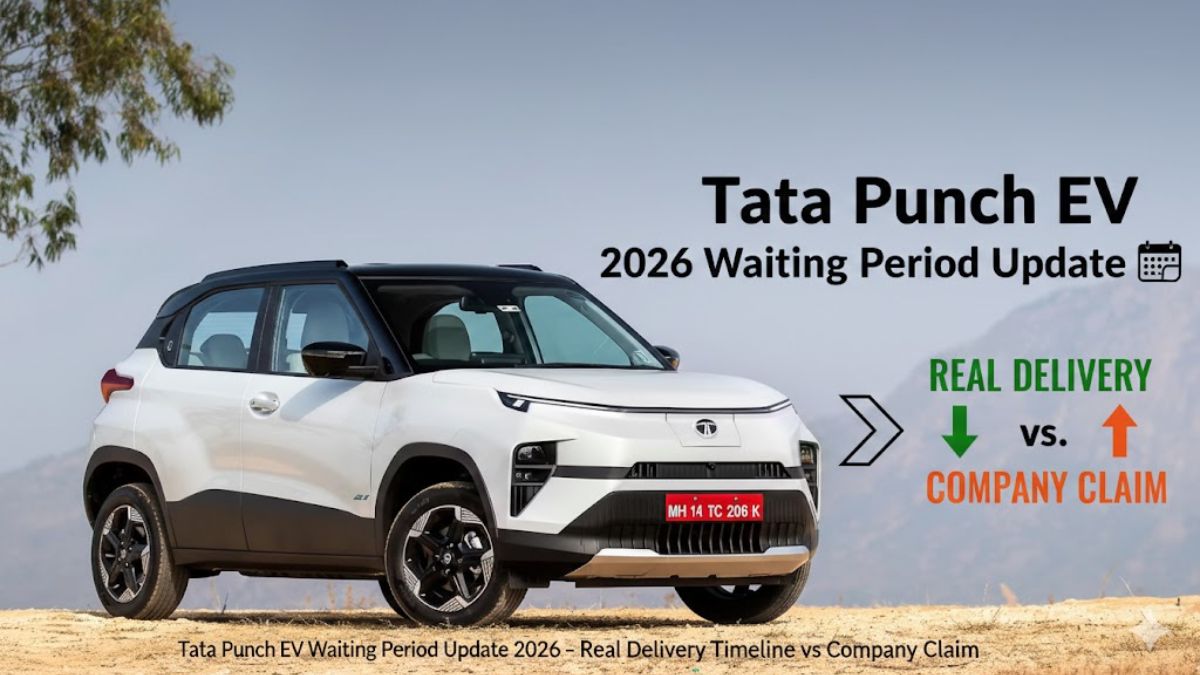
Tata Punch EV Waiting Period Update 2026: Real Delivery Timeline vs. Company Claims