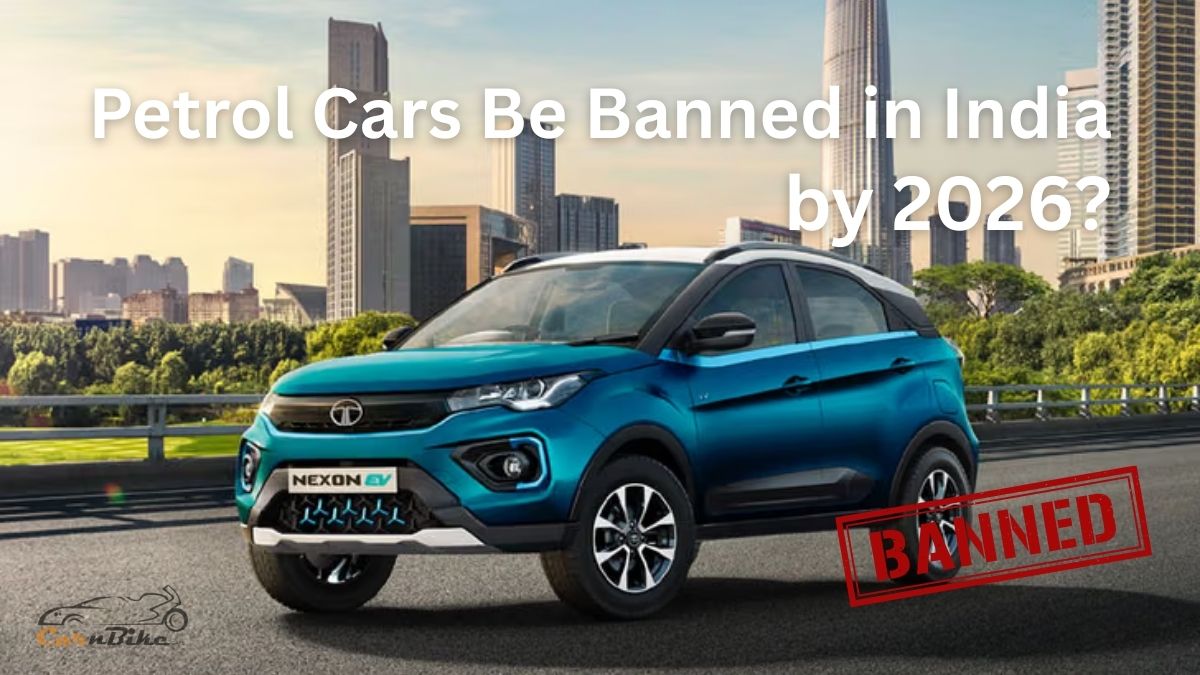
Will Petrol Cars Be Banned in India by 2026? Government’s Master Plan Explained
- Cars
- Published: 23 Dec, 2025
Book a Test Drive
Free doorstep test drive at your convenience
The idea of banning petrol cars in India by 2026 has been widely discussed across social media, automotive forums, and news outlets — but how much of it is fact, policy intention, or local pilot measures? As India races toward cleaner transportation and energy security, the government and state authorities have been pushing policies that encourage electric vehicle (EV) adoption and curtail emissions. However, a nationwide outright ban on petrol cars from 2026 is not currently official government policy.
What’s Driving the Discussion?
India’s rapid motorisation has brought economic growth and mobility — but also air pollution, greenhouse gases, and urban congestion. To tackle this, the central government and several states are adopting policies that shift the focus from fossil fuel vehicles (internal combustion engines) to electric mobility, cleaner fuels, and stricter emission norms.
The National Electric Mobility Mission Plan and related frameworks by NITI Aayog envision a long-term transition toward zero-emission mobility — but they do not specify a 2026 nationwide ban on petrol cars. Instead, timelines discussed in various policy circles and reports often point to the 2030s as a more realistic phase-out period for new petrol/diesel vehicle sales, aligned with global climate goals and India’s energy transition roadmap.
State-Level Initiatives: What’s Happening in Delhi
Some of the confusion around 2026 comes from state or city-specific proposals, particularly in Delhi:
- Draft EV Policy 2.0 in Delhi suggests banning new registrations of petrol and diesel two-wheelers from August 15, 2026, should the policy be approved. It also looks at restricting fossil fuel-powered three-wheelers from 2025 and further encouraging electric alternatives.
- Another report highlights a similar plan to stop petrol two-wheeler registrations in Delhi from August 2026.
- These proposals are aimed primarily at improving the capital’s severe air pollution and promoting EV uptake locally — they do not represent a nationwide petrol car ban.
In some iterations, these policies also stipulate incentives like electric vehicle purchase subsidies or even mandates that if a household already owns two vehicles, any additional purchase must be electric.
National Government’s Position
At the central government level, authorities have consistently reiterated support for EV adoption and cleaner fuels but have not imposed an official deadline to ban petrol car sales across India by 2026. Past comments from ministries (e.g., older statements by transport officials) suggest that the government prefers a balanced approach with industry consultations, rather than an abrupt nationwide ban.
Moreover, discussions about phasing out internal combustion vehicles at the national level often extend into the 2030–2035 timeframe, giving automakers and consumers more time to adapt.
Why the 2026 Ban Rumour Persists
There are a few reasons this topic keeps circulating:
- Local Policy Proposals: Cities like Delhi are trialing stricter EV and registration policies — and these are often misunderstood as national mandates.
- Social Media Misinformation: Viral videos and posts sometimes overstate or misinterpret draft policies.
- Consumer Concern: With rising EV rhetoric, many car buyers fear sudden phase-outs or forced obsolescence.
What This Means for Car Buyers
If you’re planning to buy a petrol car, here’s the bottom line:
- No nationwide ban on petrol cars takes effect in 2026 — you can legally buy and register petrol vehicles across India beyond that year.
- Certain cities or states might push local restrictions (like banning registration of petrol two-wheelers), but these are not uniform across the country.
- Government incentives like tax breaks, subsidies, and EV infrastructure development are steadily increasing, making electric vehicles a progressively attractive choice.
Why Choose This Insight
Choosing the right vehicle in today’s rapidly evolving auto landscape requires clear information. Here’s why this explanation stands out:
- Fact-checked and policy-based: It’s grounded in actual government proposals and current policy discussions.
- Realistic timelines: It separates local pilot actions from national mandates.
- Consumer-centric clarity: It helps buyers understand what’s mandatory vs. what’s recommended.
Conclusion
While the idea of petrol cars being banned in India by 2026 has made headlines and social media rounds, the reality is nuanced. A complete nationwide prohibition of petrol vehicle registrations by that year is not government policy. Local authorities like Delhi may propose restrictions on fossil fuel vehicles — especially two-wheelers — as part of aggressive EV transitions, but a full petrol car ban remains speculative and more likely to occur in the 2030s, if at all. For now, India’s strategy focuses on cleaner fuels, emissions norms, EV incentives, and infrastructure growth rather than abrupt bans.
Frequently Asked Questions
1. Will petrol cars be illegal in India after 2026?
No — there is currently no nationwide ban that makes petrol cars illegal in India starting 2026. Local policies might restrict new registrations of certain vehicle types in specific cities, but these are not nationwide mandates.
2. Are petrol two-wheelers being banned in 2026?
Some city proposals — such as in Delhi’s draft EV Policy 2.0 — may ban new petrol two-wheeler registrations from August 2026 if approved. However, this is regional and not a national directive.
3. When might petrol cars actually be phased out in India?
Discussions around phasing out new petrol car sales often point to the 2030–2035 timeframe in national plans and long-term EV transition goals.
4. Should I buy a petrol car now or wait for EVs?
It depends on your usage, budget, and charging infrastructure in your area. Petrol cars remain legal and practical today, but EV adoption is growing with incentives and better infrastructure.
5. Will existing petrol cars be forcibly taken off the road?
No — there is no program to confiscate or stop driving existing petrol cars. Some regions may restrict access based on emissions compliance or age in extreme pollution conditions, but these are specific measures, not broad bans.
Book a Test Drive
Free doorstep test drive at your convenience
Popular Brands





Latest Car News
Upcoming Cars in September 2026 in India: New Cars, Launch Dates & Expected Prices
MG Hector Hawk SUV vs Tata Harrier: Expected Price, Features & Key Differences
Skoda Superb Diesel in India: Will the Diesel Engine Make a Comeback?
Tata Punch Becomes India's Best-Selling SUV in July 2026 with 21,313 Units Sold
Car Sales Report July 2026: Maruti Remains No.1, Tata, Mahindra & Hyundai Record Strong Growth
Tata Curvv EV Discount August 2026: Save Big with Limited-Time Offers
Kia Sorento Booking in India: Launch Date, Price & Booking Process
Skoda Slavia Facelift Launch Date in India
Hyundai Creta Next Gen Upgrades: Biggest Changes Expected
Limited Edition Skoda Slavia Monte Carlo Adds New Colours for 200 Buyers Only
Suzuki Loses India Market Share as Buyers Demand More Features
Hybrid Car Sales Decline 8% in June 2026: Complete Analysis
How to Book Maruti Brezza Facelift: Complete Booking Guide
Alto K10 vs Tiago: Which Is Better?
Maruti Brezza Facelift 2026: What's New Compared to the Current Model?
Renault Duster Adventure Edition vs Standard Duster: What's Different?
Skoda Slavia Facelift 2026 vs Volkswagen Virtus: Which Sedan Should You Wait For?
Volkswagen Tayron Life Launched in India at ₹41.99 Lakh
Volkswagen Announces 50% Reduction In Global Car Line-up
Tata Nexon Pure Plus : Know Everything Before Buying in July