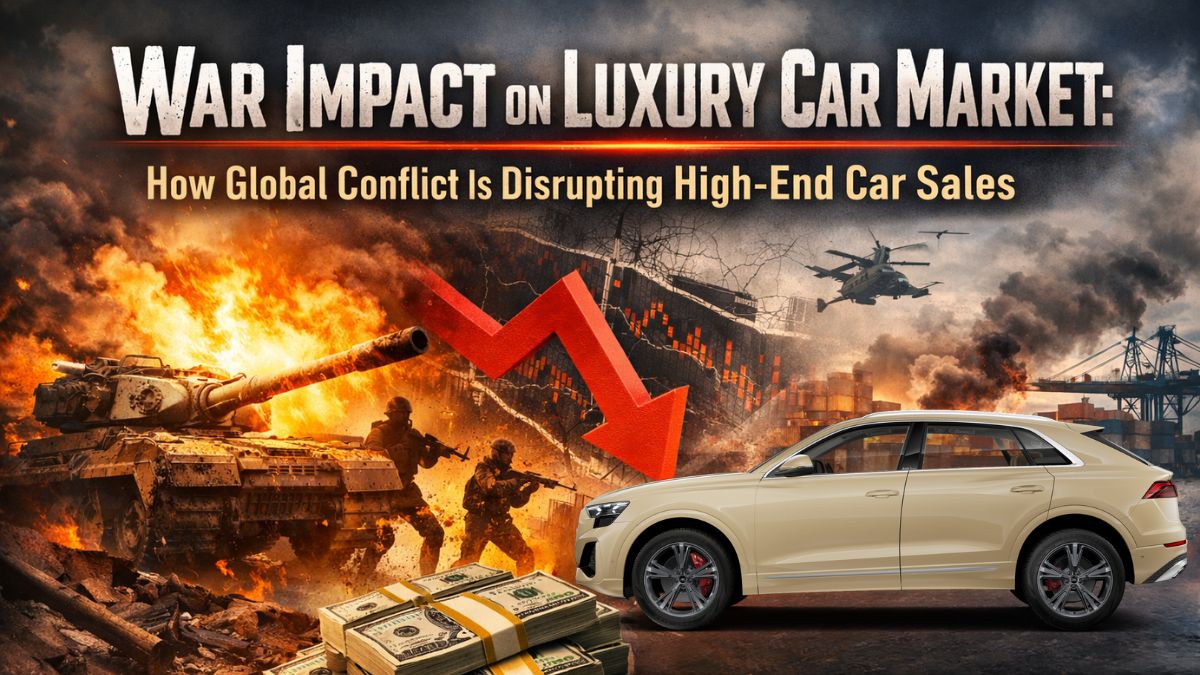
War Impact on Luxury Car Market: How Global Conflict Is Disrupting High-End Car Sales
- Other
- Published: 06 Apr, 2026
Book a Test Drive
Free doorstep test drive at your convenience
April 2026 | Global Auto News
The global luxury car market is facing fresh challenges in 2026 as ongoing geopolitical tensions begin to disrupt high-end vehicle sales. From delayed shipments to rising operational costs, premium automakers are experiencing pressure across multiple fronts.
Industry experts say the impact of global conflicts—particularly in energy-rich regions—is now clearly visible in the luxury automobile segment.
Supply Chain Disruptions Hit Premium Segment
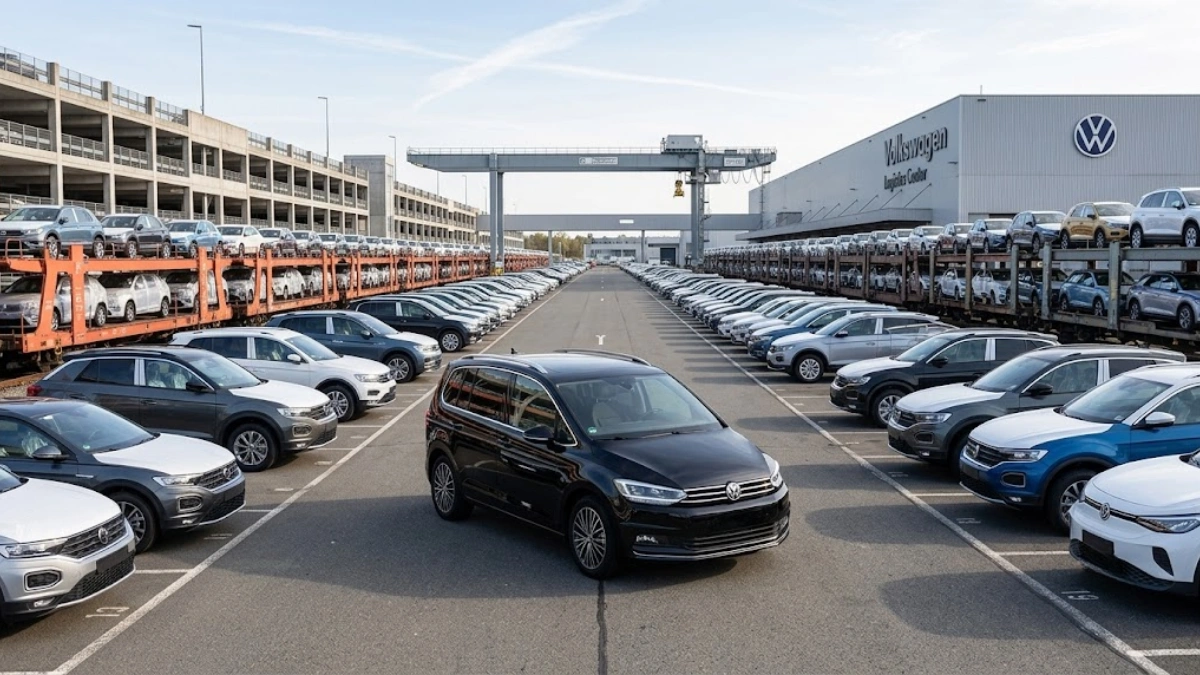
Luxury car manufacturers depend heavily on global supply chains for high-quality components and advanced technology. However, recent conflicts have created bottlenecks in transportation and logistics.
Shipping routes in key regions have become unstable, leading to:
- Delays in vehicle deliveries
- Increased freight and insurance costs
- Limited availability of imported components
Brands like Mercedes-Benz and BMW rely on global networks, making them particularly vulnerable to such disruptions.
Rising Energy Costs Affect Production
One of the most immediate consequences of geopolitical conflict is the surge in oil and energy prices. For luxury car manufacturers, this has translated into higher production and transportation expenses.
Factories are facing increased operational costs, while logistics expenses continue to climb. These additional costs are often passed on to consumers, pushing luxury car prices even higher.
Demand Slows as Economic Uncertainty Grows
Luxury vehicles are considered discretionary purchases. During times of economic uncertainty, even high-income consumers tend to delay big-ticket spending.
Market analysts report:
- A slowdown in new bookings for premium vehicles
- Increased waiting periods due to limited supply
- A cautious approach among buyers in global markets
This trend is affecting not only established brands but also emerging luxury EV manufacturers.
Delivery Delays Becoming Common
Dealerships across multiple regions have reported delays in receiving high-end models. Customers waiting for imported vehicles are facing longer delivery timelines than usual.
Luxury SUVs and sedans, which often require specialized components, are particularly affected. The situation is further complicated by port congestion and increased security measures in conflict-affected regions.
Shift Toward Electric Luxury Vehicles
Despite these challenges, one segment showing resilience is electric luxury vehicles.
Brands are accelerating their EV strategies to:
- Reduce dependence on fossil fuels
- Align with sustainability goals
- Attract future-focused buyers
Companies like Tesla are continuing to expand globally, while traditional automakers are investing heavily in electric platforms.
Regional Impact Varies
The impact of global conflict on luxury car sales is not uniform.
- Europe: Facing supply chain disruptions and rising energy costs
- Asia (including India): Experiencing price increases and delayed imports
- Middle East: Demand remains stable but logistics challenges persist
India, a growing market for luxury vehicles, is witnessing cautious buying behavior as prices rise and delivery timelines extend.
Price Hikes Across Premium Models
Luxury car prices have seen noticeable increases in recent months. Industry insiders attribute this to:
- Higher raw material costs
- Increased import duties (in some regions)
- Rising logistics expenses
As a result, entry-level luxury cars are becoming less accessible, pushing some buyers to delay purchases or explore alternative options.
Industry Response: Adapting to Uncertainty
Automakers are actively working to manage the situation:
- Diversifying supply chains
- Increasing local production in key markets
- Adjusting pricing strategies
Some companies are also focusing on digital sales channels and pre-booking models to manage demand more effectively.
Outlook: Short-Term Pressure, Long-Term Resilience
While the current situation presents clear challenges, analysts believe the luxury car market will remain resilient in the long term.
As global conditions stabilize:
- Supply chains are expected to recover
- Demand may rebound strongly
- EV adoption will continue to grow
However, in the short term, volatility is likely to persist.
Conclusion
The impact of global conflict on the luxury car market in 2026 is significant but not unexpected. From rising costs to delayed deliveries, the industry is navigating a complex environment shaped by geopolitical uncertainty.
For buyers, this means higher prices and longer waiting periods. For automakers, it’s a test of adaptability and strategic planning.
As the situation evolves, the luxury auto sector will continue to adjust—balancing challenges with innovation and long-term growth opportunities.
Book a Test Drive
Free doorstep test drive at your convenience